
Are you feeling overwhelmed by the thought of reporting your digital assets to the Australian Taxation Office (ATO)? You are certainly not alone in this annual financial struggle. Finding a reliable crypto tax guide Australia can mean the difference between maximizing your returns and facing steep audit penalties. In 2026, the ATO has drastically upgraded its blockchain tracking capabilities to monitor every swap, trade, and airdrop. Let’s break down exactly what you need to know to stay compliant and keep more of your hard-earned profits.
- 1. Navigating the Crypto Tax Guide Australia Landscape in 2026
- 2. Capital Gains Tax (CGT) Fundamentals for Aussie Investors
- 3. Income Tax vs. Capital Gains: Staking, Yield Farming, and DeFi Taxes
- 4. The Taxation of NFTs, Metaverse Assets, and Web3 Gaming
- 5. Essential Record Keeping and Crypto Portfolio Tracker Tools
- 6. Self-Managed Super Funds (SMSF) and Cryptocurrency
- 7. Advanced Tax-Loss Harvesting and Minimization Strategies
- 8. Frequently Asked Questions (FAQ)
1. Navigating the Crypto Tax Guide Australia Landscape in 2026

The cryptocurrency landscape has matured significantly, and so have the regulations governing it in Australia. The ATO now treats cryptocurrency as a form of property rather than standard fiat currency. This means that almost every interaction you have with digital assets carries potential tax implications. In 2026, ignorance of the law is no longer accepted as a valid excuse by auditors.
Statistical data from the ATO indicates that over 2.5 million Australian taxpayers now hold or trade digital assets. Because of this widespread adoption, data-matching programs have become incredibly sophisticated. Australian digital currency exchanges are legally required to hand over user transaction histories directly to the taxation office.
Personal Use vs. Investment Classifications
One of the most misunderstood areas of the crypto tax guide Australia is the “personal use asset” exemption. Many investors mistakenly believe they can dodge taxes by claiming their portfolio is for personal use. However, the ATO maintains extremely strict criteria for this classification in 2026.
To qualify as a personal use asset, the cryptocurrency must be purchased and used within a short timeframe to buy goods or services for personal consumption. For instance, buying Bitcoin to immediately purchase concert tickets might qualify. Holding digital assets for months hoping the price increases definitively marks them as investments.
If your assets are classified as investments, you are firmly in the realm of capital gains tax. You cannot claim the personal use exemption on assets kept in a hardware wallet for long-term storage. Always assume your holdings are investments unless you have clear documentation proving immediate consumer spending.
How ATO Data-Matching Works
The ATO’s data-matching program is a technological dragnet designed to catch underreported crypto income. They collect bulk data from all registered Australian cryptocurrency designated service providers. This includes your name, address, bank details, and complete transaction history.
This data is then cross-referenced with your annual tax return. If there is a discrepancy between the exchange data and your self-reported income, an automated red flag is generated. In 2026, this system also extends to interacting with international tax authorities to track offshore exchange usage.
Attempting to hide assets by transferring them off-exchange to a decentralized wallet will not fool the system. The initial transfer is recorded on the blockchain ledger, leaving a permanent digital footprint. Complete transparency with a robust crypto portfolio tracker is your best defense.
2. Capital Gains Tax (CGT) Fundamentals for Aussie Investors

Understanding capital gains tax is the cornerstone of any comprehensive crypto tax guide Australia. A CGT event occurs anytime you dispose of a cryptocurrency. “Disposal” is a broad term that covers far more than just selling your digital coins for Australian dollars.
Selling crypto for fiat currency is the most obvious CGT event. However, trading one cryptocurrency for another is also a taxable event under Australian law. For example, using Ethereum to purchase a decentralized stablecoin triggers a capital gain or loss on the Ethereum.
Even using cryptocurrency to purchase real-world goods—if the crypto was held as an investment—triggers a CGT event. You must calculate the market value of the crypto in Australian dollars at the exact moment of the transaction. This highlights the vital importance of maintaining precise chronological records.
Calculating Your Capital Gains and Losses
To calculate a capital gain, you must determine your cost base. The cost base includes the initial purchase price of the cryptocurrency, plus any associated fees like exchange commissions or network gas fees. Deducting this cost base from your final sale price gives you your gross capital gain.
If you sell the asset for less than your cost base, you incur a capital loss. Capital losses are incredibly valuable as they can be used to offset your capital gains. If your losses exceed your gains in a single financial year, the net loss carries forward to future years.
It is important to note that capital losses can only offset capital gains, not your regular employment income. Keeping meticulous track of your cost bases across different wallets and exchanges is essential. Many investors rely on automated software because manually calculating cost bases for thousands of micro-trades is virtually impossible.
The 50% CGT Discount Explained
One of the most generous provisions in the Australian tax system is the 50% CGT discount. If you hold a cryptocurrency investment for longer than 12 months before disposing of it, you only pay tax on half of the profit. This is a massive incentive for long-term holding strategies in 2026.
For example, if you make a $10,000 profit on Bitcoin held for 14 months, only $5,000 is added to your taxable income. This amount is then taxed at your marginal income tax rate, which can reach up to 45%. Taking advantage of this discount requires strict proof of acquisition dates.
However, the 12-month rule applies on a “first-in, first-out” (FIFO) basis by default, though the ATO allows specific identification of assets. This means you can choose exactly which units of cryptocurrency you are selling, provided you can individually identify them. Using specialized software helps immensely with optimizing these specific identification sales.
3. Income Tax vs. Capital Gains: Staking, Yield Farming, and DeFi Taxes

The rise of Decentralized Finance (DeFi) has added incredible complexity to the crypto tax guide Australia. Not all crypto returns are treated as capital gains; many activities generate standard income. Understanding the distinction between ordinary income and capital gains is critical for accurate reporting.
When you earn cryptocurrency as a reward for an activity, it is generally considered ordinary income. This income must be declared at its Australian dollar market value on the day you receive it. Your marginal tax rate will then apply to this earned amount.
Navigating DeFi taxes requires careful attention to the mechanics of the specific smart contracts you interact with. Some protocols pay out daily rewards, creating hundreds of taxable income events per year. Others compound automatically, which may alter the timing of your tax obligations depending on how the contract is structured.
Taxation on Staking Rewards
Staking involves locking up your cryptocurrency to help secure a blockchain network, earning newly minted coins in return. The ATO explicitly views staking rewards as ordinary income. The moment the newly minted tokens hit your wallet, you have generated a taxable event.
You must record the fair market value of these tokens in AUD at the time of receipt. This initial value then becomes the cost base for those specific tokens moving forward. When you eventually sell those staked rewards, you will trigger a secondary capital gains tax event based on the new cost base.
Validators running independent nodes face the same rules as retail investors participating in staking pools. The frequency of payouts can create an administrative nightmare without proper tracking tools. Daily payouts mean 365 separate income declarations for a single staked asset.
Liquidity Pools and Yield Farming
Providing liquidity to decentralized exchanges (DEXs) is a popular way to earn yield, but it carries unique tax burdens. When you deposit two tokens into a liquidity pool, you usually receive a Liquidity Provider (LP) token in return. The ATO often views this initial deposit as a crypto-to-crypto disposal, triggering a CGT event.
While your tokens are in the pool, you earn trading fees from the DEX. These accumulated fees are generally treated as ordinary income when you claim them. If the fees are automatically reinvested into the LP token’s value, the taxation timing can become highly complex and usually requires expert accounting advice.
When you finally withdraw your liquidity by burning the LP token, you trigger another CGT event. You must calculate the gain or loss based on the value of the assets you receive back compared to the LP token’s cost base. Impermanent loss, a common risk in yield farming, can sometimes be claimed as a capital loss, but thorough documentation is required.
4. The Taxation of NFTs, Metaverse Assets, and Web3 Gaming

Non-Fungible Tokens (NFTs) have exploded beyond digital art into gaming, real estate, and digital identities. Any complete crypto tax guide Australia must address the rapidly evolving world of NFT taxation. The ATO applies the same fundamental property rules to NFTs as they do to fungible cryptocurrencies.
Buying an NFT with a cryptocurrency like Ethereum is considered a disposal of that Ethereum. This triggers a CGT event for the crypto you spent. The purchase price in AUD becomes the cost base for your newly acquired NFT.
When you eventually sell the NFT, the profit or loss is calculated against that initial cost base. If you hold the NFT for more than 12 months as an investor, it qualifies for the 50% CGT discount. However, if you are an artist creating and selling NFTs, the revenue is treated as ordinary business income, not a capital gain.
Royalties and NFT Creators
For digital artists and developers, minting an NFT is akin to manufacturing a product. When you sell an NFT you created, the proceeds are considered ordinary income. You can deduct the costs associated with creation, such as network gas fees for minting.
Many smart contracts include secondary royalty functions, paying the creator a percentage every time the NFT is resold. These ongoing royalty payments are also classified as ordinary income. They must be tracked and reported in the financial year they are received.
If you are operating as an NFT business, you may also need to register for Goods and Services Tax (GST) if your turnover exceeds $75,000 annually. The intersection of GST and digital assets is complex, particularly when dealing with international buyers. Consulting a specialized crypto tax accountant is highly recommended for active creators.
Play-to-Earn (P2E) and Web3 Gaming
Blockchain gaming allows players to earn tokens and trade in-game assets for real money. In 2026, the ATO is closely monitoring high-volume play-to-earn participants. Earning tokens simply by playing a game constitutes receiving ordinary income.
The market value of the in-game token at the time it is deposited into your wallet must be recorded. If you breed digital pets or craft in-game NFT items using those tokens, you are engaging in crypto-to-crypto swaps. Each of these crafting mechanics can technically trigger a CGT event.
Selling high-value gaming NFTs, such as virtual real estate or rare weapons, on secondary markets also triggers capital gains. Gamers who treat these ecosystems as a primary source of income may be classified as traders rather than investors. This classification changes the tax treatment significantly, removing the 50% CGT discount but allowing for trading stock deductions.
5. Essential Record Keeping and Crypto Portfolio Tracker Tools
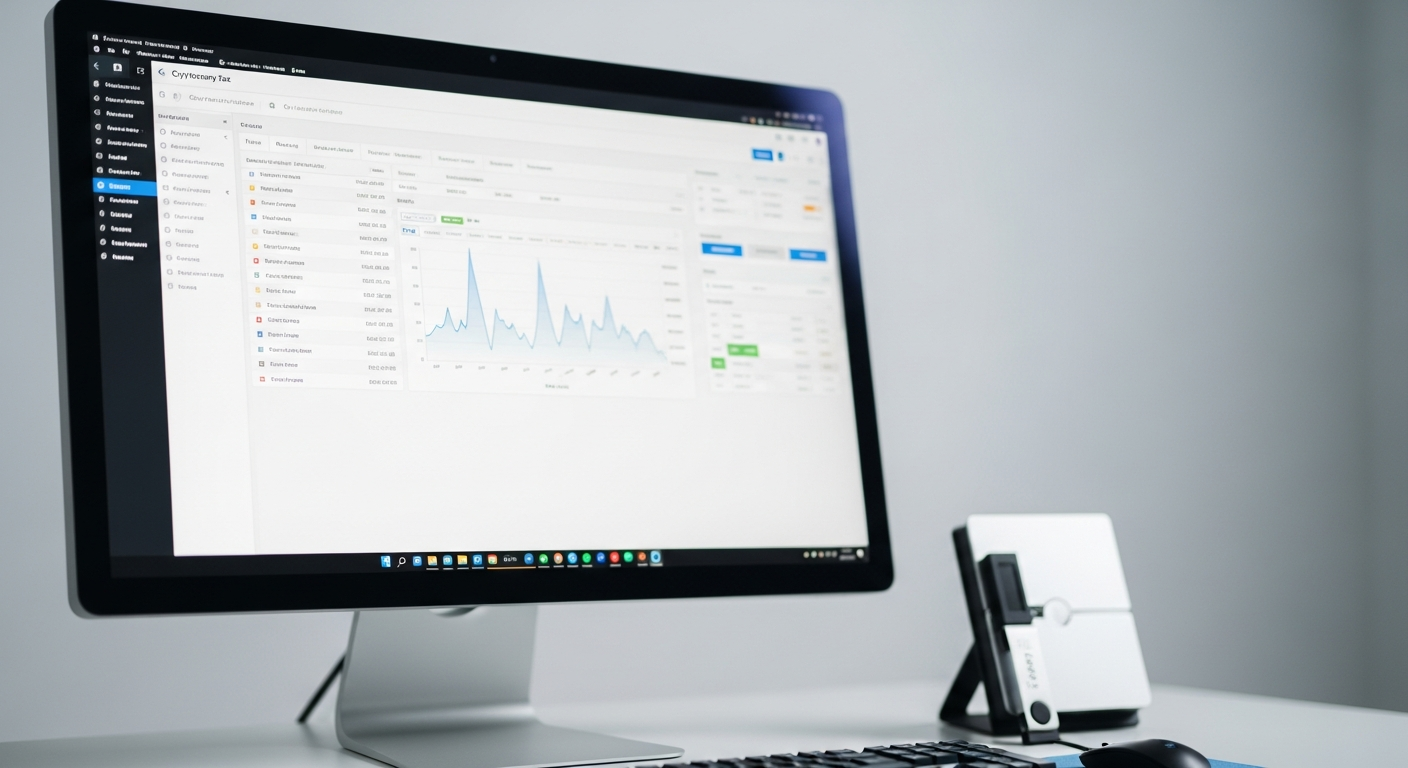
The golden rule of the crypto tax guide Australia is to keep immaculate records. The ATO mandates that you keep transaction records for at least five years after a tax event occurs. Relying on your memory or downloading CSV files at the last minute is a recipe for disaster.
You must record the date of transactions, the value of the crypto in AUD, the purpose of the transaction, and the details of the other party involved. Doing this manually in a spreadsheet is feasible for a handful of trades. For anyone using DeFi or conducting weekly trades, specialized software is non-negotiable.
A reliable crypto portfolio tracker will sync directly with your exchanges via read-only APIs. It will automatically calculate your cost bases, identify CGT events, and generate ATO-compliant tax reports. The time saved by these tools justifies their subscription costs many times over.
🛒 professional accounting ledger book
View on Amazon →
As an Amazon Associate, we earn from qualifying purchases.
Automated Crypto Tax Calculators
Using a dedicated crypto tax calculator is the industry standard for Australian investors in 2026. These platforms support thousands of different blockchains and decentralized applications. They seamlessly categorize complex transactions like liquidity pool deposits and staking rewards.
When selecting software, ensure it specifically supports Australian tax rules. It must automatically apply the 12-month 50% CGT discount and handle specific identification methodologies. Below is a comparison of top-tier tax tracking solutions.
| Software Platform | DeFi Support | ATO Compliant Reports | Best For |
|---|---|---|---|
| Koinly | Excellent | Yes | All-around investors |
| CryptoTaxCalculator | Outstanding | Yes (Australian Made) | Heavy DeFi users |
| CoinTracking | Good | Yes | Professional accountants |
🛒 Koinly crypto tax software subscription
View on Amazon →
As an Amazon Associate, we earn from qualifying purchases.
Hardware Wallets and Record Keeping
Moving your assets off exchanges and into cold storage is excellent for security, but it requires diligent record-keeping. Transferring crypto between your own wallets is not a taxable event. However, you must prove to the ATO that you own both wallets to avoid triggering a false disposal.
Hardware wallets offer robust security against digital theft by keeping private keys offline. When you transfer assets to cold storage, you should immediately log the transfer fees, as network fees can sometimes be added to the asset’s cost base. Maintaining a clear paper trail prevents costly misunderstandings during an audit.
✅ Pros of Hardware Wallets
- Immune to exchange bankruptcies and online hacks.
- Complete ownership of your private keys and assets.
- Seamless integration with most major crypto tax software.
❌ Cons of Hardware Wallets
- Upfront cost to purchase the physical device.
- Loss of the physical backup seed phrase means total loss of funds.
- Requires manual tracking to prove wallet ownership to the ATO.
🛒 Ledger Nano X crypto hardware wallet
View on Amazon →
As an Amazon Associate, we earn from qualifying purchases.
6. Self-Managed Super Funds (SMSF) and Cryptocurrency

A growing trend in the crypto tax guide Australia involves using Self-Managed Super Funds (SMSFs) to invest in digital assets. Investing through an SMSF can offer significant tax advantages. In accumulation phase, earnings are generally taxed at a concessional rate of 15%.
If the SMSF holds the cryptocurrency for longer than 12 months, the effective tax rate on capital gains drops to just 10%. In the pension phase, capital gains on these assets can even be tax-free. However, the regulatory compliance requirements for SMSFs are incredibly strict and heavily audited.
The ATO mandates that the SMSF’s trust deed must explicitly allow for cryptocurrency investments. Furthermore, the investment must align with the fund’s documented investment strategy and satisfy the sole purpose test. Commingling personal digital assets with SMSF assets is a severe breach that can result in massive penalties.
Custody and Valuation Rules
One of the biggest hurdles for SMSFs is proving ownership and existence of the digital assets to external auditors. The assets must be held in a wallet that is clearly established in the name of the corporate trustee of the SMSF. Personal exchange accounts cannot be used under any circumstances.
You must obtain historical valuation data at the end of every financial year (June 30) for reporting purposes. The fluctuating nature of crypto means accurate timestamps are vital for the fund’s annual return. Specialized SMSF auditors will scrutinize blockchain explorers to verify the balances.
Security is paramount; if the SMSF loses its seed phrase or is hacked, the loss of retirement capital is permanent. The ATO views the loss of crypto due to lost private keys as a complex area, often requiring specific rulings to claim a capital loss. Trustees must maintain rigorous cybersecurity protocols.
Restrictions on SMSF Crypto Use
Cryptocurrency held within an SMSF cannot be used for personal transactions. You cannot use the fund’s Bitcoin to buy a personal coffee or fund a holiday. Doing so breaches the sole purpose test, which requires funds to be maintained strictly for retirement benefits.
Additionally, SMSFs cannot acquire digital assets from a related party, meaning you cannot transfer your personal crypto portfolio into your SMSF. The fund must purchase the digital assets directly from an open exchange. Breaking these rules can lead to the SMSF being made non-complying, subjecting the entire fund balance to a 45% tax rate.
7. Advanced Tax-Loss Harvesting and Minimization Strategies

Understanding how to legally minimize your liability is the most valuable part of any crypto tax guide Australia. Active management of your portfolio leading up to the end of the financial year is crucial. Strategic planning can save you thousands of dollars in outgoing tax payments.
Tax minimization is not about evasion; it is about utilizing the legal frameworks provided by the ATO. By carefully timing your disposals, you can balance your gains and losses effectively. This process requires a proactive approach well before June 30th.
Utilizing a crypto portfolio tracker throughout the year allows you to spot minimization opportunities in real-time. Knowing your exact unrealized gains and losses gives you the power to make data-driven decisions. Let’s explore the most effective legal strategies used in 2026.
Tax-Loss Harvesting Tactics
Tax-loss harvesting involves deliberately selling cryptocurrency that has dropped in value to realize a capital loss. This realized loss is then used to offset the capital gains you have made on other successful investments during the year. This strategy effectively lowers your overall net capital gain, directly reducing your tax bill.
For example, if you made $10,000 in gains selling Bitcoin, but your Solana holdings are down by $4,000, you can sell the Solana to realize the loss. Your net taxable capital gain drops to $6,000. It is a highly effective tool for rebalancing a portfolio while gaining a tax advantage.
However, Australian investors must be highly cautious of “wash sale” rules. A wash sale occurs when you sell a crypto asset to claim a tax loss, and then immediately buy back the exact same asset. The ATO views this as a scheme purely to avoid tax and will actively disallow the capital loss.
Strategic Timing of Your Asset Sales
The timing of your trades dictates your tax outcomes. Deferring the sale of a highly profitable asset until the next financial year pushes the tax liability forward by twelve months. This strategy is particularly useful if you expect your regular income to be lower in the following year, dropping you into a lower tax bracket.
Furthermore, timing your sales to cross the 12-month threshold is vital. If you are sitting on massive profits at the 11-month mark, exercising patience can unlock the 50% CGT discount. The tax savings from waiting a few weeks often outweigh short-term market volatility.
You can also consider gifting cryptocurrency to a registered charity. In Australia, donating crypto to a Deductible Gift Recipient (DGR) allows you to claim a tax deduction for the asset’s market value. This not only supports a good cause but significantly lowers your taxable income.
[INTERNAL_LINKS]
8. Frequently Asked Questions (FAQ)
Do I have to pay tax if I just hold crypto in Australia?
No, simply buying and holding cryptocurrency in your wallet does not trigger a tax event in Australia. You only incur a tax liability when you dispose of the asset, such as selling it for fiat, swapping it for another crypto, or spending it. However, if your holdings generate income through staking or airdrops while you hold them, that specific income must be declared.
Can the ATO track my crypto wallets?
Yes, the ATO possesses highly sophisticated data-matching capabilities in 2026. They receive transaction data directly from all Australian registered exchanges linked to your identity. If you transfer assets from an exchange to a private wallet, the blockchain’s public ledger allows them to follow the funds seamlessly.
How do I report crypto losses on my tax return?
You report capital losses in the capital gains tax section of your annual ATO tax return. You first calculate your total capital gains for the year, and then apply your capital losses to reduce that figure. If your losses exceed your gains, the remaining loss cannot be deducted from your regular salary but will carry forward to offset future capital gains in subsequent years.
📚 You May Also Like