Best Smart Home Devices UK: A Complete 2024 Guide
Transforming your house into a connected, intelligent living space is no longer a futuristic dream—it is a practical reality. With rising energy costs, security concerns, and the ever-increasing pace of modern life, investing in the right technology can save you time, money, and peace of mind. But with thousands of products flooding the market, choosing the right smart home devices uk residents can actually rely on is a daunting task.
Whether you live in a newly built modern apartment or a traditional Victorian terrace with thick brick walls that challenge Wi-Fi signals, this comprehensive guide will walk you through everything you need to know. We will explore the leading ecosystems, the most effective ways to lower your energy bills through smart heating, and how to secure your property with cutting-edge technology.
Table of Contents
The Evolution of UK Smart Homes

The landscape of domestic life in the United Kingdom has shifted dramatically over the past decade. Previously, home automation was reserved for luxury properties and hardcore tech enthusiasts. Today, the integration of intelligent technology into everyday households is accelerating rapidly. This shift is driven primarily by two factors: the pressing need for energy efficiency amidst volatile utility prices, and the standardisation of communication protocols that make devices easier to install and manage.
When looking for the best smart home devices uk markets have to offer, it is essential to understand the unique challenges of British housing. Unlike the timber-framed houses common in North America, a vast portion of UK housing stock consists of older properties built with dense brick and block work. This structural reality can severely inhibit standard Wi-Fi signals, making the choice of smart home communication protocols incredibly important.
Understanding Protocols: Wi-Fi, Zigbee, and Matter
Before purchasing any hardware, you must understand how these devices talk to one another. The three main protocols you will encounter are Wi-Fi, Zigbee, and Matter.
Wi-Fi is the most common. Devices connect directly to your home router. While this means you don’t need an additional hub, too many Wi-Fi smart devices can congest your network, leading to dropped connections. Furthermore, standard Wi-Fi struggles to penetrate thick internal brick walls common in UK properties.
Zigbee is a protocol designed specifically for smart homes. Instead of every device connecting to your router, they connect to each other, creating a “mesh network.” If you have a smart bulb in the hallway and another in the living room, they bounce the signal between themselves back to a central hub. This is highly effective for circumventing the thick wall issue in older British homes.
Matter is the newest and most exciting development in the industry. It is a universal standard backed by Apple, Google, Amazon, and Samsung. Historically, if you bought an Apple HomeKit device, it wouldn’t work with Amazon Alexa. Matter solves this. If a device has the Matter logo, it is guaranteed to work across all major ecosystems, making future-proofing your home significantly easier.
Building the Foundation: Smart Hubs and Assistants

Every smart home needs a brain—a central command centre that ties all your disparate gadgets together into a cohesive, manageable system. Smart hubs and their accompanying voice assistants are the gatekeepers to your automated life. Choosing the right ecosystem from the outset will dictate which products you can buy down the line, so this is arguably the most critical decision you will make.
Amazon Alexa: The Household Name
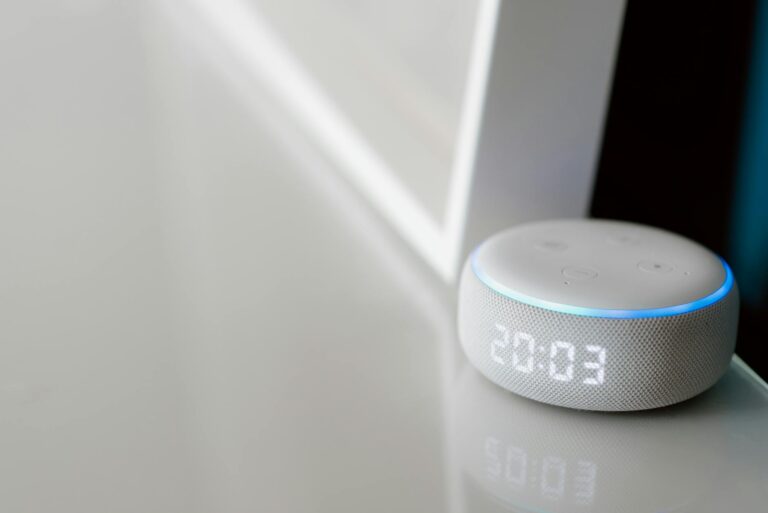
Amazon’s Alexa ecosystem is arguably the most widely adopted in the UK. Its primary strength lies in its sheer compatibility; almost every smart device manufactured today will proudly display a “Works with Alexa” badge. The hardware ranges from the incredibly affordable Echo Pop to the screen-equipped Echo Show series, which can double as digital photo frames or kitchen recipe assistants.
Alexa excels in creating “Routines.” For example, you can create a “Good Morning” routine where simply saying the phrase will prompt Alexa to read the BBC News headlines, boil your smart kettle, and gently fade up your bedroom lights. However, while Alexa is fantastic at controlling devices, it can sometimes lag behind Google in answering complex, general knowledge questions.
🛒 Amazon Echo 4th Gen Smart Home Hub
View on Amazon →
As an Amazon Associate, we earn from qualifying purchases.
Google Home: The Information Powerhouse
Powered by Google Assistant, the Google Home ecosystem (utilising hardware like the Nest Mini and Nest Hub) is the smartest of the bunch when it comes to understanding natural language. Because it taps into Google’s vast search engine database, it is exceptionally good at answering contextual questions, providing accurate traffic updates, and managing your Google Calendar.
The Google Home app offers a clean, intuitive interface for controlling your house. It integrates seamlessly with other Google-owned products like Nest cameras and thermostats. If your household is deeply entrenched in the Google ecosystem (using Gmail, Google Calendar, and Android phones), this is the logical choice.
Apple HomeKit: The Privacy Champion
Apple HomeKit is the premium choice for iOS users. While it has traditionally supported fewer third-party devices than Amazon or Google, the introduction of the Matter standard is rapidly closing this gap. Apple’s ecosystem is controlled via the ‘Home’ app on iPhones, iPads, and MacBooks, or via voice using Siri on a HomePod.
The standout feature of HomeKit is its commitment to privacy. Apple processes most smart home commands locally on your devices rather than sending data to the cloud. This local processing also means that commands—like turning on a light—often execute slightly faster than cloud-based alternatives.
| Feature | Amazon Alexa | Google Home | Apple HomeKit |
|---|---|---|---|
| Device Compatibility | Excellent | Very Good | Good (Improving via Matter) |
| Voice Recognition | Very Good | Excellent | Good |
| Privacy & Local Control | Average | Average | Excellent |
| Best For… | Budget setups & broad compatibility | Android users & information retrieval | Strict iOS users & privacy advocates |
Tackling UK Weather: Smart Heating and Climate Control

Heating accounts for more than half of the typical UK household’s energy bills. With the unpredictable British weather and fluctuating gas prices, a smart thermostat is widely considered the best return on investment among all available smart home devices uk homeowners can install. Unlike traditional thermostats that simply turn your boiler on or off based on a set dial, smart thermostats learn your habits, track your location, and monitor the weather outside.
Understanding UK Boiler Systems
Before buying a smart thermostat, you must understand your current heating setup. The majority of UK homes use a ‘combi’ (combination) boiler, which provides heating and hot water on demand. Others use a system or conventional boiler, which relies on a separate hot water cylinder (usually found in an airing cupboard). Smart thermostats are available for both setups, but you must ensure you purchase the correct version. For system boilers, you will need a smart thermostat capable of controlling both heating and hot water independently.
Hive Active Heating: The British Champion
Created by Centrica (the parent company of British Gas), Hive was designed specifically with UK plumbing and heating systems in mind. It is arguably the most popular smart thermostat in the country. The interface is clean, and the companion app is remarkably intuitive, allowing you to set complex heating schedules with a few taps.
One of Hive’s best features is its “Frost Protection,” which automatically triggers your boiler if the temperature drops below a dangerous level, preventing your pipes from freezing during harsh winter nights. Furthermore, because it is backed by British Gas, professional installation is easy to arrange, taking the anxiety out of dealing with mains electricity and boiler wiring.
- ✅ Pros: Designed specifically for UK boilers; excellent app; highly reliable frost protection.
- ✅ Pros: Easily expandable with Hive’s smart radiator valves for multi-zone control.
- ❌ Cons: The physical thermostat unit requires batteries rather than being hardwired.
- ❌ Cons: Aesthetically, it is a bit bulkier than its premium competitors.
🛒 Hive Thermostat for Heating and Hot Water
View on Amazon →
As an Amazon Associate, we earn from qualifying purchases.
Google Nest Learning Thermostat: The Intelligent Aesthetic
If you want a device that looks as good as it functions, the Google Nest Learning Thermostat is unmatched. Featuring a sleek, stainless-steel ring and a high-resolution display that lights up as you walk past, it is a premium addition to any hallway.
Its main selling point is its ‘Learning’ capability. For the first week of use, you adjust the dial manually. Over time, Nest learns what temperature you prefer when you wake up, when you leave for work, and when you return. It then creates an automated schedule, constantly refining it to save energy. It also features OpenTherm compatibility, a technology that allows the thermostat to tell your boiler precisely how much gas to burn, rather than just switching it completely on or off, leading to significant fuel savings.
- ✅ Pros: Stunning design; learns your routine automatically; OpenTherm compatibility.
- ✅ Pros: Hardwired unit means no batteries to change.
- ❌ Cons: Professional installation is highly recommended as wiring can be complex.
- ❌ Cons: Less intuitive manual scheduling compared to Hive.
Tado° Smart Thermostat: The Geofencing Expert
Tado° takes a slightly different approach. Its biggest strength lies in its advanced geofencing capabilities. By tracking the GPS location of the smartphones in your household, Tado knows when the last person has left the house and automatically turns the heating down. As soon as it detects someone is on their way home, it fires the boiler back up so the house is warm precisely when they unlock the front door.
Tado also excels in multi-zone heating. By replacing your standard radiator valves with Tado Smart Radiator Thermostats, you can control the temperature of individual rooms. Why heat the spare bedroom if nobody is using it? However, it is worth noting that Tado locks some of its best automated features (like automatic geofencing without a push notification) behind an “Auto-Assist” monthly subscription.
| Thermostat | Standout Feature | Boiler Compatibility | Subscription Required? |
|---|---|---|---|
| Hive Active Heating | Ease of use & UK design | Combi & System | No (Optional for extras) |
| Google Nest Learning | Auto-scheduling & Aesthetics | Combi & System (OpenTherm) | No |
| Tado° V3+ | Geofencing & Multi-zone | Combi & System | Yes (For automated geofencing) |
Illuminating and Securing Your Space

Once you have your hub setup and your heating under control, the next logical steps in your automation journey involve convenience and security. Smart lighting can fundamentally change the atmosphere of your home, while smart security provides unmatched peace of mind, allowing you to monitor your property from anywhere in the world.
Smart Lighting: Beyond the Simple Switch
Smart lighting is often the entry point for many consumers into the connected home ecosystem. The benefits go far beyond simply changing the colour of your living room. Smart bulbs can simulate occupancy when you are on holiday, automatically adjust to warmer colour temperatures in the evening to help you sleep, and sync with your television or music for immersive entertainment.
When shopping for bulbs in the UK, be extremely careful to check your fittings. The UK uses a mix of Bayonet Cap (B22), Edison Screw (E27), and spotlight fittings (GU10). Always double-check your existing fixtures before ordering.
Philips Hue is universally recognised as the gold standard in this category. Operating on a Zigbee mesh network (requiring a Hue Bridge), these bulbs respond instantaneously, offer the most vibrant colours, and boast unparalleled reliability. While they are undeniably expensive, they are an investment in quality.
- ✅ Pros: Unmatched reliability; incredibly vibrant colours; huge range of bulb shapes and outdoor fixtures.
- ✅ Pros: Flawless integration with Alexa, Google, Apple, and Samsung.
- ❌ Cons: The most expensive option on the market.
- ❌ Cons: Requires an external hub (Hue Bridge) to unlock all features.
🛒 Philips Hue White and Colour Ambiance Starter Kit B22
View on Amazon →
As an Amazon Associate, we earn from qualifying purchases.
If Hue is too harsh on your budget, brands like WiZ and Tapo offer fantastic alternatives. These bulbs connect directly to your Wi-Fi, eliminating the need for a separate hub. While they might lack the absolute split-second responsiveness of Hue’s Zigbee network, they are more than adequate for most users and cost a fraction of the price.
Smart Security: Doorbells, Cameras, and Locks
Home security has been revolutionised by smart tech. Gone are the days of grainy, complex CCTV setups. Today, high-definition cameras can be installed in minutes and monitored straight from your smartphone.
Video Doorbells: The Ring Video Doorbell is synonymous with this category. Owned by Amazon, Ring doorbells allow you to see, hear, and speak to whoever is at your door, whether you are upstairs or in another country. It is incredibly useful for intercepting delivery drivers. However, Ring requires a monthly ‘Ring Protect’ subscription to save and review recorded video. If you prefer a subscription-free alternative, Eufy offers excellent video doorbells that store footage locally on a hub inside your house, meaning no ongoing costs and enhanced privacy.
Smart Locks: The UK smart lock market is slightly more complex than the US due to the prevalence of multipoint locking systems on modern UPVC and composite doors. You cannot simply attach a standard deadbolt smart lock. Products like the Ultion Nuki are specifically designed for UK doors. It retrofits over your existing key on the inside, meaning you can still use a physical key from the outside if needed. It allows you to lock and unlock your door via an app, grant temporary access to dog walkers, or set it to auto-unlock as you approach your driveway.
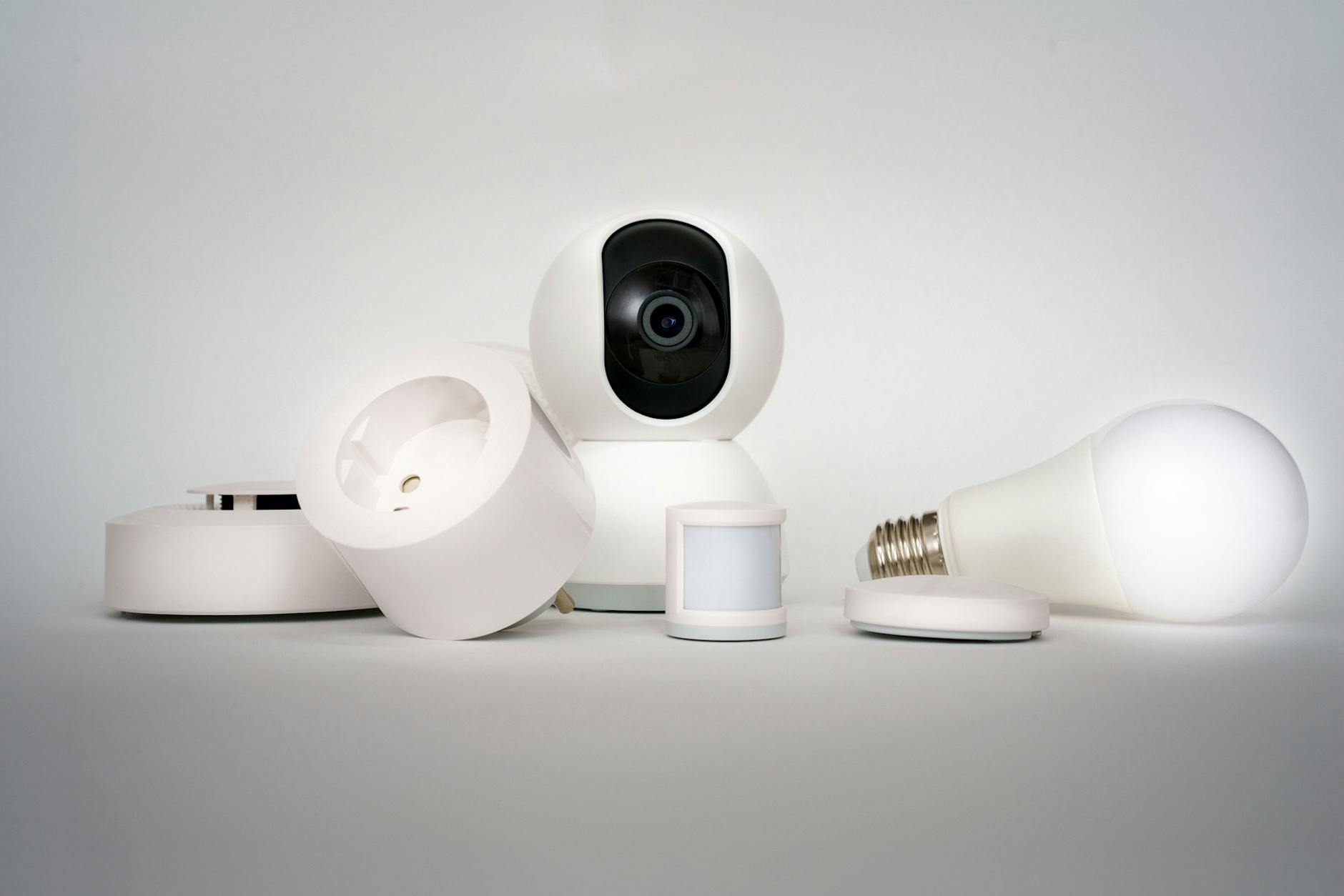
Smart Plugs: Don’t overlook the humble smart plug. These inexpensive devices act as an intermediary between your wall socket and any “dumb” appliance. Want your slow cooker to turn on while you’re at work? Plug it into a smart plug. More importantly, modern smart plugs (like those from Tapo) feature built-in energy monitoring. They allow you to track exactly how many kilowatts an appliance is drawing, helping you identify energy vampires in your home and make informed decisions to lower your electricity bill.
Conclusion and Final Thoughts
Building a connected home is not an all-or-nothing endeavour. You do not need to replace every switch, appliance, and bulb in a single weekend. The most successful setups are those that are built gradually, addressing specific pain points as they arise.
If you are just starting out, begin by choosing your voice assistant ecosystem—whether that is Alexa, Google, or Apple. Next, invest in one of the highly-rated smart thermostats; this is the one device that will actively pay for itself by reducing your winter heating bills. Once you are comfortable with scheduling your heating via an app or voice command, expand your setup with a video doorbell for security and a few smart bulbs in high-traffic areas like the living room or kitchen.
The landscape of smart home devices uk consumers can access is richer and more user-friendly than ever before. With protocols like Matter standardising the industry and devices becoming increasingly energy-conscious, there has never been a better time to upgrade your property. Take it one step at a time, prioritise compatibility, and enjoy the unparalleled convenience, security, and efficiency that a modern smart home provides.



![The Best Monitors for Work From Home India [2024]](https://pikinfo.com/wp-content/uploads/2026/03/best-monitors-work-from-home-india-thumb-768x432.jpg)