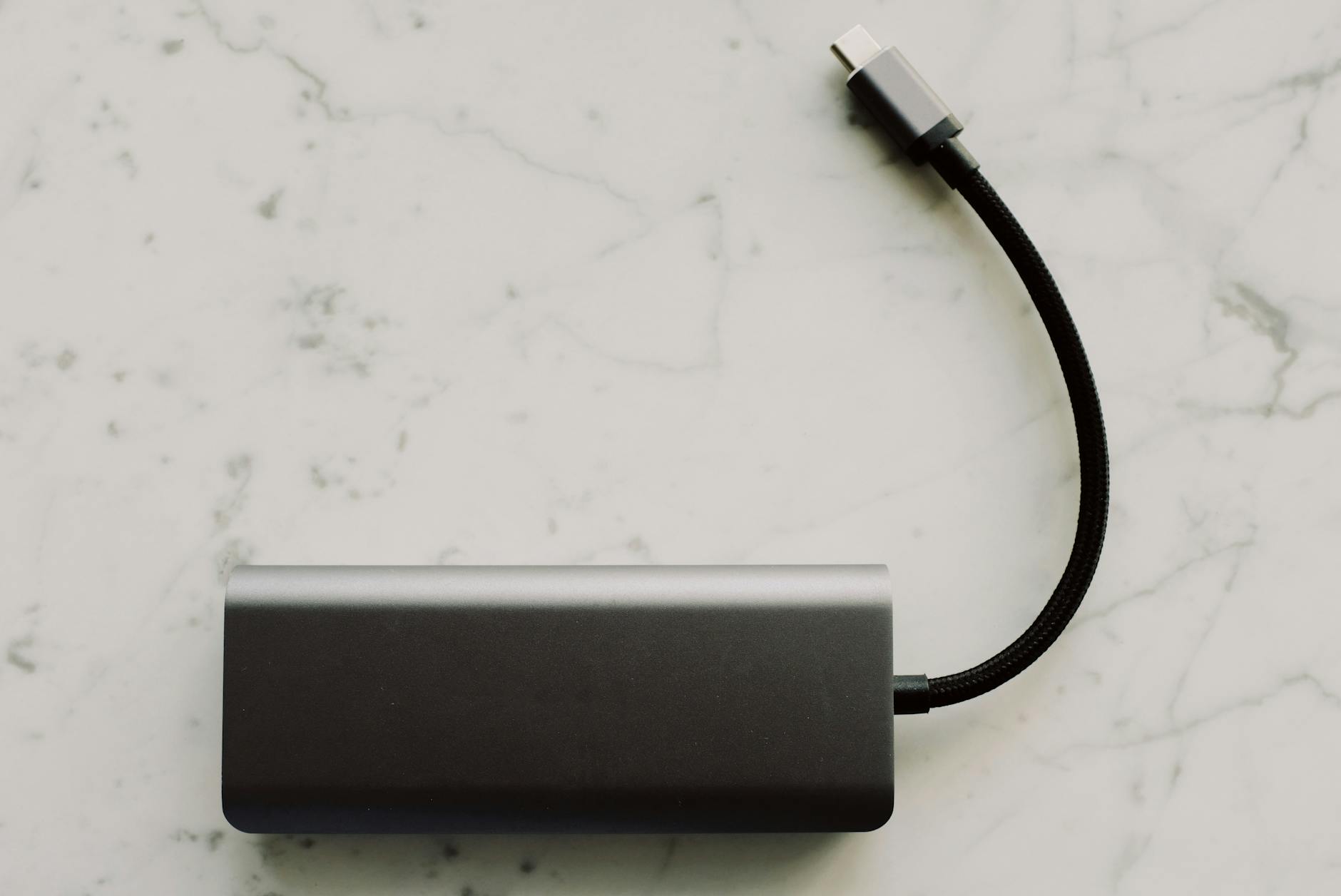
Best Portable Power Bank Reviews: 2024 Guide
In our hyper-connected world, a dead battery is more than just a minor inconvenience—it can derail your workday, disrupt your travel plans, or leave you stranded without navigation. As smartphones, tablets, and laptops become increasingly powerful, their energy demands have skyrocketed, making a reliable backup power source an absolute necessity. However, with thousands of options flooding the market, ranging from cheap gas station knock-offs to premium high-capacity powerhouses, choosing the right one can feel overwhelming.
That is exactly why reading comprehensive portable power bank reviews is the most critical step before making a purchase. You need a device that delivers on its promises, provides safe and efficient charging, and fits seamlessly into your lifestyle. Whether you are a digital nomad needing to keep a MacBook Pro alive on a transatlantic flight, a hiker relying on GPS, or just someone who wants to guarantee their phone survives a night out, we have done the heavy lifting for you.
In this ultimate guide, we will break down the best power banks of the year, decode confusing battery terminology, and provide you with all the information you need to make an informed, confident purchase.
Table of Contents
How We Evaluate the Best Power Banks

Before we crown any device as a top pick, it must survive a rigorous testing methodology. Our evaluation process goes far beyond just reading the manufacturer’s spec sheet. We push these devices to their limits in real-world scenarios to ensure they deliver consistent, safe, and efficient power.
Real-World Capacity (mAh vs. Wh)
Manufacturers advertise capacity in milliamp-hours (mAh), such as 10,000mAh or 20,000mAh. However, due to voltage conversion and energy lost as heat during the charging process, you will never get 100% of that advertised capacity into your phone. We test the real-world efficiency of every power bank. A high-quality power bank should deliver an efficiency rate of 70% to 80%. If a 10,000mAh power bank can fully charge a 3,000mAh smartphone roughly 2.5 times, it passes our efficiency test.
Output and Input Speeds (Power Delivery & Quick Charge)
Capacity means nothing if a power bank takes hours to charge your phone by a mere 10%. We rigorously test the power output protocols, specifically looking for USB-C Power Delivery (PD) and Qualcomm Quick Charge compatibility. We measure the maximum wattage output to see if it can fast-charge modern flagship phones (which typically require 20W to 45W) or power demanding laptops (which require 65W to 100W+).
Equally important is the input speed—how long it takes to recharge the power bank itself. A massive 26,000mAh battery pack is useless if it takes 18 hours to recharge. We look for power banks that accept rapid input charging, allowing them to be fully topped up overnight or during a short layover.
Portability, Form Factor, and Build Quality
A power bank is meant to be portable. We evaluate the weight-to-capacity ratio. Does the device feel like a brick in your pocket, or does it utilize high-density lithium-polymer cells to keep the profile slim? We also scrutinize the build quality—testing the tactile feel of the buttons, the durability of the outer casing (aluminum vs. polycarbonate), and the snugness of the USB ports to ensure cables do not wiggle loose during transit.
Safety and Thermal Management
Lithium-ion batteries carry inherent risks if improperly manufactured. We monitor the thermal output of these devices during peak discharge. If a power bank gets uncomfortably hot to the touch while charging a laptop, it fails our test. We also verify safety certifications (such as UL, CE, and FCC) and look for built-in protections against overcharging, short-circuiting, and temperature spikes.
Top Picks: Comprehensive Portable Power Bank Reviews

After hundreds of hours of testing, discharging, and recharging, we have narrowed down the crowded market to the absolute best devices available today. In this section of our portable power bank reviews, we categorize our top picks by their ideal use cases.
1. The Best Everyday Carry (EDC): The 10,000mAh Sweet Spot
For most people commuting to the office, running errands, or attending classes, a 10,000mAh power bank is the perfect balance of portability and power. It provides roughly two full charges for most modern smartphones but remains small enough to slip into a front jeans pocket or a small purse without weighing you down.
The top contender in this space offers incredible value, a robust build, and an exclusive technology that optimizes the charging speed depending on the device plugged in. It features a USB-C port for fast charging and a traditional USB-A port for older legacy devices. During our testing, this unit consistently stayed cool and delivered an impressive 78% efficiency rate, easily topping up an iPhone 15 Pro from 0% to 50% in just under 30 minutes.
🛒 Anker PowerCore 10000 Portable Charger
View on Amazon →
As an Amazon Associate, we earn from qualifying purchases.
What truly sets this everyday carry option apart is its trickle-charging mode. Many power banks automatically shut off when they detect a low-power draw, making it impossible to charge wireless earbuds or fitness trackers. With a simple double-press of the power button, this unit switches to a low-current mode, safely charging your smallest accessories without overpowering them.
- ✅ Extremely lightweight and pocket-friendly
- ✅ Trickle-charging mode for wireless earbuds and smartwatches
- ✅ Excellent price-to-performance ratio
- ❌ Recharging the power bank itself is slightly slower than premium models
- ❌ Only outputs a maximum of 20W, not suitable for laptops
2. The Ultimate High-Capacity Powerhouse for Laptops
If you are a remote worker, a video editor on the go, or a digital nomad who relies heavily on a laptop, a standard 20W power bank simply won’t cut it. You need massive capacity and, more importantly, high-wattage Power Delivery (PD) to keep a MacBook or Dell XPS running when you are miles away from an AC outlet.
Our top pick for heavy-duty users is a monstrous 20,000mAh device that can output a staggering 65W via its primary USB-C port. This is enough juice to charge a 13-inch laptop at nearly the exact same speed as the wall charger it came with. It features an intelligent LED display that goes beyond simple dot indicators, actually showing you the precise voltage, amperage, and estimated time remaining.
🛒 Baseus 65W 20000mAh Laptop Power Bank
View on Amazon →
As an Amazon Associate, we earn from qualifying purchases.
During a simulated cross-country flight, this power bank kept a laptop running under heavy workload for an additional 6 hours while simultaneously fast-charging a smartphone from its secondary port. Despite the heavy power draw, the aluminum chassis dissipated heat beautifully, keeping the internal cells well within safe operating temperatures.
- ✅ Massive 65W output easily powers demanding laptops
- ✅ Informative digital LED display for real-time battery stats
- ✅ Sleek, premium aluminum casing aids in heat dissipation
- ❌ Heavy and bulky; definitely requires a backpack or laptop bag
- ❌ Included USB-C cable is quite short
3. The Best MagSafe/Wireless Power Bank
Cables can be a hassle, especially if you are traveling or trying to use your phone while it charges. Magnetic wireless charging has revolutionized the portable power bank industry. By simply snapping a battery pack to the back of a compatible smartphone, you can instantly start charging without fumbling for cords.
The standout winner in the magnetic wireless category is a sleek, 5,000mAh to 10,000mAh unit that features a surprisingly strong magnetic array. It aligns perfectly with the internal magnets of modern smartphones, ensuring optimal charging efficiency and preventing the pack from sliding off in your pocket.
🛒 Anker 622 Magnetic Battery MagGo
View on Amazon →
As an Amazon Associate, we earn from qualifying purchases.
We absolutely love the built-in foldable kickstand on this model. It allows you to prop your phone up vertically to scroll through feeds or horizontally to watch movies on a flight, all while the battery actively replenishes your device. While wireless charging is inherently less efficient than wired charging (resulting in a bit more heat and slower speeds), the pure convenience of a “snap-and-go” design makes this an essential gadget for tech enthusiasts.
- ✅ Unbeatable convenience with strong magnetic attachment
- ✅ Built-in kickstand is perfect for media consumption
- ✅ Slim enough to stay attached while using the phone
- ❌ Wireless charging maxes out at 7.5W (slower than wired)
- ❌ Lower total capacity means it won’t provide a full 0-100% charge for the largest flagship phones
Top Picks Compared
To help you quickly visualize the differences between our top-rated devices, we have compiled this comparative matrix. Pay close attention to the max output and weight to ensure you select the model that best fits your daily routine.
| Category | Ideal Capacity | Max Output | Estimated Weight | Best For |
|---|---|---|---|---|
| Everyday Carry | 10,000mAh | 20W – 25W | ~7 oz (200g) | Commutes, concerts, night out |
| Laptop / Pro | 20,000mAh+ | 65W – 140W | ~16 oz (450g) | Remote work, flights, video editing |
| Magnetic / Wireless | 5,000mAh – 10k | 7.5W (Wireless) | ~5 oz (140g) | Cord-free convenience, travel |
| Ultra-Rugged | 20,000mAh+ | 18W – 30W | ~20 oz (560g) | Camping, hiking, harsh environments |
Deep Dive: Understanding Battery Technology

To truly understand what makes a power bank exceptional, you have to look under the hood. The terminology surrounding portable batteries can be dense, but breaking it down reveals exactly why certain models cost $20 and others cost $150.
Milliamp-Hours (mAh) vs. Watt-Hours (Wh)
You will frequently see capacity listed in mAh, which measures electric charge. However, Watt-hours (Wh) is actually a more accurate measurement of total energy because it accounts for voltage. The formula is simple: (mAh × Voltage) ÷ 1000 = Wh.
Inside most power banks are lithium-ion cells that operate at a nominal voltage of 3.7V. However, the USB standard requires power to be output at 5V (or higher for fast charging). When the power bank converts that 3.7V to 5V, the mAh rating effectively drops. Furthermore, the conversion process generates heat, which is wasted energy. This is why a 10,000mAh power bank never delivers exactly 10,000mAh to your phone. Premium power banks feature high-efficiency circuitry that minimizes this heat loss, allowing more of that stored energy to make it into your device’s battery.
Lithium-Ion (Li-ion) vs. Lithium-Polymer (Li-Po)
Power banks generally use one of two battery chemistries. Lithium-Ion (Li-ion) batteries are typically cylindrical (like the common 18650 cells). They have a very high energy density, are relatively cheap to produce, and suffer very little from the “memory effect.” However, they are rigid and dictate the bulky, rectangular shape of many high-capacity chargers.
Lithium-Polymer (Li-Po) batteries, on the other hand, use a gel-like electrolyte. This allows the battery to be manufactured in almost any shape or size, including ultra-thin profiles. They are generally safer with a lower risk of leaking electrolyte, but they are slightly more expensive to produce and have a marginally lower energy density compared to Li-ion. If you are looking at a hyper-slim power bank, it is almost certainly using Li-Po technology.
The Magic of USB-C Power Delivery (PD) and PPS
A few years ago, charging a device was a dumb process—power flowed at a static rate until the battery was full. Today, thanks to USB-C Power Delivery (PD) and Programmable Power Supply (PPS), charging is a highly intelligent, negotiated conversation between the power bank and your device.
When you plug a modern phone into a PD-enabled power bank, microchips in both devices “talk” to each other. The phone communicates its current battery level, temperature, and maximum accepted wattage. The power bank then adjusts its voltage and current on the fly to deliver the absolute fastest charge without overheating the battery. PPS takes this a step further by allowing the voltage to adjust in micro-steps, drastically reducing heat and extending the long-term lifespan of your smartphone’s battery.
Buying Guide: Choosing the Right Power Bank for Your Needs

With a solid understanding of the technology, how do you decide which device to buy? The best strategy is to cross-reference your specific lifestyle with our portable power bank reviews. No single power bank is perfect for everyone; a backpacker’s ideal charger is a commuter’s worst nightmare due to size and weight. Let’s break down the ideal profiles.
Commuters and Students
If your primary goal is to ensure your phone doesn’t die before you get home from class or the office, prioritize portability over extreme capacity. Look for a slim 10,000mAh power bank that easily slips into a pocket or the accessory sleeve of a small bag. You won’t need massive 65W output; a standard 20W USB-C PD port is more than sufficient to fast-charge an iPhone or Samsung Galaxy.
Frequent Travelers and Digital Nomads
Airport terminals, coffee shops, and train stations are notorious for their lack of accessible wall outlets. If you work on a laptop, you absolutely need a power bank with at least 20,000mAh capacity and a minimum of 45W (ideally 65W+) output. Look for devices with multiple ports so you can charge your laptop, phone, and noise-canceling headphones simultaneously. Pay close attention to the Watt-hour (Wh) rating to ensure it is TSA-compliant (under 100Wh).
Outdoor Enthusiasts and Campers
If you are heading off the grid, standard power banks might not survive the elements. You should look for ruggedized power banks that feature an IP67 or IP68 rating, making them highly resistant to dust, dirt, and water submersion. Some of these models feature built-in solar panels; however, be aware that these small panels charge incredibly slowly and should only be relied upon for emergency trickles of power, not as a primary recharging method.
Feature Matcher Matrix
Use this quick-reference matrix to identify which specific power bank features you should prioritize based on the tech gear you carry every day.
| Your Primary Device(s) | Required Output Wattage | Recommended Capacity | Must-Have Feature |
|---|---|---|---|
| Smartphones only | 18W – 25W | 5,000 – 10,000mAh | Ultra-slim profile / MagSafe |
| Phones + Tablets / Switch | 30W – 45W | 15,000 – 20,000mAh | Dual USB-C ports |
| Ultrabook Laptops (MacBook Air) | 45W – 65W | 20,000mAh | USB-C Power Delivery (PD) |
| Pro Laptops (MacBook Pro 16) | 100W – 140W | 24,000 – 27,000mAh | PD 3.1 & Digital Display |
Power Bank Safety and Maintenance Tips
Buying a high-quality power bank is an investment. To ensure it lasts for years and operates safely, there are several crucial maintenance guidelines you should follow. Lithium-ion batteries degrade over time, but poor habits can accelerate that degradation significantly.
Avoid Extreme Temperatures
Heat is the number one enemy of battery health. Leaving your power bank sitting on the dashboard of a hot car in the middle of summer will permanently damage the internal cell chemistry, drastically reducing its total capacity and potentially causing the battery to swell (a major fire hazard). Conversely, extreme cold temporarily reduces the battery’s ability to discharge power effectively. Always try to store and use your power bank at room temperature.
Proper Long-Term Storage
If you only use your massive 20,000mAh power bank for occasional camping trips, do not store it with a 100% charge, and definitely do not store it at 0%. Keeping a lithium-ion battery at maximum voltage for months stresses the internal chemistry. Letting it sit completely dead can cause a deep discharge state, where the battery’s protection circuit permanently bricks the device to prevent dangerous chemical instability. If you plan to store your power bank in a drawer for several months, discharge it to roughly 50%. This is the most stable state for lithium-ion chemistry.
Airline Travel Rules and TSA Guidelines
Because lithium-ion batteries pose a fire risk if punctured or short-circuited, aviation authorities heavily regulate them. The Federal Aviation Administration (FAA) and international counterparts mandate that power banks must be carried in your carry-on baggage, never in checked luggage. If a battery malfunctions in the cabin, the flight crew can handle it; if it catches fire in the cargo hold, it can be catastrophic.
Furthermore, there are capacity limits. You are generally allowed to fly with power banks up to 100 Watt-hours (Wh) without needing any special permission. A 100Wh battery translates to roughly 27,000mAh at 3.7V. This is why you will notice that the largest portable chargers on the market top out at 26,800mAh—they are specifically engineered to skirt right under the TSA flight limit. If your power bank is between 101Wh and 160Wh, you must get explicit airline approval before boarding.
Frequently Asked Questions (FAQs)
We receive countless questions from readers trying to navigate the complex world of portable power. Here are detailed answers to the most common inquiries to supplement our reviews.
What does “Pass-Through Charging” mean?
Pass-through charging is a feature that allows a power bank to charge a connected device (like your phone) while the power bank itself is simultaneously plugged into a wall outlet and recharging. The power essentially “passes through” the battery pack to your phone. This is incredibly useful in hotel rooms where you might only have one wall adapter but need to wake up with both your phone and your power bank fully charged. Keep in mind that doing this frequently generates extra heat, which can slightly reduce the overall lifespan of the power bank.
How long does a power bank last before it needs to be replaced?
A high-quality power bank is typically rated for 300 to 500 complete charge cycles. A cycle is defined as a full discharge from 100% down to 0% and back up again. If you only discharge it by 50% before recharging it, that counts as half a cycle. For the average user, a good power bank should easily last 3 to 5 years before you notice a significant drop in its capacity to hold a charge.
Can I use a laptop wall charger to recharge my power bank?
Yes, absolutely. In fact, if you own a high-capacity power bank that supports USB-C Power Delivery inputs, using a high-wattage laptop charger (like an Apple 61W or 96W brick, or a modern GaN charger) is the best way to recharge it. A massive 20,000mAh battery might take 12 hours to recharge on an old 5W iPhone brick, but a 65W PD charger can juice it up from 0 to 100% in under two hours.
Why does my power bank automatically shut off when charging small devices?
Most power banks have a minimum output threshold. If a connected device draws very little power—which is common with Bluetooth earbuds, fitness bands, or hearing aids—the power bank’s circuitry assumes the device is fully charged and shuts off to conserve energy. This is why we highly recommend looking for a power bank with a dedicated “Trickle Charging” or “Low-Current” mode, which bypasses this auto-shutoff feature to slowly and safely charge micro-devices.
Is it safe to leave my power bank plugged in overnight?
Yes, modern power banks from reputable brands have advanced integrated circuits with overcharge protection. Once the internal battery cells reach 100%, the device automatically cuts off the input current to prevent overcharging. However, it is always a good practice to unplug electronics once they are full, and you should never charge a power bank on a soft surface like a bed or under a pillow where heat cannot dissipate.
Conclusion and Final Thoughts
Finding the right portable charger doesn’t have to be a gamble. By evaluating your daily power requirements, understanding basic battery terminology like mAh and Watt-hours, and familiarizing yourself with charging protocols like USB-C Power Delivery, you can easily select a device that perfectly complements your tech ecosystem.
We hope this deep dive and our thorough portable power bank reviews have demystified the selection process for you. Remember that a power bank is an investment in convenience and safety. While it might be tempting to buy the cheapest, highest-capacity brick you can find online, investing in a reputable brand with verifiable safety certifications and high-efficiency circuitry will always pay off in the long run. Stay powered up, travel safely, and never let a 1% battery warning cause you panic again!