Top Picks: Best Crypto Exchange in World (2024 Guide)
Cryptocurrency has transitioned from a niche internet experiment into a globally recognized asset class. Whether you are looking to buy your first fraction of a Bitcoin, stake Ethereum for passive income, or actively day-trade complex derivative instruments, your journey begins with one critical decision: choosing your trading platform. When searching for the best crypto exchange in world, the options can feel overwhelming, with hundreds of platforms claiming to offer the lowest fees and the best security.
Choosing the wrong exchange can lead to high hidden fees, poor user experiences, or in the worst-case scenario, the loss of your funds due to hacks or insolvency. In this comprehensive, expert-led guide, we will break down the absolute best platforms available globally in 2024. We will evaluate them based on rigorous criteria including liquidity, security frameworks, regulatory compliance, fee structures, and overall user experience.
Table of Contents
- What Makes the Best Crypto Exchange in World?
- Top 5 Crypto Exchanges Reviewed for 2024
- Understanding Trading Fees: Maker vs. Taker
- Crucial Security Tips for Protecting Your Assets
- Centralized vs. Decentralized Exchanges (CEX vs. DEX)
- Step-by-Step: How to Open Your First Account
- Conclusion: Which Platform is Right for You?
What Makes the Best Crypto Exchange in World?
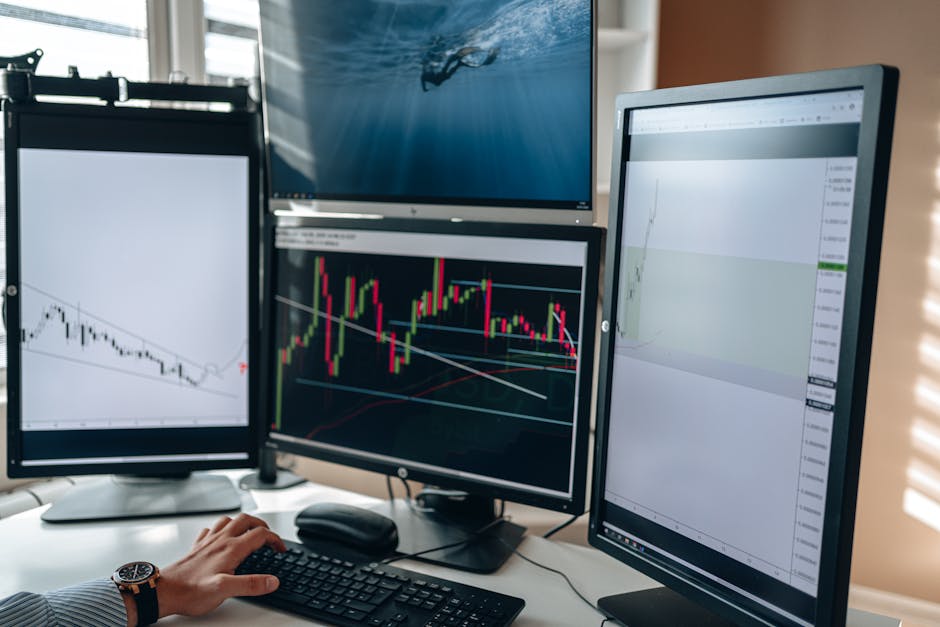
Before diving into specific recommendations, it is vital to understand the metrics used to evaluate these platforms. What exactly defines the best crypto exchange in world? There is no one-size-fits-all answer, as a professional day trader requires vastly different tools than a long-term holder buying Bitcoin for their retirement portfolio. However, every top-tier exchange must excel in the following foundational categories.
1. Ironclad Security Protocols
In the crypto industry, security is paramount. The history of digital assets is unfortunately littered with high-profile exchange hacks and collapses (such as Mt. Gox and, more recently, FTX). Top-tier exchanges mitigate these risks by storing the vast majority (typically 95% or more) of user funds in offline, air-gapped cold storage. Furthermore, they offer robust user-side security features, including mandatory Two-Factor Authentication (2FA), withdrawal address whitelisting, and anti-phishing codes.
2. Deep Liquidity
Liquidity refers to how easily an asset can be bought or sold at stable, transparent prices. An exchange with high liquidity has massive trading volume and deep order books. If you are trading on an illiquid exchange, you may suffer from “slippage”—where the price of the asset changes unfavorably between the time you place your order and the time it executes. The top global exchanges process billions of dollars in volume daily, ensuring your trades execute instantly at the expected price.
3. Transparent and Competitive Fees
High fees can eat into your investment returns faster than you might realize. Exchanges charge various fees, including deposit/withdrawal fees, spot trading fees, and margin borrowing fees. The industry standard for spot trading has settled around 0.10% to 0.60% per trade. We prioritize exchanges that offer transparent, low-cost fee tiers that reward users for higher trading volumes or for holding native exchange tokens.
4. Asset Selection and Pairs
While almost every exchange offers Bitcoin (BTC) and Ethereum (ETH), altcoin traders look for platforms that list hundreds of vetted projects. Furthermore, having a wide variety of trading pairs (e.g., trading ADA directly for SOL, rather than converting to a stablecoin first) provides traders with maximum flexibility.
Top 5 Crypto Exchanges Reviewed for 2024

After rigorous testing and market analysis, we have identified the five platforms that lead the global market. These exchanges have proven their resilience through bear markets, maintained high regulatory standards, and consistently delivered innovative features to their users.
1. Binance – The Global Volume Leader
When discussing the titans of the industry, Binance inevitably dominates the conversation. Founded in 2017 by Changpeng Zhao, Binance quickly scaled to become the largest cryptocurrency exchange by trading volume. It offers a staggering array of features, from basic spot trading to complex futures contracts, options, staking, and an extensive peer-to-peer (P2P) network.
Binance’s fee structure is one of its strongest selling points. Base spot trading fees are set at a highly competitive 0.10%, and these can be reduced even further if you pay your fees using Binance Coin (BNB), the platform’s native token. For advanced traders, Binance provides a highly customizable interface with advanced charting tools powered by TradingView.
However, it is worth noting that Binance has faced intense regulatory scrutiny in various jurisdictions. As a result, users in certain countries (like the US) are directed to localized, heavily restricted versions of the platform (like Binance.US).
- ✅ Pros: Industry-leading liquidity, incredibly low fees (0.10% base), massive selection of over 350+ altcoins, advanced trading tools.
- ❌ Cons: The interface can be overwhelming for total beginners, ongoing regulatory challenges in specific western jurisdictions.
2. Coinbase – The Best Choice for Beginners
Coinbase is the household name of the crypto industry, particularly in the United States. As a publicly traded company on the NASDAQ (COIN), Coinbase operates with a level of financial transparency and regulatory compliance that is practically unmatched in the space. This makes it a highly trusted harbor for institutional investors and complete beginners alike.
The standard Coinbase app offers a beautifully simple, streamlined interface where buying Bitcoin is as easy as buying a book online. Users can link their bank accounts or debit cards and make purchases with a few taps. Coinbase also offers an excellent “Learn and Earn” program, where users can earn free crypto by watching short educational videos about different blockchain projects.
For more experienced users who want to avoid Coinbase’s notoriously high simple-trade fees, “Coinbase Advanced” (formerly Coinbase Pro) offers a maker/taker fee structure that is much more competitive, alongside deep charting tools and advanced order types.
- ✅ Pros: Unmatched user-friendly interface, highly regulated and publicly traded, excellent educational resources, strong security track record.
- ❌ Cons: Standard app fees are quite high, fewer altcoins compared to global competitors, customer support can be slow during bull markets.
3. Kraken – The Security Pioneer
Founded in 2011, Kraken is one of the oldest cryptocurrency exchanges still in operation. Its longevity is a testament to its industry-leading security practices; Kraken has never suffered a major hack. The platform is renowned for its transparency, regularly conducting independent Proof of Reserves (PoR) audits to prove that user funds are backed 1:1.
Kraken appeals to a wide demographic. Beginners can use the standard Kraken app for straightforward purchases, while veterans can utilize Kraken Pro, which features a highly customizable interface, low fees, and deep liquidity across various fiat pairs (especially EUR and USD). Kraken also stands out for its exceptional customer support, offering 24/7 live chat with actual human representatives—a rarity in the crypto space.
- ✅ Pros: Flawless security history, excellent live customer support, transparent Proof of Reserves, robust staking options.
- ❌ Cons: Fiat deposit options can be limited depending on your geographic region, starter accounts have high instant-buy fees.
4. Bybit – The Derivatives Powerhouse
For traders who focus heavily on margin trading and complex derivative products, Bybit has rapidly become the platform of choice. Originally focused solely on perpetual contracts, Bybit has expanded into a comprehensive exchange offering spot trading, staking, and an NFT marketplace.
Bybit is famous for its exceptionally fast matching engine, boasting 100,000 transactions per second per trading pair. This ensures that the platform rarely experiences downtime or system overloads, even during periods of extreme market volatility. This reliability is crucial for day traders who use leverage and cannot afford system lag. The platform also offers excellent copy-trading features, allowing beginners to automatically mirror the trades of successful, experienced users.
- ✅ Pros: Lightning-fast matching engine with no system overloads, excellent liquidity for derivatives, user-friendly mobile app, robust copy-trading features.
- ❌ Cons: Not available to users in the United States, primarily geared toward advanced traders rather than long-term spot investors.
5. OKX – The Web3 Ecosystem Hub
OKX has rebranded and repositioned itself not just as an exchange, but as a gateway to the broader Web3 ecosystem. It offers a powerful exchange for spot and derivatives trading, alongside a fully integrated, non-custodial Web3 wallet. This allows users to seamlessly switch between centralized trading and decentralized finance (DeFi), NFTs, and dApps all within the same application.
OKX offers very competitive fees and a massive selection of global assets. They also feature a unique “trading bot” marketplace where users can deploy automated grid trading bots, DCA (Dollar Cost Averaging) bots, and arbitrage bots without needing to know how to code.
- ✅ Pros: Seamless integration between centralized exchange and decentralized Web3 wallet, built-in automated trading bots, massive asset selection.
- ❌ Cons: Not available to US residents, the abundance of features can cause a steep learning curve.
Exchange Comparison Snapshot
| Exchange | Best For | Base Spot Fee | Supported Coins | US Availability |
|---|---|---|---|---|
| Binance | Global Volume & Altcoins | 0.10% | 350+ | No (Binance.US only) |
| Coinbase | Beginners & Institutions | 0.40% / 0.60% | 240+ | Yes |
| Kraken | Security & Support | 0.16% / 0.26% | 230+ | Yes (Restricted in NY/WA) |
| Bybit | Derivatives & Margin | 0.10% | 400+ | No |
| OKX | Web3 & Automated Bots | 0.08% / 0.10% | 350+ | No |
Understanding Trading Fees: Maker vs. Taker
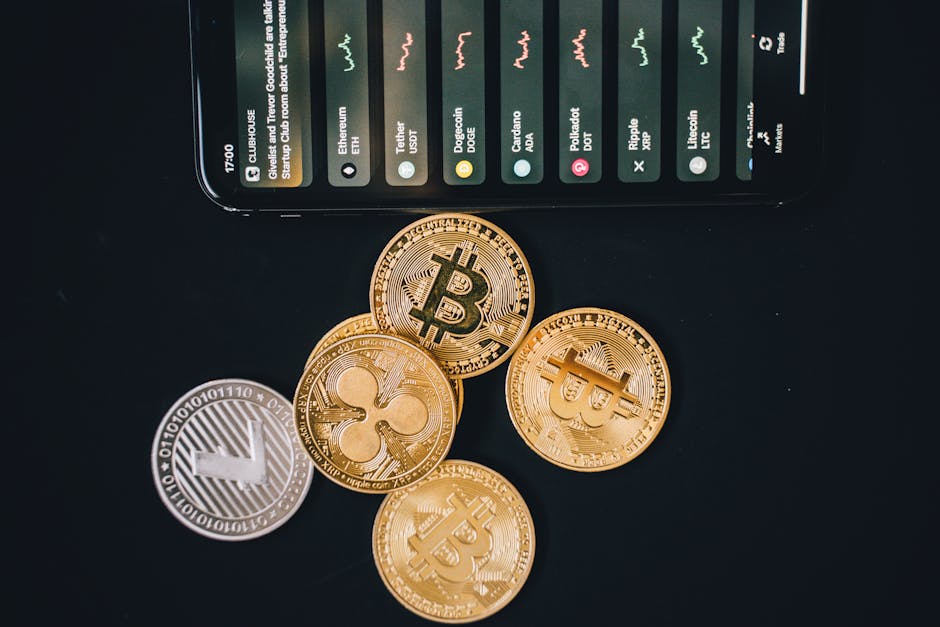
To truly maximize your returns, you must deeply understand how crypto exchanges charge you. The most common fee model across professional trading platforms is the Maker-Taker model. This model is designed to stimulate trading activity and ensure deep liquidity on the platform.
What is a Maker? You are a “maker” when you place an order that does not trade immediately. For example, if Bitcoin is at $60,000 and you place a limit order to buy at $59,000, your order goes onto the order book. You are “making” liquidity for the exchange. Because exchanges want deep order books, they reward makers with lower trading fees.
What is a Taker? You are a “taker” when you place an order that executes immediately against an existing order on the book. If you place a market order to buy Bitcoin right now at the current price, you are “taking” liquidity away from the exchange. Consequently, taker fees are almost always slightly higher than maker fees.
Beyond spot trading fees, you must also consider:
- Deposit Fees: Crypto deposits are usually free. Fiat deposits via bank transfer (ACH, SEPA) are often free or very cheap, while debit/credit card purchases carry massive premiums (often 3% to 5%).
- Withdrawal Fees: Withdrawing fiat to your bank might incur a small flat fee. Withdrawing crypto incurs a network fee. Some exchanges subsidize this, while others mark it up for profit. Always check a platform’s withdrawal fee schedule before committing capital.
- Inactivity Fees: Some platforms charge you if you leave fiat sitting in an account without trading for over a year.
Crucial Security Tips for Protecting Your Assets

Finding the top-rated platforms is only half the battle. Once you have acquired cryptocurrency, the responsibility of safeguarding it falls on your shoulders. Centralized exchanges are massive honeypots for cybercriminals. While top platforms have multi-layered security, the golden rule of crypto remains: “Not your keys, not your coins.”
If you leave your funds on an exchange, you are trusting a third party to hold your assets. If the exchange goes bankrupt or is hacked, you become an unsecured creditor. To mitigate this risk, any long-term holdings (assets you don’t plan to trade within the next 30 days) should be moved to a non-custodial hardware wallet.
Hardware wallets are physical devices that store your private keys offline. When you want to send crypto, you plug the device into your computer and physically press a button to sign the transaction. Because the keys never touch your internet-connected computer, remote hackers cannot access your funds.
🛒 Ledger Nano X Bluetooth Crypto Hardware Wallet
View on Amazon →
As an Amazon Associate, we earn from qualifying purchases.
Even for the funds you must keep on the exchange for active trading, you should maximize your account security. Do not rely on SMS for Two-Factor Authentication (2FA), as SIM-swapping attacks are incredibly common. Instead, use an authenticator app (like Google Authenticator or Authy), or better yet, a physical security key.
🛒 YubiKey 5C NFC Two-Factor Authentication Security Key
View on Amazon →
As an Amazon Associate, we earn from qualifying purchases.
Essential Exchange Security Checklist:
- Enable App-based or Hardware-based 2FA immediately.
- Set up “Withdrawal Whitelisting” so funds can only be sent to your personal wallet addresses.
- Enable Anti-Phishing codes, which append a secret word to all official exchange emails, ensuring you never fall for a fake email.
- Use a unique, highly complex password and a dedicated email address specifically for your crypto exchange accounts.
Centralized vs. Decentralized Exchanges (CEX vs. DEX)

As you dive deeper into the crypto ecosystem, you will encounter Decentralized Exchanges (DEXs) like Uniswap, PancakeSwap, and Jupiter. It is vital to understand the difference between these and the Centralized Exchanges (CEXs) we have reviewed above.
A Centralized Exchange (CEX) is operated by a traditional corporate entity. They act as intermediaries, holding your funds in custody, providing customer support, and matching buyers and sellers using a central order book. Because they interact with fiat money (USD, EUR), they are heavily regulated and require users to complete KYC (Know Your Customer) identity verification.
A Decentralized Exchange (DEX), on the other hand, operates entirely through smart contracts on a blockchain. There is no company, no CEO, and no customer support. Users trade directly from their personal wallets using automated market maker (AMM) protocols. You do not need to create an account or provide an ID; you simply connect your wallet and trade.
| Feature | Centralized Exchange (CEX) | Decentralized Exchange (DEX) |
|---|---|---|
| Custody | Exchange holds your funds | You hold your funds in your wallet |
| Fiat On-Ramp | Yes (Bank, Credit Card) | No (Crypto-to-Crypto only) |
| Identity Verification | Strict KYC/AML required | Anonymous, no account needed |
| User Experience | Similar to traditional stock brokers | Requires Web3 knowledge |
Step-by-Step: How to Open Your First Account

Ready to take the plunge? If you have selected the platform that aligns with your financial goals, the onboarding process is relatively uniform across the top-tier providers. Here is exactly what you should expect when setting up an account on the best crypto exchange in world for your needs.
Step 1: Registration and Email Verification
Navigate to the official website of your chosen exchange. Ensure you are on the correct domain (e.g., coinbase.com, kraken.com) and not a phishing site. Provide a secure email address and generate a strong password. You will be sent an email containing a verification link or a one-time code. Enter this to confirm your email address.
Step 2: Securing the Account
Before depositing a single cent, navigate to the platform’s security settings. Bind an authenticator app (like Google Authenticator) to your account. This will require you to scan a QR code with your phone. Pro tip: Write down the alphanumeric recovery code provided during this step and store it in a physical safe. If you lose your phone, this code is the only way to bypass 2FA and access your account.
Step 3: KYC Verification
To comply with global Anti-Money Laundering (AML) laws, you must verify your identity. This process typically requires you to upload a clear photo of your government-issued ID (passport or driver’s license) and take a live selfie using your phone or webcam. Most modern exchanges use automated AI systems for verification, meaning your account is usually approved within 5 to 10 minutes.
Step 4: Funding Your Account
Navigate to the “Deposit” or “Wallet” section. You can choose to deposit fiat currency (USD, EUR, GBP) via a bank transfer. ACH transfers in the US or SEPA transfers in Europe are typically free but may take 1-3 business days to clear. Avoid using credit cards if possible, as the convenience fees will drastically reduce your purchasing power.
Step 5: Executing Your First Trade
Once your funds have settled, navigate to the spot trading interface. Find the trading pair you wish to use (e.g., BTC/USD). To keep things simple and ensure you get the exact price you want, use a “Limit Order.” Enter the price at which you are willing to buy, and the amount of fiat you want to spend. Click “Buy,” and wait for the market to hit your price target.
🛒 SafePal S1 Crypto Hardware Wallet
View on Amazon →
As an Amazon Associate, we earn from qualifying purchases.
Conclusion: Which Platform is Right for You?
Finding the best crypto exchange in world ultimately comes down to your personal investment style, technical expertise, and geographic location. The cryptocurrency market has matured significantly, and the platforms supporting it have evolved into massive, feature-rich financial hubs.
To summarize our findings:
- If you are an absolute beginner or an institutional investor prioritizing regulatory safety and a clean user interface, Coinbase is the undisputed champion.
- If you are a global user seeking the lowest possible fees, the deepest liquidity, and access to hundreds of altcoins, Binance remains the industry king.
- If you prioritize sleep-well-at-night security, transparent proof-of-reserves, and real human customer support, Kraken is an exceptional choice.
- If you are a professional day trader looking for high-leverage derivatives and zero system downtime, Bybit offers the best matching engine in the business.
- If you want to live purely on-chain and seamlessly navigate between centralized trading and Web3 DeFi protocols, OKX provides the ultimate all-in-one ecosystem.
Remember that the crypto market operates 24/7/365. It is highly volatile, and risk management should always be your top priority. Choose a reputable exchange, take advantage of limit orders to minimize fees, enable hardware-backed two-factor authentication, and always move your long-term investments to a cold storage hardware wallet. Happy trading!