
Best Remote Work Tools and Services for 2026
When it comes to scaling a startup in 2026, investing in the right remote work tools and services is no longer optional—it is the very foundation of your business infrastructure. The global shift toward distributed work has evolved rapidly over the past decade. Today, the focus is no longer merely on keeping teams connected; it is about hyper-optimizing workflows, integrating advanced artificial intelligence, protecting sensitive data with robust zero-trust security, and supporting the mental well-being of a global workforce. Startups that fail to modernize their tech stacks risk falling behind in both productivity and talent acquisition.
In this comprehensive guide, we will dive deep into the essential software, hardware, and operational platforms that distributed startups need to thrive in 2026. Whether you are bootstrapping a lean team of three or scaling a unicorn with hundreds of employees across multiple time zones, building a resilient remote ecosystem is key. We will cover everything from next-generation asynchronous communication platforms to global payroll services that take the headache out of compliance.
Table of Contents
1. The Evolution of Distributed Teams in 2026
The concept of remote work has matured significantly. In 2026, we are witnessing the “Third Wave” of distributed work. The first wave was characterized by emergency adaptations and basic connectivity. The second wave saw the normalization of hybrid schedules and cloud-based task managers. Now, the third wave is defined by spatial computing, AI agents acting as autonomous team members, and fully asynchronous operational models.
Startups in 2026 operate in a highly competitive global market. Talent density is no longer restricted by geographic borders. A startup founded in Berlin might have its lead developer in Nairobi, its marketing chief in Tokyo, and its customer success team scattered across South America. To manage this beautifully chaotic global dance, conventional synchronous meetings are being rapidly phased out. Forcing a team member to attend a 3:00 AM Zoom call is now considered an archaic and toxic practice. Instead, successful startups are leaning heavily into rich, context-aware asynchronous workflows.
Furthermore, artificial intelligence has fundamentally altered how remote work happens. AI assistants now join meetings, summarize notes, assign action items, and even draft initial code commits or marketing copy based on strategic discussions. This level of automation means that human employees are shifting their focus from menial task execution to high-level strategic thinking and creative problem-solving. Understanding this paradigm shift is crucial before selecting your software stack.
2. Essential Communication Platforms

Communication is the lifeblood of any distributed startup. However, the sheer volume of notifications, emails, and direct messages can quickly lead to burnout. In 2026, the goal is to communicate with greater clarity while utilizing fewer synchronous interruptions. Let us break down the leading platforms dominating the market.
Next-Generation Video Conferencing
While asynchronous work is preferred, synchronous video calls remain necessary for team bonding, complex brainstorming, and critical decision-making. Platforms have evolved to reduce “Zoom fatigue” and enhance accessibility.
- Zoom 3.0: Zoom remains a titan, but its 2026 iteration is heavily augmented with real-time language translation, immersive spatial audio, and AI-driven eye-contact correction, ensuring that participants always look engaged even if they are reading notes on another screen.
- Microsoft Teams Spatial: Integrated deeply with mixed reality, Microsoft Teams now allows remote workers using AR headsets to join virtual war rooms, manipulating 3D models and whiteboards as if they were in the same physical space.
- Google Meet AI: Google has integrated its generative AI directly into Meet, providing real-time fact-checking and data retrieval during calls. If a client asks for a metric, the AI instantly pulls it from your database and displays it in the chat.
Of course, crisp audio is vital for these high-fidelity meetings. Poor microphone quality can derail a crucial investor pitch or team sync. High-quality personal hardware has become a standard startup stipend expense.
🛒 Sony WH-1000XM5 wireless noise canceling headphones
View on Amazon →
As an Amazon Associate, we earn from qualifying purchases.
Asynchronous Messaging and Threads
The traditional instant messaging model (like early versions of Slack) is often criticized for creating a reactive, hyper-distracted culture. The solution for 2026 is threaded, deeply contextual messaging.
- Twist by Doist: Twist remains the champion of asynchronous communication. By forcing all conversations into structured threads rather than continuous chat streams, it eliminates the pressure to reply instantly and keeps institutional knowledge organized.
- Slack (Context Edition): Slack has adapted by introducing “Deep Work” modes and automated context-gathering. In 2026, Slack’s AI agents automatically filter out trivial messages when you are in focus mode, compiling a succinct digest for you to review later.
- Loom & Yac: Video and audio messaging platforms have become indispensable. Instead of scheduling a 30-minute meeting to explain a complex pull request or design mockup, team members record 3-minute screen shares. These platforms now feature automatic transcription, searchable text, and sentiment analysis.
3. Project Management and Collaboration

If communication tools are the nervous system of your startup, project management tools are the skeleton. They provide the structure necessary to bring products to market efficiently. The defining characteristic of 2026 project management tools is predictive resource allocation—software that not only tracks what needs to be done but predicts bottlenecks before they happen.
Agile Task Tracking
Startups need tools that balance flexibility with strict accountability. The days of clunky, rigid Gantt charts are largely over for modern software teams.
- Linear: Linear has captured the hearts of engineering and product teams in 2026. Its keyboard-centric design, blazing-fast interface, and seamless GitHub/GitLab integrations make it the gold standard for issue tracking. Its new AI triage feature automatically routes bugs to the most qualified developer based on their recent commit history.
- Notion: Notion has evolved from a simple wiki into an all-in-one workspace operating system. Startups use it to build customized CRMs, content calendars, and company handbooks. In 2026, Notion’s native database automations rival dedicated enterprise platforms, allowing for incredibly complex, customized workflows without writing a single line of code.
- Monday.com & Asana: These platforms remain excellent choices for cross-functional teams, particularly marketing and operations. Their robust integrations and visual dashboarding capabilities make it easy for founders to get a bird’s-eye view of company-wide progress.
Visual Collaboration
Replicating the energy of an in-person whiteboard session is a notoriously difficult remote work challenge. However, digital whiteboarding has reached new heights.
- Miro & FigJam: These infinite canvas tools are crucial for user story mapping, retrospectives, and architecture diagrams. They now feature AI generators—simply type “generate a user journey map for a fintech onboarding flow,” and the platform will populate a fully structured, editable diagram in seconds.
| Tool Name | Primary Use Case | Pros | Cons |
|---|---|---|---|
| Linear | Engineering / Product Tracking | ✅ Blazing fast ✅ Developer-friendly UI |
❌ Steep learning curve for non-technical staff |
| Notion | Knowledge Base / Custom Workflows | ✅ Highly customizable ✅ Excellent AI integration |
❌ Can become messy without strict governance |
| Miro | Visual Brainstorming | ✅ Infinite canvas ✅ Great templates |
❌ High resource usage on older laptops |
While software provides the framework, hardware ensures the physical comfort required to utilize these tools for hours on end. A painful workstation drastically reduces output, making ergonomic investments a top priority.
🛒 Logitech MX Master 3S wireless mouse
View on Amazon →
As an Amazon Associate, we earn from qualifying purchases.
4. Security, HR, and Operations Infrastructure

The most effective remote work tools and services encompass more than just productivity; they must address the rigorous demands of global operations, legal compliance, and cybersecurity. As startups scale their distributed footprint in 2026, they face unprecedented challenges in managing payroll across dozens of jurisdictions and securing company data on personal networks.
Global HR and Payroll Platforms
Hiring internationally used to require establishing complex local entities, hiring specialized tax lawyers, and navigating a labyrinth of local labor laws. Today, Employer of Record (EOR) services have abstracted this complexity entirely. These platforms act as the legal employer of your remote staff, handling local taxes, benefits, and compliance, while you retain full directional control over their work.
- Deel: Deel remains a juggernaut in the global payroll space. In 2026, their platform offers automated visa processing, localized stock option administration, and instant crypto payouts for contractors. It is an indispensable tool for startups looking to hire the best talent globally without administrative friction.
- Rippling: Moving beyond just HR, Rippling serves as a unified workforce management platform. When you hire a new remote employee in London, Rippling can simultaneously draft their employment contract, enroll them in localized health insurance, order and ship a pre-configured MacBook, and create their accounts across your entire software stack (Google Workspace, Slack, Linear) with the correct security permissions—all in about 90 seconds.
- Oyster: Heavily focused on democratizing access to global talent, Oyster provides deep insights into local salary benchmarks and benefits expectations, helping startups make competitive, equitable offers regardless of the candidate’s location.
Cybersecurity for Distributed Startups
The traditional “castle and moat” security perimeter is completely obsolete in 2026. When your employees are working from coffee shops in Bali, co-working spaces in Austin, and home networks in Lisbon, you must adopt a Zero Trust security architecture.
- Zero Trust Network Access (ZTNA): Services like Cloudflare One and Tailscale have largely replaced legacy VPNs. Tailscale, built on WireGuard, allows startups to create secure, peer-to-peer mesh networks that connect devices seamlessly, regardless of their physical location. It verifies the identity and security posture of every device before granting access to internal startup resources.
- Identity and Access Management (IAM): Okta and 1Password Business ensure that employees use strong, unique credentials and multifactor authentication (MFA) for every service. In 2026, passwordless authentication utilizing biometrics and physical security keys (like YubiKey) is the standard baseline for startup security.
- Mobile Device Management (MDM): Platforms like Kandji (for Apple ecosystems) and Microsoft Intune allow IT administrators to enforce security policies, push software updates, and remotely wipe devices if they are lost or stolen, ensuring that confidential startup IP remains protected anywhere in the world.
| Service Category | Leading Platforms (2026) | Startup Benefit |
|---|---|---|
| Global Payroll (EOR) | Deel, Rippling, Oyster | Hire legally in 150+ countries without establishing local entities. |
| Zero Trust Networking | Tailscale, Cloudflare One | Secure internal apps across public Wi-Fi without VPN bottlenecks. |
| Password & Identity | 1Password Business, Okta | Mitigate phishing and unauthorized access via strict IAM policies. |
5. Employee Wellness and Hardware Support

A major learning curve from the early days of remote work was the hidden toll it takes on employee mental health and physical well-being. Burnout, isolation, and sedentary lifestyles are significant risks. By 2026, progressive startups recognize that providing software is not enough; they must proactively support the holistic health of their remote teams.
Wellness Programs and Virtual Co-Working
Isolation is the enemy of retention. To combat this, startups are turning to innovative community-building tools.
- Virtual Office Spaces: Platforms like Gather.town and Teamflow have evolved significantly. They provide a top-down, video-game-like interface where employees move avatars around a virtual office. It enables spontaneous “watercooler” conversations through spatial audio—when your avatar walks near a colleague’s avatar, your video and audio fade in smoothly. It brings serendipity back to the remote workplace.
- Mental Health Subscriptions: Offering specialized wellness benefits is now a standard hiring perk. Startups frequently provide corporate subscriptions to apps like Headspace or Calm for mindfulness. Moreover, platforms like Spring Health offer personalized mental healthcare, connecting remote employees with localized therapists and coaching services globally.
- Asynchronous Fitness Challenges: Tools like Strava (with enterprise team integrations) allow distributed teams to engage in friendly, timezone-agnostic fitness competitions, fostering camaraderie and encouraging employees to step away from their monitors.
The Home Office Stipend Ecosystem
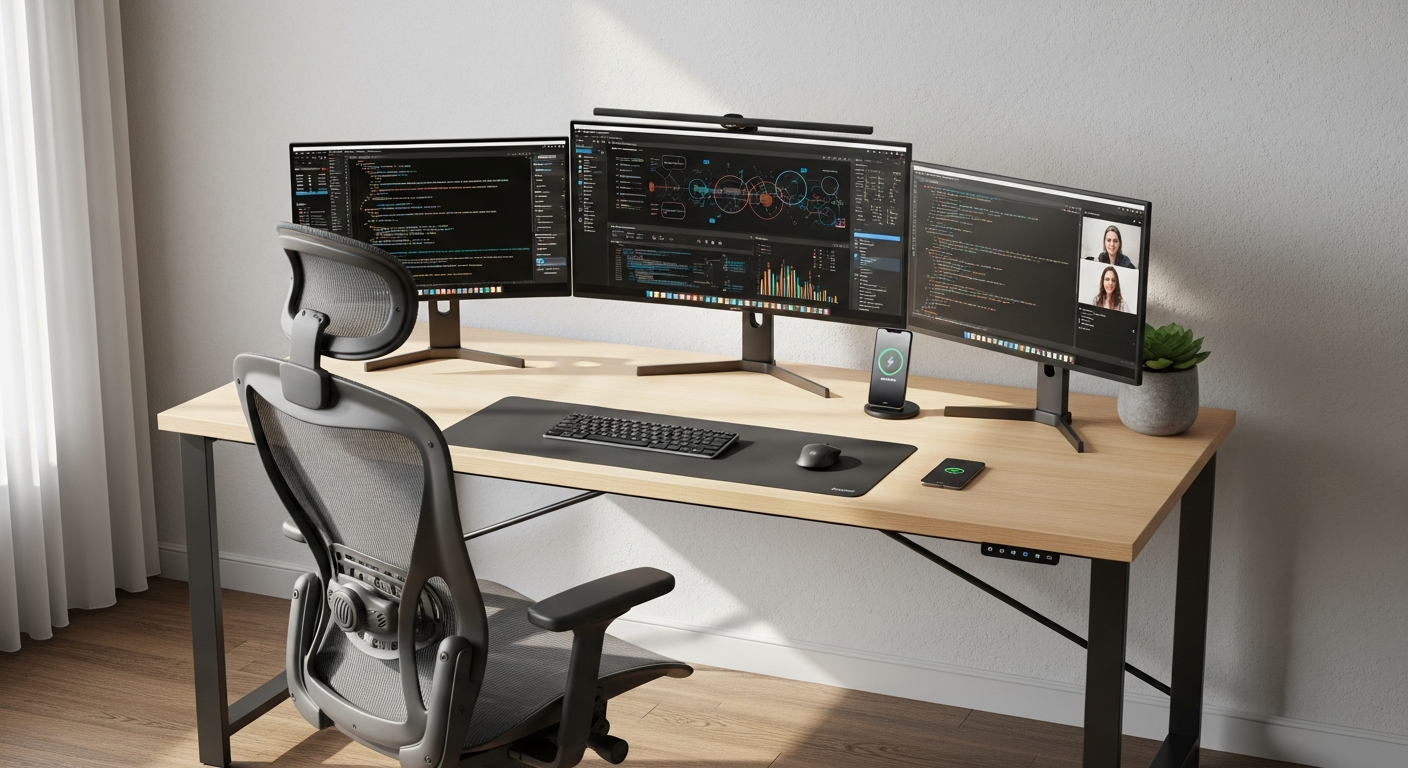
Working from a kitchen table on a 13-inch laptop is detrimental to long-term productivity and physical posture. In 2026, startups routinely offer an upfront “Home Office Build-Out” stipend, alongside recurring monthly allowances for internet and coworking space memberships.
Employees are encouraged to invest in ergonomic chairs, mechanical keyboards tailored for typing comfort, secondary monitors, and standing desks. Proper physical hardware acts as a physical anchor for remote work, signaling to the brain that it is time to focus, while protecting the spine and wrists from chronic injury.
🛒 Vari Electric Standing Desk 60×30
View on Amazon →
As an Amazon Associate, we earn from qualifying purchases.
Additionally, specialized hardware procurement platforms like Hofy or Firstbase.hq have streamlined this process. Instead of reimbursing a multitude of scattered Amazon receipts, a startup can allocate a digital budget to a new hire. The employee logs into the Firstbase portal, selects their preferred desk, chair, and monitor setup, and the platform handles the delivery, maintenance, and eventual return or recycling of the equipment directly.
6. Conclusion
The transition to a highly functional distributed startup does not happen by accident; it requires deliberate design and a willingness to embrace new paradigms. The current year is 2026, and the expectation for technological fluency has never been higher. Workers expect seamless digital experiences, ironclad security that doesn’t hinder their workflows, and holistic support for their global lifestyles.
By thoughtfully curating your remote work tools and services, you build a resilient, agile, and happy distributed team. From utilizing Linear for rapid issue tracking, to leveraging Deel for borderless hiring, to implementing Tailscale for unbreachable security, the tools you choose will dictate your operational velocity. Remember that software alone cannot fix a broken culture, but the right software, paired with trust, asynchronous workflows, and clear documentation, will propel your startup far ahead of legacy competitors.
Take the time to audit your current tech stack this quarter. Ask your team where they feel friction, ruthlessly eliminate redundant synchronous meetings, and invest the savings back into their physical and mental well-being. The future of work is already here—make sure your startup is equipped to lead it.



![The Best Monitors for Work From Home India [2024]](https://pikinfo.com/wp-content/uploads/2026/03/best-monitors-work-from-home-india-thumb-768x432.jpg)