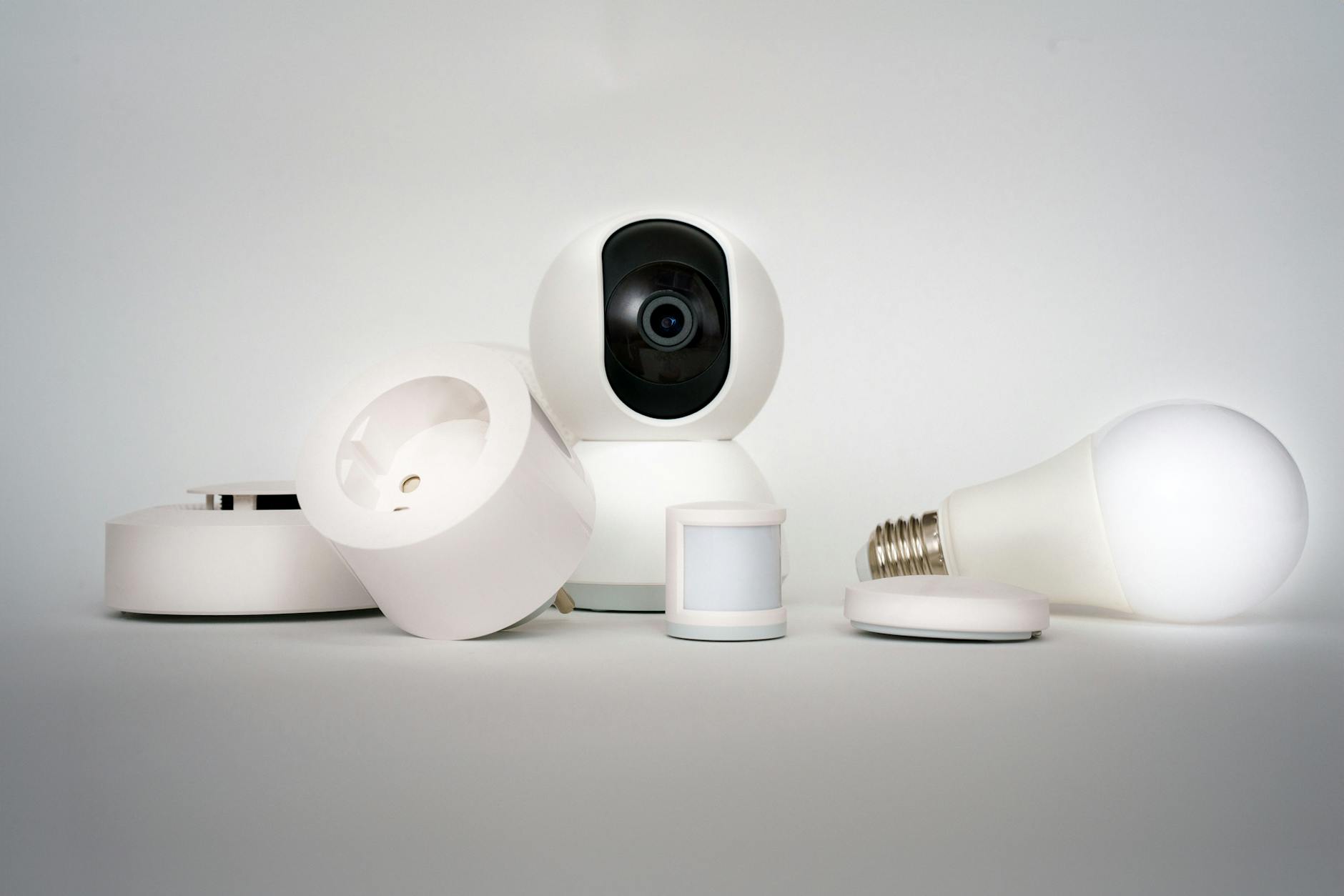
15 Best Smart Home Devices Examples for 2024
Welcome to the era of home automation, where your living space anticipates your needs, secures your property, and helps you save energy—all with a few taps on your smartphone or a simple voice command. If you are just beginning your journey into the Internet of Things (IoT), you might be wondering where to start. With thousands of gadgets on the market, finding practical, reliable smart home devices examples can feel overwhelming.
Whether you want to wake up to a freshly brewed cup of coffee, ensure your doors lock automatically when you leave, or drastically reduce your monthly electricity bill, there is a smart device built for the task. In this comprehensive guide, we will break down the most popular and effective categories of home automation, providing you with actionable insights to transform your traditional house into a futuristic, intelligent home.
Table of Contents
What Are Smart Home Devices?

At their core, smart home devices are everyday household items—like lightbulbs, thermostats, and doorbells—that have been upgraded with internet connectivity and advanced sensors. These devices communicate with one another, with a central hub, or directly with your smartphone, allowing you to control them remotely or set up automated routines.
This network of connected gadgets is often referred to as the Internet of Things (IoT). Instead of manually flipping a switch or turning a dial, IoT technology allows you to create a home environment that reacts to your presence, the time of day, or even the weather outside.
How Do They Communicate?
Smart devices rely on various wireless protocols to talk to each other. While Wi-Fi is the most common, it can consume a lot of power and bog down your router if you have too many devices. Because of this, many smart home gadgets use specialized, low-power protocols:
- Wi-Fi: Best for high-bandwidth devices like security cameras and smart TVs.
- Bluetooth: Useful for short-range connections, often used for initial device setup.
- Zigbee & Z-Wave: Low-power mesh networks where devices pass signals to one another, extending the overall range and reliability of your smart home.
- Thread: A newer, faster, and highly reliable mesh protocol that is quickly becoming the industry standard.
Entertainment & Smart Hubs

For most beginners, the entry point into home automation starts in the living room. Entertainment devices and smart hubs act as the brain of your connected home, allowing you to issue voice commands and orchestrate complex routines with ease.
1. Smart Speakers and Voice Assistants
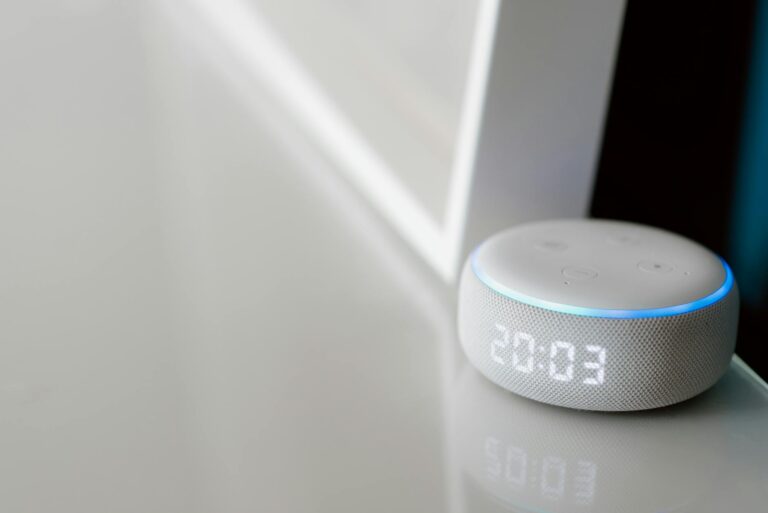
Smart speakers are arguably the most essential piece of the home automation puzzle. Devices powered by Amazon Alexa, Google Assistant, or Apple Siri do much more than play music. They serve as your voice-activated command center. You can ask them to check the weather, read your calendar, set timers, and, most importantly, control your other smart gadgets.
Pros & Cons of Smart Speakers:
✅ Hands-free control of your entire home ecosystem.
✅ Extremely affordable entry-level models available.
✅ Constant software updates add new skills and features.
❌ Privacy concerns regarding always-listening microphones.
❌ Audio quality on base models isn’t designed for audiophiles.
🛒 Amazon Echo Dot 5th Gen smart speaker
View on Amazon →
As an Amazon Associate, we earn from qualifying purchases.
2. Smart Displays
Think of a smart display as a smart speaker with a touchscreen. These devices offer all the voice-control benefits of a standard speaker but add visual context. You can watch step-by-step recipe videos in the kitchen, view the feed from your front door security camera, or make video calls to family members.
3. Smart TVs and Streaming Devices
Modern Smart TVs integrate seamlessly into your broader home ecosystem. You can dim the living room lights automatically when you press “Play” on a movie, or use your voice remote to search for specific shows without endlessly clicking through menus. If you have an older TV, smart streaming sticks (like Roku, Apple TV, or Chromecast) can instantly modernize your setup.
Lighting & Power Solutions

When searching for the most visually impactful smart home devices examples, lighting usually takes the top spot. Smart lighting and power solutions offer convenience, aesthetic upgrades, and noticeable energy savings.
4. Smart LED Bulbs
Smart bulbs replace your standard incandescent or LED bulbs. They connect to your Wi-Fi or a dedicated hub, allowing you to change their brightness, color temperature (from cool white to warm amber), and even display millions of different colors. You can group bulbs by room, schedule them to turn on at sunset, or sync them to pulse with your music and movies.
5. Smart Plugs
What if you have a favorite vintage lamp, a coffee maker, or a box fan that isn’t “smart”? Enter the smart plug. You plug this device into a standard wall outlet, and then plug your “dumb” appliance into it. You can now turn the power supply on or off remotely via an app or voice command.
6. Smart Wall Switches
If you have a room with multiple recessed lights controlled by a single switch, replacing every individual bulb can be expensive. A smart wall switch is a more economical solution. By wiring a smart switch into your wall, you make the entire circuit smart, allowing you to control standard bulbs via your phone or voice.
| Device Type | Best Use Case | Installation Difficulty | Cost Level |
|---|---|---|---|
| Smart Bulbs | Lamps, color-changing ambiance | Very Easy (Twist in) | Medium to High (per bulb) |
| Smart Plugs | Non-smart appliances (fans, coffee makers) | Very Easy (Plug in) | Low |
| Smart Switches | Rooms with multiple built-in ceiling lights | Moderate (Requires electrical wiring) | Medium |
🛒 Philips Hue White and Color Ambiance Smart Bulb Starter Kit
View on Amazon →
As an Amazon Associate, we earn from qualifying purchases.
Home Security & Access Control

Protecting your family and property is paramount. Let’s explore some vital smart home devices examples designed specifically to monitor your home and control who has access to it. Modern smart security offers peace of mind from anywhere in the world.
7. Video Doorbells
The video doorbell has single-handedly revolutionized neighborhood security. These devices feature wide-angle, high-definition cameras, motion sensors, and two-way audio. When someone approaches your porch or rings the bell, you receive an instant alert on your phone. You can see who is there, speak to delivery drivers, and record footage of potential package thieves.
8. Smart Locks
Say goodbye to fumbling for your keys in the dark. Smart locks replace your traditional deadbolt, allowing you to unlock your door using a smartphone app, a PIN code keypad, or even fingerprint recognition.
Best of all, you can issue temporary digital “keys” to dog walkers, house cleaners, or visiting relatives, which expire at a set time. You can also configure your lock to auto-lock after a certain number of minutes, ensuring your house is never accidentally left unsecured.
Pros & Cons of Smart Locks:
✅ Keyless entry is incredibly convenient.
✅ Activity logs show you exactly who entered your home and when.
✅ Integration with smart lights (turn on hallway lights when unlocked).
❌ Requires battery replacements every few months.
❌ Installation requires basic carpentry/hardware skills.
9. Indoor and Outdoor Security Cameras
Wi-Fi-enabled security cameras have become significantly cheaper and more powerful. Outdoor cameras are weather-resistant and feature infrared night vision, while indoor cameras often include physical privacy shutters. Advanced models use onboard Artificial Intelligence (AI) to differentiate between a person, an animal, or a vehicle, ensuring you only receive notifications for things that matter.
🛒 Ring Video Doorbell Pro 2
View on Amazon →
As an Amazon Associate, we earn from qualifying purchases.
Climate Control & Energy Efficiency

While entertainment and lighting are fun, climate control devices are where you actually start seeing a return on your investment. By intelligently managing your home’s heating and cooling, these devices pay for themselves in reduced utility bills over time.
10. Smart Thermostats
A smart thermostat replaces your traditional wall thermostat. Its primary benefit is learning your family’s schedule and temperature preferences. For example, it can automatically lower the heat when everyone leaves for work and warm the house back up just before you return.
Many smart thermostats utilize “geofencing.” By tracking the location of your smartphone, the thermostat knows when you are miles away from home (switching to Eco mode) and when you cross the boundary to return (switching back to Comfort mode).
| Feature | Traditional Programmable Thermostat | Smart Thermostat |
|---|---|---|
| Control Method | Manual dial or complex on-device buttons | App, Voice Control, Touchscreen |
| Scheduling | Rigid daily/weekly schedules | AI-driven learning, adapts to your actual habits |
| Remote Access | None | Yes, from anywhere in the world |
| Energy Tracking | None | Detailed monthly energy usage reports |
11. Smart Air Purifiers and Humidifiers
Indoor air quality is crucial for health. Smart air purifiers contain integrated sensors that monitor the levels of dust, pollen, and volatile organic compounds (VOCs) in your home. When air quality drops—perhaps while you’re cooking or when allergy season peaks—the purifier automatically ramps up its fan speed to clean the air. The companion app will alert you precisely when it’s time to order and replace the HEPA filters.
12. Smart Motorized Blinds
Motorized window treatments are a fantastic energy-saving addition. In the summer, smart blinds can automatically close during the hottest part of the afternoon to block out solar heat, reducing the strain on your air conditioning. In the winter, they can open during the day to let natural sunlight warm the room.
🛒 Google Nest Learning Thermostat 3rd Generation
View on Amazon →
As an Amazon Associate, we earn from qualifying purchases.
Kitchen & Cleaning Automation

Chores are an inevitable part of life, but technology has finally reached a point where it can take over some of the most tedious domestic tasks. Automation in cleaning and kitchen prep is rapidly evolving.
13. Robot Vacuums and Mops
Gone are the days when robot vacuums clumsily bumped into walls and tumbled down stairs. Today’s premium robot cleaners use LiDAR (Light Detection and Ranging) lasers or AI camera vision to map your home’s exact floor plan. You can use your phone to draw “no-go zones” around pet bowls or tangled wires. Advanced models even feature self-emptying base stations, meaning you only have to take out the trash bag once every month or two.
Pros & Cons of Robot Vacuums:
✅ Maintains daily cleanliness with zero physical effort.
✅ Easily slides under beds and heavy furniture.
✅ Self-emptying bins drastically reduce maintenance.
❌ High-end models with mapping are significant investments.
❌ Can still struggle with loose clothing or pet accidents on the floor.
14. Smart Refrigerators
Modern smart fridges feature massive touch screens on the doors. They allow you to maintain family calendars, stream music, and look up recipes. More importantly, internal cameras let you peek inside your fridge from the grocery store via your smartphone, so you never have to wonder if you’re out of milk again.
15. Smart Ovens and Microwaves
Smart ovens allow you to preheat your appliance on your drive home from work. They can download specialized cooking profiles for different recipes, ensuring your roasts and baked goods are cooked at the exact right temperature for the correct duration. Some models even feature internal cameras to monitor browning without opening the door and losing heat.
Choosing the Right Ecosystem (Matter & Thread)
If you purchase a dozen smart devices from a dozen different brands, you might end up with a dozen different apps on your phone. This is exactly what you want to avoid. To build a truly cohesive home, you need to commit to an ecosystem or rely on the newest universal standard.
The Big Three Ecosystems
- Amazon Alexa: Offers the widest compatibility with third-party devices. Ideal if you want a massive range of choices and affordable hardware.
- Google Home: Excels in search queries, natural language processing, and integration with Android devices and Google services (like Maps and Calendar).
- Apple HomeKit: The best choice for users deeply entrenched in the Apple ecosystem (iPhone, Mac, Apple Watch). Known for strict security standards and local processing.
The Future is Matter
For years, a major headache in home automation was compatibility. A bulb might work with Alexa but not Apple HomeKit. Fortunately, the tech industry has united to create Matter.
Matter is a universal smart home standard. If a device has the Matter logo on the box, it is guaranteed to work seamlessly with Alexa, Google Assistant, Apple HomeKit, and Samsung SmartThings. As you shop for devices, prioritizing Matter-compatible products is the best way to future-proof your investment.
Conclusion
Building an automated living space doesn’t have to happen overnight. The best approach is to identify your biggest daily friction points and solve them one by one. Do you constantly leave lights on? Start with a few smart bulbs. Worried about package thieves? A video doorbell is your best first step. Tired of waking up to a freezing house? A smart thermostat will change your mornings forever.
I hope these smart home devices examples have inspired you to start upgrading your house. By choosing the right ecosystem, prioritizing security, and focusing on devices that genuinely improve your daily life, you can create a home that works tirelessly in the background to keep you safe, comfortable, and entertained.


![The Best Monitors for Work From Home India [2024]](https://pikinfo.com/wp-content/uploads/2026/03/best-monitors-work-from-home-india-thumb-768x432.jpg)