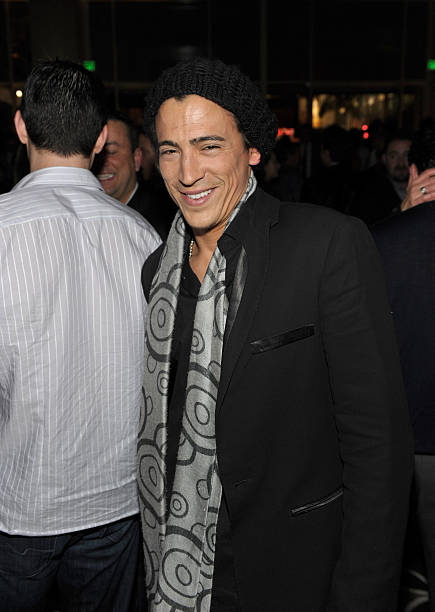
One cent. That’s what Andrew Keegan sometimes gets paid when you stream a show he was in.
Not a typo. According to E! Online (May 26, 2026), Keegan has received residual checks as low as $0.01 from past television and film work — including stuff from his peak 90s run. The guy played the villain you loved to hate in one of the most rewatched teen films of that decade, and somewhere, a studio is cutting him a check for a penny.
That detail alone tells you more about how Hollywood actually works than most industry explainers ever will. But there’s more going on with Keegan right now than just a good anecdote about broken actor compensation. He’s got three projects in development for 2026, he’s been doing the podcast circuit, and he sat down to finally address the “cult” thing that’s been following him around since the 2010s. So — who is Andrew Keegan in 2026, and why are people suddenly paying attention again?
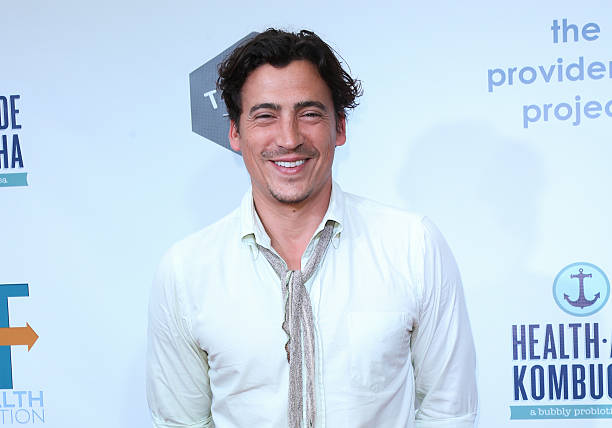
From ‘Camp Nowhere’ to Joey Donner — the actual career timeline
Keegan was born in Shadow Hills, California, and got his first real screen credit in Camp Nowhere (1994) — a supporting role, nothing headline-grabbing, but it got him in the door. The same year, he landed a main cast slot on ABC’s Thunder Alley (Season 2, 1994–1995), playing Jack Kelly. That’s the role that put him on the network radar. Not a lot of people remember Thunder Alley in 2026, but at the time it was a legitimate primetime gig for a teenager from California.
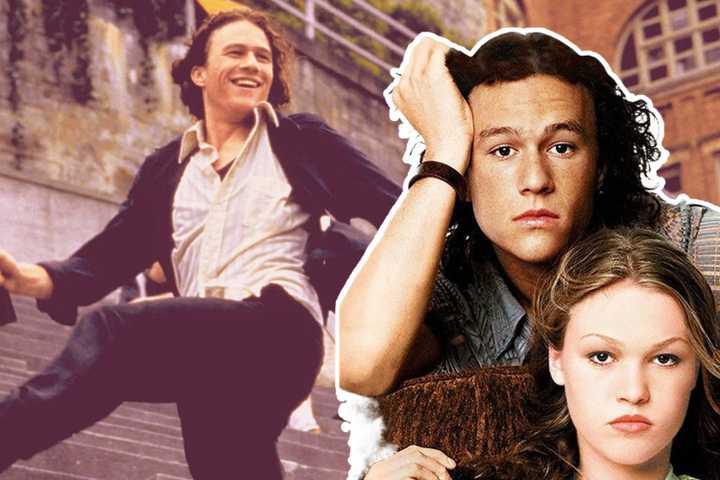
Then 1999 happened. 10 Things I Hate About You — loosely adapted from Shakespeare’s Taming of the Shrew, starring Heath Ledger, Julia Stiles, and a very young Joseph Gordon-Levitt — gave Keegan the role that still follows him. Joey Donner. The shallow, manipulative jock. He played it well enough that people still bring it up to him at conventions 27 years later.
What’s interesting is that Keegan wasn’t the romantic lead. He was the foil. And yet his cultural footprint from that film is surprisingly durable — probably because the movie itself has aged unusually well, and because Joey Donner is the kind of character that feels timeless in a certain type of teen story. Anyway.
According to his IMDb page, Keegan has stayed consistently active across the 2000s and 2010s, mostly in independent films and TV guest roles. Not the A-list trajectory some predicted in 1999, but also not the “where are they now” narrative the internet sometimes lazily applies to 90s teen actors. He kept working.
The cult thing — what he actually said
This one needs some context. Around 2014–2015, reports surfaced that Keegan had founded something called “Full Circle” in Venice, California — described variously as a spiritual community, a wellness collective, and, by some corners of the internet, a cult. The story picked up enough momentum that it became one of those persistent celebrity footnotes that never quite goes away.
On the Pod Meets World podcast (the Boy Meets World cast reunion show), Keegan addressed it directly. His framing: it was “just a really cool community center.” He reportedly called the cult label “a badge of honor” — not defensively, but almost with amusement. The r/popculturechat community picked this up and the reaction was mixed but mostly curious rather than hostile. People in that thread weren’t convinced it was sinister, but they weren’t fully dropping the raised eyebrow either.
Over in r/No_Small_Parts — a subreddit that tracks actors from specific films and eras — there’s been ongoing discussion about Keegan’s 2010s community involvement. The consensus there isn’t “this guy is dangerous.” It’s more “this is genuinely weird and we don’t have the full picture.” Which is probably the honest read.
What Keegan did on the podcast was smart, whether intentional or not. He didn’t get defensive, didn’t over-explain, didn’t lawyer up the language. He called it a badge of honor and moved on. That kind of breezy confidence tends to land better with audiences than a carefully worded denial. Whether Full Circle was an actual cult by any meaningful definition — no credible source has documented that, and the word gets thrown around loosely enough that it’s worth being skeptical of the framing.
Three projects in 2026. Here’s the context.
As of May 2026, IMDb lists three projects in development for Keegan this year, per Yahoo Entertainment (May 2026). Specific titles haven’t been widely circulated yet — which is pretty normal for projects still in development — but the fact that he has three simultaneously is notable.
For comparison, here’s a rough look at how Keegan’s output has tracked across different eras:
| Era | Notable Work | Career Phase |
|---|---|---|
| 1994–1999 | Camp Nowhere, Thunder Alley, 10 Things I Hate About You | Peak mainstream exposure |
| 2000–2009 | Independent films, TV guest appearances | Consistent but lower-profile |
| 2010–2019 | Continued indie work; Full Circle community coverage | Mixed — personal life dominated press |
| 2020–2025 | Podcast appearances, social media presence | Rebuilding public narrative |
| 2026 | 3 projects in development (IMDb, May 2026) | Active resurgence |
The 90s nostalgia cycle is real and it’s running hot right now. Shows like Yellowjackets, the revival of Boy Meets World discussions, and the general cultural appetite for late-90s aesthetics have created a genuine opening for actors from that era to re-enter the conversation. Keegan seems to be timing this reasonably well — three projects is not a vanity play, it’s an actual workload.
That one-cent check — and why it matters beyond the headline
This is the part of the story that deserves more attention than it’s getting.
When Keegan mentioned on a podcast that he’d received residual checks as low as one cent, most coverage treated it as a fun “wow, Hollywood is weird” anecdote. But it’s actually a pretty pointed illustration of how residual structures — negotiated back when physical media and syndication were the primary revenue models — have completely failed to adapt to streaming.
The SAG-AFTRA strike in 2023 was partly about this exact issue. Streaming residuals for older catalog content are calculated using formulas that bear almost no relationship to actual viewership numbers. A film that gets 10 million streams on a platform might generate less in residuals for its cast than a 1992 VHS rental deal would have. The math is genuinely broken, and it was broken deliberately — studios pushed for favorable residual structures during the transition to streaming, and the unions didn’t have enough leverage at the time to stop it.
Keegan’s one-cent check isn’t an anomaly. Actors from that era have been talking about this for years. It’s just that when someone attaches a specific number to it — especially someone associated with a film as recognizable as 10 Things I Hate About You — it lands differently than an abstract complaint about industry economics.
The SAG-AFTRA agreements reached after the 2023 strike included improved minimums for streaming residuals going forward, but they didn’t retroactively fix the math on older catalog titles. So Keegan is probably still getting those one-cent checks. That’s not going to change.
The social media piece — and the viral daughter video
Keegan maintains an active Instagram presence at @andrewkeegn, and earlier in 2026, a video featuring him and his daughter went viral — described by Yahoo Entertainment as “nostalgic” and generating surprise from 90s fans who hadn’t tracked his personal life closely.
The reaction was genuinely warm. People who grew up watching him as Joey Donner seeing him as a dad in 2026 hits a very specific emotional register — it’s the same mechanism that makes any 90s reunion content perform well online. There’s no cynicism in that response. It’s just time doing what time does.
What’s interesting about Keegan’s social media approach is that it doesn’t feel managed in the overly-produced way a lot of celebrity accounts do. The content is personal without being oversharing. The cult question gets addressed on a podcast, not in a carefully staged Instagram post. That’s a real choice, and it reads as more authentic than the alternative.
Pik’s Take
On the residuals story: The one-cent check is the most important detail in Keegan’s 2026 press cycle, and it’s being underreported. This isn’t just a quirky anecdote — it’s a symptom of a structural problem in actor compensation that affects thousands of working performers, not just recognizable names. When the next round of SAG-AFTRA negotiations comes up, this is the kind of specific, human-scale example that actually moves public opinion. Keegan probably didn’t intend to make a policy argument. But he did.
On the cult narrative: The “badge of honor” framing was a smart move, and I’d guess it was instinctive rather than PR-coached. The worst thing you can do with an internet rumor is over-deny it — that just feeds the story. Calling it a badge of honor and moving on signals confidence, and confidence reads as innocence more effectively than a detailed rebuttal. Whether Full Circle was genuinely just a community center, I can’t say. But the way he handled the question in 2026 is probably the right playbook regardless of the underlying facts.
On the three-projects-in-2026 angle: Watch what genre these land in. If they’re nostalgia-adjacent projects — reboots, ensemble casts from the 90s era, streaming platform originals targeting millennial viewers — that tells you his team is playing the nostalgia wave deliberately. If they’re genre-diverse (one indie drama, one genre piece, one TV), that’s a different signal — someone trying to build a second career on new terms rather than cashing in on old recognition. The titles matter. We’ll know more once they surface.
So why does any of this matter in 2026?
Honestly? For most people, Andrew Keegan is a pleasant piece of cultural memory. Joey Donner, that early 2000s indie filmography, the weird cult story that turned out to be less weird than advertised. He’s not a major news story.
But the threads around him right now are actually connected to things that matter more broadly. The residuals conversation is directly tied to ongoing labor disputes in Hollywood. The 90s nostalgia wave is a real economic force shaping what gets greenlit on streaming platforms. And the way a minor celebrity navigates a reputation problem in 2026 — podcasts, candid humor, social media authenticity — is a decent case study in how public perception management actually works when you’re not Beyoncé and can’t afford a crisis PR firm.
Keegan’s been in Hollywood for 32 years. He knows where the bodies are buried, figuratively speaking. The fact that he’s still standing, still working, and still getting asked about a 1999 film in 2026 says something. Not sure exactly what. But something.
— Pik
📱 Get Pik’s daily briefings on Telegram → t.me/pikinfo
🔗 Found this useful? Share it with a Piker → pikinfo.com/andrew-keegan-2026
This article is for informational purposes only. Data and projections reflect available information at time of writing. Any price or market forecasts are speculative and should not be taken as financial advice.