
Are you a growing startup wondering exactly how to raise funds for charity without draining your limited operational resources? You are certainly not alone in this struggle. In the fast-paced ecosystem of 2026, founders are under immense pressure to drive revenue while simultaneously proving their commitment to corporate social responsibility. Balancing profit margins with a genuine desire to give back can feel like walking a tightrope without a safety net.
However, modern philanthropy is no longer reserved exclusively for massive enterprise corporations with bottomless budgets. Today’s most innovative startups are weaving charitable giving directly into their growth models, proving that you can scale a business while making a tangible impact. Whether you want to support local community initiatives, fund environmental causes, or back global health research, the right approach can turn your team into a powerful force for good.
This comprehensive guide will break down the exact strategies you need to launch successful campaigns. We will explore cutting-edge nonprofit fundraising strategies, from digital crowdfunding platforms to deeply integrated product giving models. By the end of this post, you will have a clear, actionable roadmap to engage your community, boost your brand equity, and generate meaningful donations for the causes that matter most.
- The New Era of Startup Philanthropy in 2026
- How to Raise Funds for Charity Using Digital Crowdfunding
- Hosting High-Impact Virtual and Hybrid Fundraising Events
- Integrating Philanthropic Giving into Your Product Offerings
- Building Corporate Partnerships and Sponsorships
- Maximizing Donor Engagement and Retention Metrics
- Legal Compliance and Financial Transparency for Startups
- Frequently Asked Questions (FAQ)
The New Era of Startup Philanthropy in 2026

The business landscape has fundamentally transformed as we navigate through 2026. Consumers are smarter, more critical, and fiercely loyal to brands that align with their personal values. Knowing how to raise funds for charity is no longer just a nice public relations tactic; it is an essential pillar of modern brand building.
Startups have a unique advantage over legacy corporations in this arena. Because you are agile and closely connected to your early-adopter community, you can launch impactful campaigns in days rather than months. Your charitable efforts can act as a profound differentiator in crowded markets.
However, approaching charity with a purely transactional mindset will backfire. Audiences can spot inauthentic giving from a mile away, and performative activism can severely damage your reputation. Let’s look at why authentic philanthropic giving is critical and how the paradigm of corporate responsibility has shifted.
Why Modern Startups Must Give Back
Integrating charity into your startup DNA offers massive downstream benefits for your organizational health. From a human resources perspective, purpose-driven companies attract the most elite talent. Top-tier developers, marketers, and executives want their daily labor to contribute to a better world.
The data backing this trend is undeniable. Recent industry studies in early 2026 reveal that startups integrating consistent philanthropic initiatives see a 32% increase in employee retention compared to their strictly profit-driven counterparts. Furthermore, over 74% of modern consumers actively prefer purchasing from brands with transparent social impact programs.
Beyond talent acquisition and customer loyalty, fundraising builds invaluable networking opportunities. When your startup champions a cause, you naturally cross paths with other community leaders, influential donors, and potential investors who share your passions. These authentic relationships often translate into unforeseen business partnerships down the road.
The Shift from Traditional Corporate Social Responsibility
Historically, corporate social responsibility (CSR) consisted of a single, oversized check presented at an annual gala. It was often a siloed department, disconnected from the actual day-to-day operations of the business. In 2026, this outdated model has been completely replaced by integrated, grassroots action.
Today’s model focuses heavily on continuous, micro-actions that compound over time. Startups are utilizing everyday business operations to generate funds, such as matching employee micro-donations or pledging a fraction of a cent per software transaction. This seamless integration ensures that charity doesn’t require massive operational overhauls.
Furthermore, transparency is the new currency of trust. Donors and customers no longer accept vague promises about “supporting the community.” They expect real-time dashboards showing exactly where their contributions are going, how many lives have been impacted, and the specific outcomes of the nonprofit fundraising strategies deployed.
How to Raise Funds for Charity Using Digital Crowdfunding

When searching for ways on how to raise funds for charity quickly, digital crowdfunding remains the undisputed champion. It democratizes the fundraising process, allowing you to pool small amounts of capital from a vast number of individuals. For startups, it’s a brilliant way to activate your existing user base.
Crowdfunding campaigns also serve as highly effective marketing vehicles. They create a natural sense of urgency and community involvement that traditional marketing channels struggle to replicate. By launching a campaign, you are inviting your audience to become active participants in your brand’s story.
However, the competition for attention on these platforms is fierce. You cannot simply throw up a page, ask for money, and expect the funds to roll in. Success requires strategic planning, the right platform choice, and a narrative that deeply resonates with potential backers.
Leveraging Next-Gen Charity Crowdfunding Platforms
Not all crowdfunding platforms are created equal, especially when it comes to charitable giving. You need a platform that aligns with your specific goals, offers robust tracking tools, and provides a seamless checkout experience for your donors. The technology has evolved significantly to reduce friction at the point of donation.
Some platforms specialize in peer-to-peer fundraising, where your employees and customers create their own sub-campaigns on your behalf. Others are designed specifically for corporate matching gifts or equity-free grants. Choosing the right tool from the myriad of charity crowdfunding platforms is your first critical decision.
Below is a comparison of some of the leading platform types available for startup philanthropy in 2026:
| Platform Type | Best For | Key Feature in 2026 | Fee Structure |
|---|---|---|---|
| Corporate Giving Portals | Internal team fundraising | Automated payroll deductions | Monthly SaaS fee |
| Peer-to-Peer Networks | Customer community activation | Social media API integrations | Percentage of donations |
| Micro-Donation APIs | E-commerce startups | One-click checkout rounding | Per-transaction flat fee |
Crafting a Compelling Campaign Narrative
Once you have selected your platform, the success of your campaign hinges entirely on your storytelling. People donate to people, not abstract concepts. Your campaign narrative must vividly illustrate the pain point the charity is addressing and precisely how the donor’s contribution will solve it.
Start by utilizing the “Hero’s Journey” framework. Frame the donor as the hero of the story, your startup as the guide, and the charitable cause as the ultimate quest. Use high-quality multimedia, particularly short-form vertical video, to make the cause tangible and deeply emotional.
Transparency within your narrative is non-negotiable. Clearly state your financial goals, timelines, and the direct impact of specific donation tiers. For instance, explaining that “a $50 donation provides clean water for one family for a year” is infinitely more effective than simply asking for a “generous contribution.”
🛒 professional lapel microphone for smartphone video recording
View on Amazon →
As an Amazon Associate, we earn from qualifying purchases.
Hosting High-Impact Virtual and Hybrid Fundraising Events

The landscape of event hosting has forever changed, and hybrid models are now the gold standard. Startups can leverage virtual events to reach global audiences without the massive overhead costs associated with renting physical ballrooms or catering massive dinners. This maximizes the amount of money that actually reaches the charity.
Event-based fundraising is incredibly potent because it offers immediate value in exchange for a donation. Whether you are offering educational content, entertainment, or exclusive networking opportunities, attendees feel they are receiving something tangible while simultaneously supporting a noble cause.
Executing these events flawlessly requires a solid technical infrastructure. Glitchy streams or confusing ticketing systems will instantly destroy the donor experience and harm your brand’s credibility. Let’s break down the execution of modern charity events.
Planning a Charity Webinar or Virtual Summit
A charity webinar or virtual summit is one of the lowest-barrier entry points for a startup looking to raise funds. You can leverage the existing expertise within your team or invite industry influencers to speak on a relevant topic. Instead of charging a traditional ticket fee, you require a minimum donation for access to the live stream.
To maximize attendance, co-host the event with the nonprofit organization you are supporting. This allows you to cross-pollinate audiences, tapping into their dedicated donor base while exposing your customer base to their mission. It is a mutually beneficial strategy that amplifies reach and credibility.
During the event, utilize interactive elements to spur impromptu giving. Live donation tickers, real-time shoutouts to major donors, and interactive Q&A sessions keep the audience engaged. The key is to maintain high energy and continuously remind the audience of the event’s underlying purpose.
Organizing a Hybrid Charity Gala
For startups that have reached a scale where they want to host a premium experience, the hybrid gala is the ultimate solution. This involves hosting a smaller, exclusive in-person event for major stakeholders and local partners, while simultaneously live-streaming a highly produced version to a global audience. The dual approach maximizes your fundraising potential.
Recent data indicates that hybrid events yield an impressive 45% higher donor engagement than strictly physical gatherings. Virtual attendees can participate in digital silent auctions, text-to-donate campaigns, and virtual networking lounges. Meanwhile, the physical attendees provide the high-energy atmosphere that translates well on camera.
Logistics are the biggest hurdle here. You need dedicated teams managing the physical experience and the digital broadcast concurrently. Investing in professional AV equipment and reliable streaming software is mandatory to ensure the virtual audience doesn’t feel like an afterthought.
🛒 4k streaming webcam for professional virtual events
View on Amazon →
As an Amazon Associate, we earn from qualifying purchases.
Integrating Philanthropic Giving into Your Product Offerings
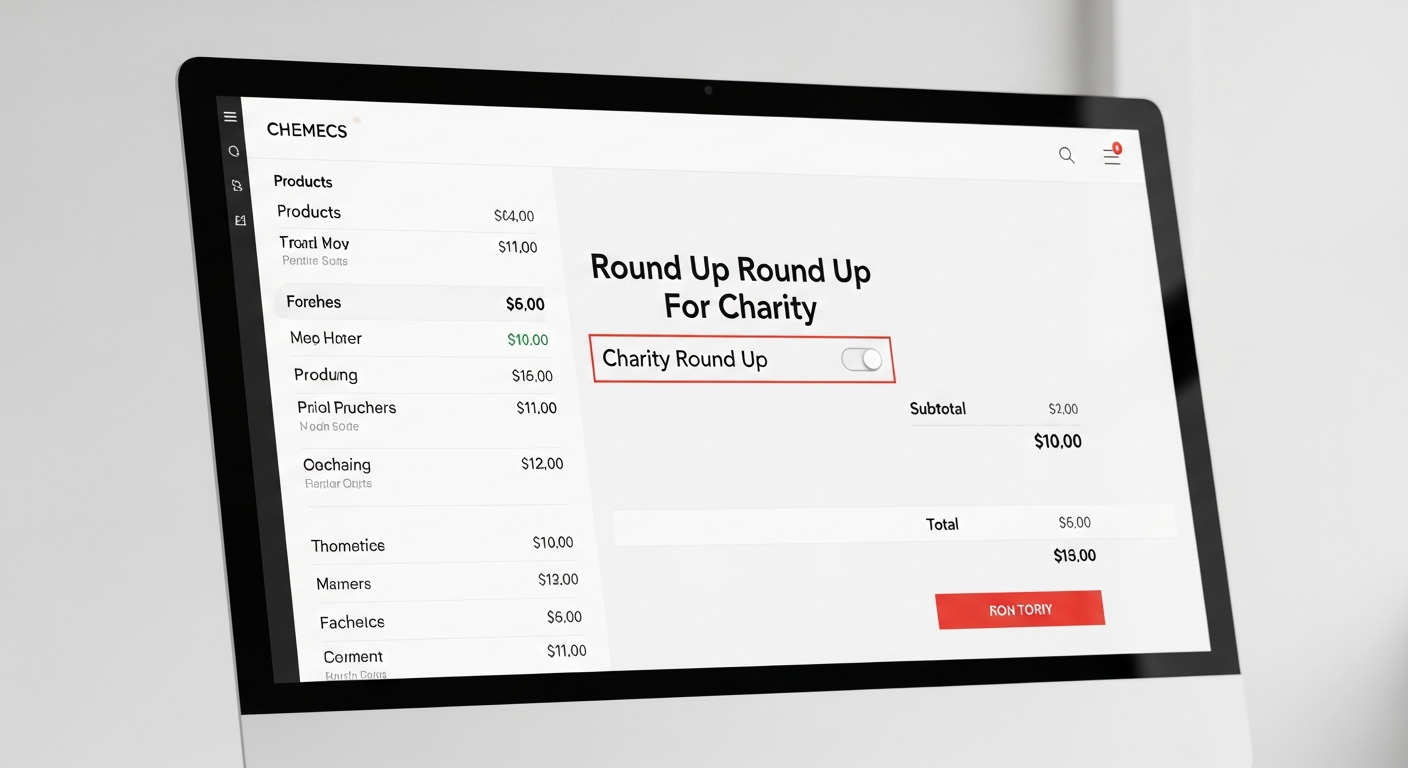
One of the most sustainable answers to how to raise funds for charity is to weave giving directly into your product’s lifecycle. When philanthropy is embedded into your business model, you don’t have to launch exhausting standalone campaigns. Every sale automatically contributes to the greater good.
This approach transforms your customers into micro-philanthropists. It significantly reduces the friction of giving, as the donation happens seamlessly during a transaction they were already planning to make. Furthermore, it creates a powerful marketing message that differentiates your product from competitors.
There are several ways to integrate giving, ranging from matching physical products to rounding up digital transactions. The right choice depends entirely on your industry, profit margins, and technical capabilities. Let’s explore the most popular models for modern startups.
The “Buy One, Give One” Model Explained
Pioneered by early DTC brands and refined significantly by 2026, the “Buy One, Give One” (BOGO) model remains incredibly popular. For every item or subscription a customer purchases, your startup donates an equivalent product, service, or monetary amount to a person in need. It is remarkably easy for consumers to understand.
For SaaS startups, this might look like donating a software license to an educational institution for every enterprise client signed. For physical product companies, it could mean donating essential goods directly to crisis centers. The clarity of the impact is the primary driver of this model’s success.
However, you must strictly evaluate your unit economics before committing to a BOGO model. Margins can compress quickly if supply chain costs fluctuate. It requires precise financial forecasting to ensure the charitable commitment does not eventually threaten the startup’s survival.
Setting Up Automated Donation Integrations
If a BOGO model is too risky for your current margins, automated donation integrations offer a brilliant alternative. This involves integrating third-party APIs into your checkout flow, allowing customers to round up their total to the nearest dollar or add a fixed micro-donation before completing their purchase.
This strategy relies on the psychology of micro-commitments. A customer spending $49.50 is highly likely to click a button to round up to $50.00 for a good cause. While individual contributions are tiny, the aggregate volume from hundreds or thousands of daily transactions generates substantial funding.
Implementing these systems is easier than ever. Most modern e-commerce platforms and payment gateways offer native plugins for charity integrations. This ensures the funds are compliantly routed directly to the charity, removing the administrative burden from your accounting team.
✅ Pros of Integrated Giving
- Creates a passive, continuous stream of charitable funds.
- Enhances brand loyalty and improves cart conversion rates.
- Removes the friction of asking for separate donations.
- Builds long-term partnerships with nonprofit organizations.
❌ Cons of Integrated Giving
- Can compress profit margins if not forecasted accurately.
- Requires technical setup and ongoing API maintenance.
- May cause checkout friction if the UI is poorly designed.
- Necessitates strict financial compliance and reporting.
Building Corporate Partnerships and Sponsorships

Going it alone is rarely the most effective way to scale a charitable initiative. By joining forces with other businesses, startups can exponentially multiply their fundraising power. Corporate partnerships allow you to pool resources, share marketing channels, and create campaigns with massive reach.
Furthermore, aligning with established, reputable brands lends instant credibility to your startup. When a well-known corporation co-sponsors your charity drive, their audience takes notice. It acts as a powerful endorsement of your company’s values and operational legitimacy.
However, finding the right partner requires strategic alignment. A mismatch in brand values or target demographics will result in a disjointed campaign that confuses both audiences. It is crucial to approach partnerships methodically.
Identifying Brand-Aligned Nonprofits
Before pitching other corporations, you must clearly define the nonprofit you are championing. The cause must align naturally with your startup’s mission and industry. For example, a sustainable packaging startup should ideally partner with ocean conservation charities, not random unrelated causes.
Thoroughly vet potential nonprofits before committing. Look into their overhead ratios, impact reports, and leadership transparency. You are essentially staking your startup’s reputation on their operational integrity. Utilize independent charity evaluators to ensure their financial health is robust.
Once you have identified the perfect nonprofit, engage them as a true partner. Don’t just hand them money; ask how your startup’s specific skills (marketing, coding, logistics) can help amplify their mission. This collaborative approach yields much richer narratives for your eventual fundraising campaigns.
Pitching Co-Marketing Campaigns
With your nonprofit partner secured, you can begin pitching co-marketing fundraising campaigns to other businesses. The pitch must clearly articulate the “win-win-win” scenario. How does the charity benefit? How does your startup benefit? Most importantly, how does the partnering corporation benefit?
Focus the pitch on shared audience acquisition and positive PR. Propose matching gift structures, where your startup and the partner agree to match customer donations up to a certain threshold. This gamifies the process for the consumer, knowing their $10 donation is suddenly worth $30.
Create ready-to-use media kits for your partners. Provide them with pre-written social media copy, high-resolution graphics, and suggested email templates. The easier you make it for a partner to participate, the more likely they are to say yes and actively promote the initiative.
Maximizing Donor Engagement and Retention Metrics

Acquiring a first-time donor is notoriously difficult and expensive. Therefore, donor retention is the lifeblood of sustainable fundraising. If you treat donors as one-time transactional entities, you will constantly be starting from scratch with every new campaign.
Startups must apply the same rigor to donor engagement as they do to customer retention. This means utilizing CRM software, segmenting audiences, and delivering highly personalized communication. A donor should feel deeply valued and intimately connected to the ongoing impact of their contribution.
In 2026, automation is your best friend for managing these relationships at scale. You can set up sophisticated workflows that nurture donors over time, providing updates, expressing gratitude, and gently prompting future involvement without feeling spammy or overly aggressive.
Implementing Automated Thank-You Workflows
The speed and personalization of your “thank you” directly correlate to the likelihood of a second donation. If a donor gives to your campaign and hears nothing but an automated tax receipt, their emotional connection to the cause is instantly severed. You must do better.
Set up automated email sequences that trigger immediately upon donation. The first email should be a heartfelt thank you, ideally featuring a short video from your founder or a representative of the charity. Subsequent emails over the following weeks should share stories of the actual people or projects benefiting from the funds.
For high-tier donors, automation should trigger a manual task for your team. A handwritten note or a personalized phone call can secure a lifelong relationship. These micro-interactions showcase a level of care that large, bureaucratic institutions often fail to provide.
Tracking the Impact of Your Charitable Giving
Modern donors demand data. They want to know the exact return on their charitable investment. If you cannot articulate the specific outcomes generated by the funds you raised, your credibility will evaporate. Transparency is paramount.
Work closely with your nonprofit partners to establish clear KPIs before a campaign launches. Will you measure meals served, trees planted, or hours of education provided? Once these metrics are established, create public-facing dashboards on your startup’s website that update in real-time.
Regularly publish “Impact Reports” detailing both the successes and the challenges of the initiatives. Honesty about what didn’t work builds trust just as much as celebrating victories. By treating donors as board members of your social impact division, you foster deep, unshakeable loyalty.
🛒 smart digital display frame to showcase real time fundraising metrics in office
View on Amazon →
As an Amazon Associate, we earn from qualifying purchases.
Legal Compliance and Financial Transparency for Startups

The administrative side of how to raise funds for charity is undoubtedly the least glamorous part of the process, but it is absolutely critical. Mishandling charitable funds can result in severe legal penalties, massive tax liabilities, and irreversible PR disasters for your startup.
Because you are collecting money on behalf of another entity, you must navigate complex commercial co-venture laws. These regulations vary wildly depending on your jurisdiction and the specific mechanics of your campaign. Ignorance of the law is never an acceptable defense.
It is strongly advised to consult with a legal professional specializing in nonprofit law before launching any major initiative. However, there are fundamental principles of compliance and transparency that every founder should understand to protect their business and their donors.
Navigating Tax Deductions in 2026
The tax landscape for corporate giving has seen updates as we moved into 2026. Understanding what is and isn’t deductible is crucial for your startup’s financial planning. Generally, direct corporate donations to verified 501(c)(3) organizations are tax-deductible, but limits apply based on your taxable income.
However, when acting as a middleman—collecting funds from customers and passing them to a charity—the tax implications shift. You cannot claim tax deductions on money donated by your customers. The customer is the one entitled to the deduction, and you must provide them with the appropriate documentation if the platform doesn’t do it automatically.
Maintain pristine records distinguishing corporate gifts from customer pass-through donations. Commingling these funds in your general operating accounts is a massive red flag for auditors. Always establish dedicated sub-accounts for charitable activities.
Ensuring Clear Financial Reporting
Transparency extends beyond legal compliance; it is a moral obligation to your supporters. Your financial reporting regarding charitable campaigns should be as rigorous as your investor updates. Ambiguity breeds suspicion.
Clearly state what percentage of a purchase or donation goes directly to the charity versus administrative costs. If your startup is covering platform fees or credit card processing fees to ensure 100% of the donor’s money reaches the cause, advertise that heavily! It is a massive selling point.
Publish an annual social impact report that details total funds raised, exact disbursement dates, and receipts from the receiving charities. This level of extreme transparency protects your startup from scrutiny and solidifies your reputation as a genuinely ethical brand.
[INTERNAL_LINKS]
Frequently Asked Questions (FAQ)
What is the fastest way to raise money for a charity as a startup?
The fastest method is utilizing digital crowdfunding platforms combined with matching corporate gifts. By announcing a limited-time campaign where your startup matches every dollar donated by customers (up to a certain cap), you create massive urgency. Activating your existing email list and social media following with this compelling offer can generate significant funds within 48 to 72 hours.
How do you legally raise money for a cause?
To legally raise money, you must ensure the receiving organization is a registered 501(c)(3) nonprofit (or local equivalent). If you are running a sales promotion where a portion of proceeds goes to charity, you must comply with Commercial Co-Venture (CCV) laws. This typically requires a written contract with the charity, specific disclosure language in your marketing, and sometimes registering the campaign with state authorities. Always consult legal counsel to ensure full compliance in 2026.
What are the best fundraising ideas for small businesses?
Highly effective ideas for small businesses and startups include “Buy One, Give One” product models, hosting hybrid virtual webinars with donation-based ticketing, and integrating micro-donation APIs at checkout. Additionally, organizing a peer-to-peer challenge (like a virtual 5K or coding marathon) where employees and customers seek sponsorships is a fantastic way to build community culture while raising funds.
📚 You May Also Like