
Navigating the complex world of cryptocurrency can feel overwhelming, especially when it is time to file your income tax returns. If you are searching for a definitive crypto tax guide India, you have come to the right place. The regulatory landscape has shifted significantly as we move deeper into 2026.
With over 45 million active cryptocurrency investors currently in India, the Income Tax Department has tightened its digital surveillance. Failing to report your Virtual Digital Asset (VDA) transactions correctly can lead to massive penalties and legal notices. You cannot afford to rely on outdated advice or ignore the strict tracking mechanisms now implemented by the government.
This comprehensive guide will demystify the 2026 taxation rules for Indian crypto investors. We will break down the flat 30% tax rate, the unavoidable 1% TDS, and precisely how to report your digital earnings. By the end of this article, you will have a rock-solid strategy to file your taxes accurately and optimize your digital portfolio.
- Understanding the Crypto Tax Guide India 2026 Updates
- How to Calculate Your Crypto Taxes Effectively
- Crypto Tax Software vs. Manual Calculation
- Filing Your Income Tax Return (ITR) with Crypto Income
- Tax Implications for Different Crypto Activities
- Legal Ways to Optimize Your Crypto Taxes
- Frequently Asked Questions (FAQ)
Understanding the Crypto Tax Guide India 2026 Updates

The foundation of Indian cryptocurrency taxation remains rooted in the frameworks established earlier this decade, but 2026 brings stricter enforcement. The government officially classifies cryptocurrencies, NFTs, and other digital tokens as Virtual Digital Assets (VDAs). Understanding this classification is your first step toward total tax compliance.
The Income Tax Department now utilizes advanced blockchain analytics to track on-chain movements connected to Indian KYC accounts. This means moving funds to offshore exchanges no longer hides them from the taxman. Every transaction you make leaves a permanent, traceable digital footprint.
What Qualifies as a Virtual Digital Asset (VDA)?
Under Section 2(47A) of the Income Tax Act, a VDA encompasses almost every form of digital asset you can trade. This includes major cryptocurrencies like Bitcoin and Ethereum, as well as altcoins, stablecoins, and meme tokens. The definition is intentionally broad to capture any digital representation of value.
Non-Fungible Tokens (NFTs) are also strictly categorized as VDAs. Whether you are buying digital artwork, virtual real estate in the metaverse, or blockchain gaming assets, they all fall under the same regulatory umbrella. Furthermore, specific tokens generated through airdrops or hard forks are immediately classified as taxable VDAs.
It is crucial to note that Indian Central Bank Digital Currency (e-Rupee) is specifically excluded from the VDA classification. The e-Rupee functions exactly like fiat currency and is not subject to the harsh 30% crypto tax laws. Always separate your CBDC transactions from your VDA portfolio when preparing your books.
Flat 30% Tax Rate Rules
Section 115BBH is the most feared section of the Income Tax Act for Indian crypto investors. It mandates a staggering flat 30% tax on any income derived from the transfer of VDAs. This rate applies universally, regardless of your standard income tax slab.
You cannot claim any deductions for expenses incurred during trading, such as exchange fees, internet bills, or mining equipment depreciation. The only permissible deduction is the initial cost of acquisition. If you buy Bitcoin for ₹100,000 and sell it for ₹150,000, you will pay a 30% tax strictly on the ₹50,000 profit.
Another major blow to investors is the inability to set off crypto losses. If you make a ₹50,000 profit on Ethereum but lose ₹40,000 on Solana, you cannot net these out. You will pay 30% tax on the ₹50,000 Ethereum profit, while the Solana loss simply vanishes into the digital ether.
How to Calculate Your Crypto Taxes Effectively

Mastering your tax calculation is essential to avoid overpaying or facing audits. In 2026, the volume of airdrops, staking rewards, and micro-transactions makes manual tracking incredibly difficult. You must adopt a systematic approach to document every single trade.
The key to accurate calculation lies in maintaining a meticulous record of your cost basis. Every time you purchase a VDA, you must log the exact INR value at that specific second. This documentation will be your primary defense if the Income Tax Department ever questions your filed returns.
Calculating Profits and Losses
To calculate your taxable profit, you subtract the cost of acquisition from the final sale price. For example, if you purchased 100 MATIC tokens for ₹8,000 and sold them a month later for ₹12,000, your taxable profit is ₹4,000. You will owe exactly ₹1,200 in taxes (30% of ₹4,000) for this specific trade.
The situation becomes more complicated when you make multiple purchases of the same asset at different prices. In India, the First-In-First-Out (FIFO) method is the standard accounting principle accepted by tax authorities. This means when you sell a portion of your holdings, the system assumes you are selling the oldest coins you acquired first.
Let us look at crypto-to-crypto trades, which catch many investors off guard. If you swap Bitcoin directly for Cardano, it is legally treated as two distinct transactions. You are deemed to have sold Bitcoin for INR, generating a taxable event, and subsequently used that INR to purchase Cardano.
The Impact of the 1% TDS on Crypto Transactions
Section 194S mandates a 1% Tax Deducted at Source (TDS) on the sale of Virtual Digital Assets. This rule was designed specifically to establish a flawless paper trail for the government. Every time you sell or swap a crypto asset, 1% of the transaction value is locked away by the exchange.
For domestic Indian exchanges registered with the Financial Intelligence Unit (FIU), this 1% TDS is deducted automatically. You do not need to perform any manual calculations for these trades. However, if you are trading on decentralized exchanges (DEXs) or offshore platforms, the burden of deducting and depositing this TDS falls squarely on you.
The threshold for TDS applicability is ₹50,000 per financial year for specified individuals, and ₹10,000 for others. Once your aggregate trades cross this limit, the 1% deduction applies to every subsequent trade. You can claim this TDS back as a refund when filing your annual ITR, provided your total tax liability is lower than the accumulated TDS.
Crypto Tax Software vs. Manual Calculation
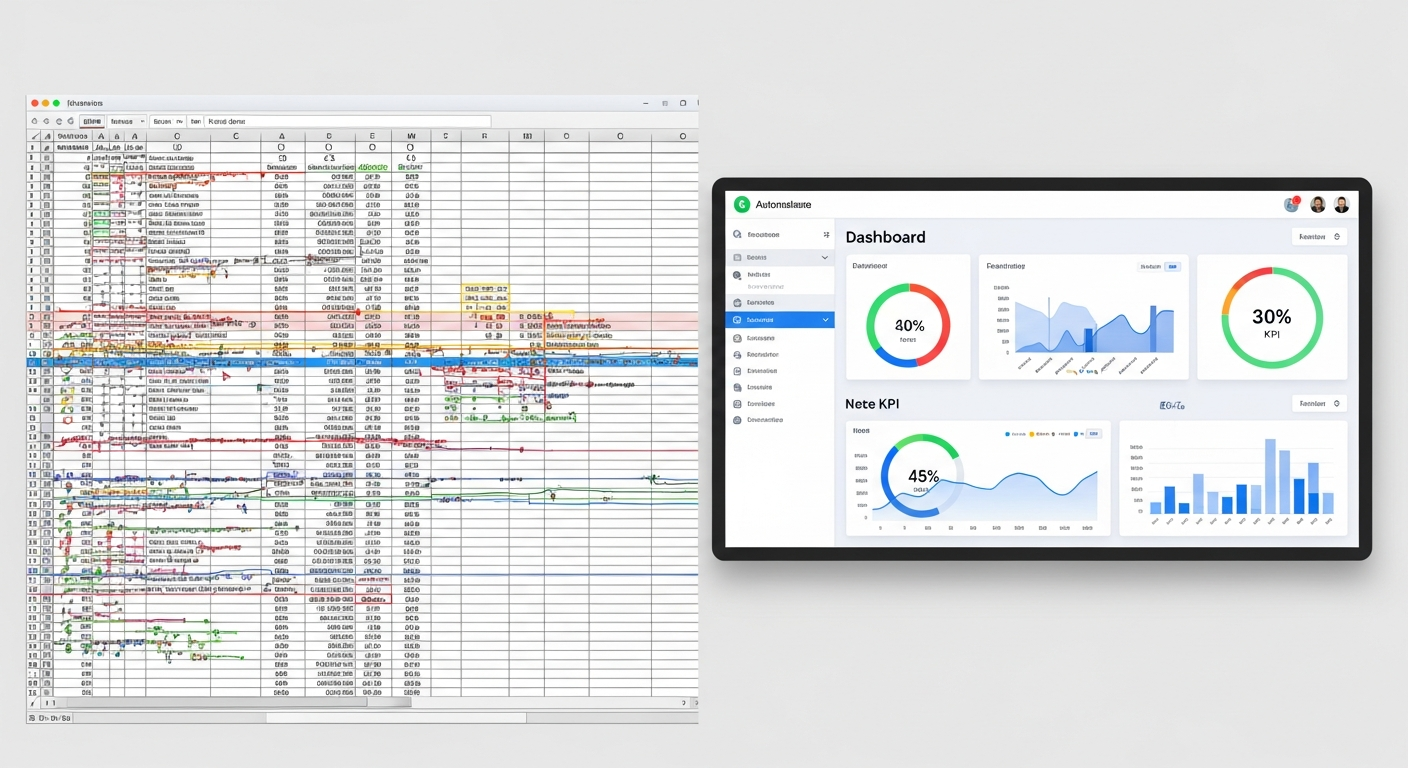
As your crypto journey evolves, the sheer volume of transactions can become unmanageable. Many beginners attempt to track their portfolio using Excel spreadsheets. However, this approach usually crumbles once they discover decentralized finance (DeFi) and automated trading bots.
Choosing the right method to calculate your crypto tax liability is a critical decision in 2026. Let us explore the fundamental differences between manual tracking and using dedicated automated software. Your choice will dictate how stressful your financial year-end will be.
Why Manual Tracking Fails in 2026
Manual tracking requires you to personally log the date, time, cost basis, and sale price for every single transaction. If you only buy Bitcoin once a month and hold it, a spreadsheet might suffice. However, if you are an active trader, this method is a recipe for disaster.
Consider the complexities of staking rewards, which might deposit micro-fractions of a token into your wallet every single day. Logging 365 daily micro-transactions manually for just one asset is incredibly tedious. Furthermore, calculating the precise INR fair market value for obscure DeFi tokens at the exact time of receipt is nearly impossible without automated tools.
Human error is the biggest risk of manual calculation. A single misplaced decimal point in your cost basis can completely skew your final tax liability. If the tax department uncovers these discrepancies, you could face severe penalties for misreporting your income.
🛒 secure cryptocurrency hardware wallet for offline cold storage
View on Amazon →
As an Amazon Associate, we earn from qualifying purchases.
Benefits of Automated Tax Software
Crypto tax software eliminates the friction of manual data entry by connecting directly to your exchange APIs and public wallet addresses. These platforms automatically sync your entire transaction history across multiple blockchains. They instantly apply the correct Indian FIFO rules to generate your final tax report.
The software easily handles complex DeFi protocols, liquidity pooling, and NFT bridging. It automatically fetches historical INR pricing data for thousands of tokens. This ensures your capital gains and income from other sources are calculated with pinpoint accuracy.
Most importantly, premium crypto tax calculators in 2026 produce ready-to-upload tax reports formatted specifically for the Indian Income Tax portal. They summarize your Schedule VDA perfectly. This saves you and your Chartered Accountant countless hours during tax season.
| Feature | Manual Excel Tracking | Crypto Tax Software |
|---|---|---|
| Time Investment | Extremely High | Minimal (Automated Sync) |
| Accuracy Rate | Prone to human error | Extremely high precision |
| DeFi/Staking Handling | Nearly impossible | Automatic categorization |
| Cost | Free | Annual subscription fee |
✅ Pros of Automated Tax Software
- Saves dozens of hours of manual calculation.
- Automatically identifies tax-free transfers between your own wallets.
- Generates CA-approved reports for instant ITR filing.
- Minimizes audit risks through perfectly maintained digital ledgers.
❌ Cons of Automated Tax Software
- Requires paying an annual subscription fee.
- New or obscure micro-cap tokens might occasionally require manual classification.
- Requires giving read-only API access to third-party services.
Filing Your Income Tax Return (ITR) with Crypto Income
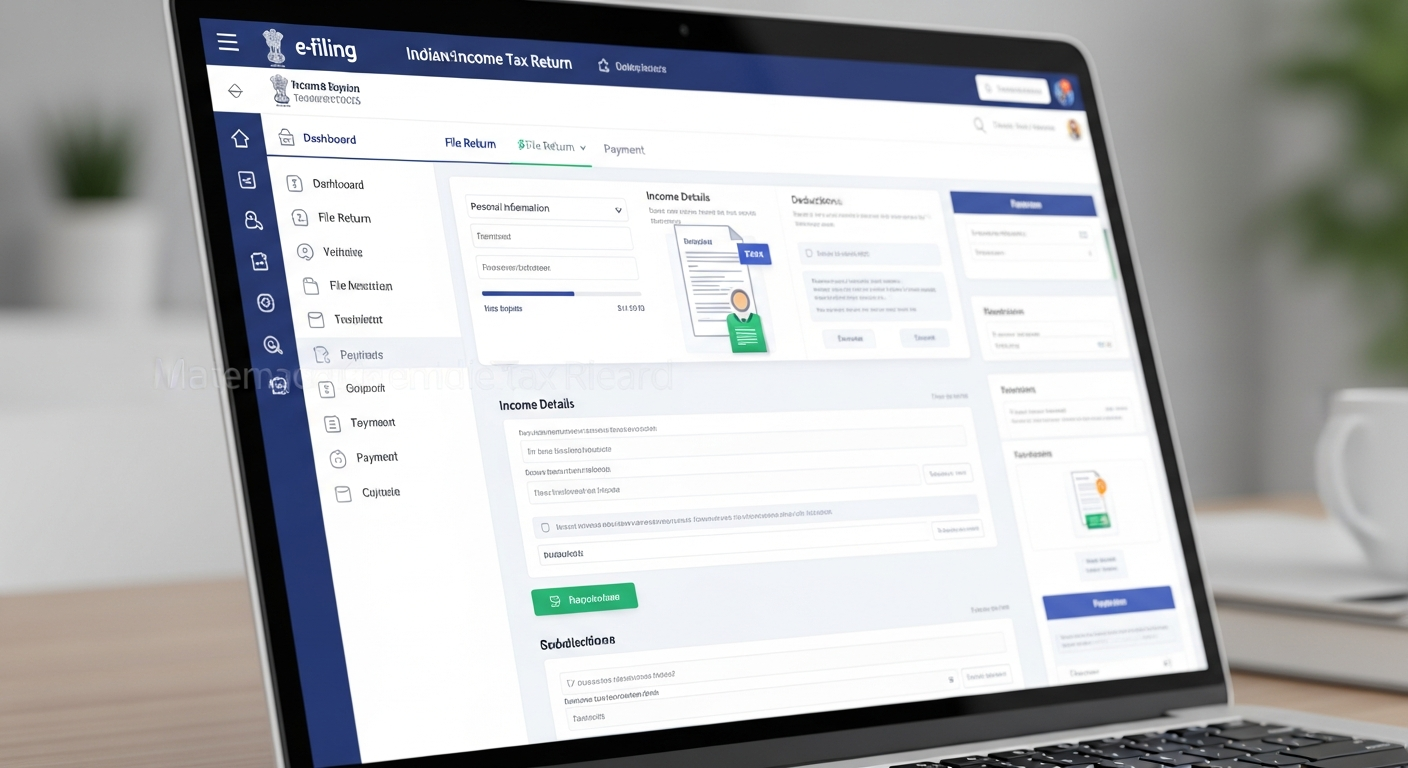
Filing your Income Tax Return (ITR) requires utmost precision now that VDAs have dedicated reporting sections. The government has streamlined the digital portal to ensure maximum transparency. Failing to disclose your crypto holdings is considered tax evasion and carries severe legal consequences.
Before you begin the filing process, ensure you have downloaded all necessary documents. This includes your complete transaction history from all exchanges, your Form 26AS, and your Annual Information Statement (AIS). Cross-reference the TDS deducted on your exchange reports with your Form 26AS to ensure everything matches perfectly.
Choosing the Right ITR Form
Selecting the correct ITR form depends heavily on how you classify your cryptocurrency activities. For the vast majority of investors who buy and sell crypto as an investment, capital gains rules apply. In this scenario, you must file your returns using ITR-2.
However, if you are a high-volume day trader or operate a dedicated crypto mining farm, your activities might be classified as business income. If your crypto trading is your primary business operation, you are required to use ITR-3. Consulting a Chartered Accountant is highly recommended if you are unsure about your specific classification.
Remember, regardless of whether you file ITR-2 or ITR-3, the 30% tax rate remains identical. The classification merely changes the specific schedules you fill out and how your overarching business expenses are treated for your non-crypto income. Always ensure consistency in how you report your VDA activities year over year.
Step-by-Step Reporting Process
The Income Tax portal introduced a specific “Schedule VDA” explicitly for reporting cryptocurrency transactions. This schedule requires you to detail every single digital asset transfer you made during the financial year. You must provide the date of acquisition, date of transfer, cost of acquisition, and sale consideration.
When filing, you will first navigate to the Schedule VDA section on the e-filing portal. Input your aggregated profits from successful trades, completely ignoring trades that resulted in a loss. Remember, the system will not allow you to offset losses against your profitable trades within this schedule.
Next, you must verify your TDS claims. Navigate to the taxes paid section and ensure the 1% TDS deducted under Section 194S is accurately reflected. If the automated AIS data matches your records, you can finalize your return and potentially claim a refund on excess TDS paid.
🛒 premium tax preparation software for self employed individuals
View on Amazon →
As an Amazon Associate, we earn from qualifying purchases.
Tax Implications for Different Crypto Activities

Cryptocurrency is no longer just about buying Bitcoin and holding it in a hardware wallet. The ecosystem has exploded with decentralized finance protocols, yielding farming, and network participation rewards. Each of these distinct activities carries its own unique tax implications.
The Income Tax Department views any inflow of wealth as a taxable event. Whether you earned a token through sheer luck or rigorous mining operations, you owe the government its share. Understanding these nuances will prevent nasty surprises during tax season.
Staking, Airdrops, and Mining
Receiving tokens via an airdrop is considered a taxable event the moment the tokens hit your wallet. They are taxed under “Income from Other Sources” at a flat 30% rate, based on their fair market value on the day of receipt. If you later sell these airdropped tokens, any subsequent price appreciation is taxed again as capital gains.
Staking rewards follow a very similar taxation framework in 2026. When you lock up your tokens and receive periodic interest in the form of additional crypto, that interest is taxable upon receipt. You must declare the INR value of those staking rewards as ordinary income.
Crypto mining requires substantial hardware and electricity, but the rewards are taxed ruthlessly. The coins you mine are taxed at a flat 30% upon receipt, and you cannot deduct your massive electricity or GPU costs. When you eventually sell the mined coins, you will face taxes again on any profit made from the time of mining to the time of sale.
Crypto-to-Crypto Trading Taxes
We briefly touched on this earlier, but crypto-to-crypto trading remains the most misunderstood aspect of the crypto tax guide India. Swapping tokens is not a tax-free event. The law views this as selling the first token for fiat, and immediately using that fiat to buy the second token.
For instance, if you trade 1 Ethereum for 2,000 USDT, you must calculate the exact INR value of that Ethereum at the moment of the trade. If that value is higher than your original acquisition cost for the Ethereum, you owe 30% tax on the difference. The 1% TDS also applies to this swap, meaning the exchange will automatically withhold a fraction of your USDT.
This rule severely impacts day traders who constantly cycle through different altcoins trying to catch market trends. Every single swap generates a taxable event and depletes their capital through consecutive TDS deductions. This is why high-frequency trading on Indian platforms has significantly declined in favor of long-term holding strategies.
Legal Ways to Optimize Your Crypto Taxes

While the 30% flat tax and strict loss-offset rules are harsh, there are entirely legal strategies to optimize your digital asset portfolio. Tax evasion is a crime, but tax optimization is a right every smart investor should exercise. It requires foresight and strategic planning throughout the financial year.
By understanding exactly how the Income Tax Act treats VDAs, you can structure your trades to minimize unnecessary tax burdens. This involves timing your sales correctly and understanding the mechanics of self-custody. Let us explore the most effective optimization strategies for 2026.
Strategic Portfolio Rebalancing
Since you cannot offset losses against gains, randomly selling different assets throughout the year is highly inefficient. If you need liquidity, you should prioritize selling assets that are currently sitting at a minimal profit or a slight loss. Selling a coin at a loss generates zero tax liability, allowing you to access cash without feeding the taxman.
Avoid panic selling your highly profitable assets unless you genuinely believe the market is collapsing. Every time you realize a large profit, you instantly lose 30% of that growth to taxes. By strategically choosing which specific tax lots to sell, you can tightly control your annual tax outflow.
Furthermore, transferring crypto between your own personal wallets is not a taxable event. You can freely move assets from an exchange to a secure hardware wallet without triggering a taxable sale. Just ensure you keep detailed records proving that you own both wallets to satisfy any potential audit inquiries.
Long-term Holding vs. Short-term Trading
Unlike traditional equity markets, the Indian government does not offer any tax discount for holding crypto long-term. Whether you hold Bitcoin for 5 minutes or 5 years, the profit is taxed at exactly 30%. However, holding long-term still offers massive secondary benefits.
By adopting a buy-and-hold strategy, you drastically reduce the number of taxable events you trigger. You also avoid the continuous 1% TDS drain on your trading capital. This allows your portfolio to compound uninterrupted, maximizing your potential overall returns over the decade.
Active trading in 2026 requires you to beat the market by a massive margin just to break even after the 30% tax and 1% TDS. Therefore, the most mathematically sound strategy for Indian investors is to accumulate high-quality assets and hold them securely offline. Only sell when you are ready to completely exit the market and utilize the fiat currency.
[INTERNAL_LINKS]
Frequently Asked Questions (FAQ)
Can I offset my crypto losses against other income in India?
No, you absolutely cannot offset crypto losses against any other income source. Under Section 115BBH, VDA losses cannot be set off against your salary, business income, or even profits from other cryptocurrencies. If you lose money on a trade, that loss is permanently trapped and offers no tax benefit whatsoever.
Do I need to pay tax if I hold crypto in a foreign exchange?
Yes, Indian tax residents must pay taxes on their global income, regardless of where the crypto is stored. Furthermore, the Indian government requires you to declare any foreign assets, including crypto held on offshore exchanges, in the Schedule FA of your ITR. Failing to disclose foreign crypto holdings violates the Black Money Act and invites severe penalties.
Is P2P crypto trading subject to the 1% TDS rule?
Yes, Peer-to-Peer (P2P) trading is fully subject to the 1% TDS rule under Section 194S. If you are buying crypto via P2P directly from an individual seller, it is technically your legal responsibility to deduct 1% TDS and deposit it with the government. Using FIU-compliant domestic exchanges eliminates this headache, as they automate the P2P TDS deduction process for you.
📚 You May Also Like