
Are you dreading the upcoming tax season and wondering how your digital asset portfolio will impact your bottom line? You are not alone in this struggle. As we navigate the complex financial landscape of 2026, the IRS has aggressively tightened its oversight on digital currencies. Ignoring the latest crypto tax guidelines is no longer a risk you can afford to take.
The days of flying under the radar with anonymous wallets and decentralized exchanges are officially over. With the full implementation of new broker reporting rules this year, the revenue agencies know exactly what you hold. Failing to report accurately could lead to severe penalties, audits, and frozen accounts.
However, understanding these rules doesn’t just protect you from the IRS; it also opens the door to incredible tax-saving opportunities. From strategic tax-loss harvesting to optimizing your cost basis, the right knowledge puts money back into your pocket. Let’s dive deep into the definitive crypto tax guidelines for 2026 and secure your financial future.
- Understanding the Core 2026 Crypto Tax Guidelines
- Triggers: When Do You Actually Owe Crypto Taxes?
- Calculating Your Crypto Capital Gains and Losses
- Navigating DeFi, Staking, and NFT Taxes
- Essential Crypto Tax Software and Tracking Tools
- Proven Strategies to Minimize Your Crypto Tax Bill
- International Crypto Reporting Requirements in 2026
- Real-World Case Studies for 2026
- Frequently Asked Questions (FAQ)
Understanding the Core 2026 Crypto Tax Guidelines

The foundation of all crypto tax guidelines rests on how regulatory bodies classify digital assets. In 2026, the IRS continues to treat cryptocurrency as property, not as traditional fiat currency. This means that every time you interact with your digital assets, property tax laws apply.
Because it is treated as property, general capital gains rules are the primary mechanism for taxation. You are required to report your cost basis, the fair market value at the time of disposal, and the resulting gain or loss. This fundamental classification dictates the entire framework of your annual tax return.
Many investors mistakenly believe that small transactions are exempt from these rules. However, the 2026 mandate requires absolute transparency, regardless of the transaction size. Keeping pristine records is your only defense against potential discrepancies.
How the IRS Views Digital Assets Now
The legal definition of digital assets has expanded significantly to encompass the modern Web3 ecosystem. The IRS now explicitly includes stablecoins, non-fungible tokens (NFTs), and governance tokens under the same property umbrella. You cannot simply claim that a digital trading card is exempt from capital gains.
Furthermore, the classification impacts how you report income generated from these assets. If you receive cryptocurrency in exchange for services provided, it is treated as ordinary income. The value of that income is determined by the exact fair market value of the token on the day and minute you received it.
This strict interpretation means your crypto portfolio is scrutinized just like a traditional real estate or stock portfolio. If your assets appreciate in value and you dispose of them, you owe the government its share. Understanding this perspective is the first step toward compliance.
The New Form 1099-DA Explained
One of the most monumental shifts in the 2026 tax year is the universal rollout of IRS Form 1099-DA. This specific form was designed exclusively for digital asset brokers to report user transactions directly to the government. If you use a centralized exchange, the IRS already has a copy of your trading history.
The form tracks your gross proceeds from digital asset sales and, in many cases, your cost basis. Brokers are legally obligated to send you and the IRS this documentation by early February. This effectively eliminates any remaining loopholes for unreported decentralized wealth.
You must ensure that the information on your personal tax return matches the data reported on your 1099-DA perfectly. A mismatch will automatically trigger an automated IRS correspondence audit. Reconciliation between your personal records and broker forms is now a mandatory annual chore.
Triggers: When Do You Actually Owe Crypto Taxes?

Knowing what constitutes a taxable event is critical for adhering to crypto tax guidelines. Not every interaction with your blockchain wallet results in a tax obligation. You only owe money when a specific “trigger” event occurs according to the tax code.
The complexity arises because the blockchain allows for highly diverse transactions. Trading, bridging, wrapping, and burning tokens all have different implications. You must evaluate each action individually to determine its taxable status.
Failing to recognize a taxable event is the number one reason investors face unexpected tax bills. Let’s break down exactly what triggers a tax liability and what actions remain safely untaxed.
Taxable Events in Cryptocurrency
The most common taxable event is cashing out your digital assets for fiat currency, such as US Dollars or Euros. Whether you transfer the funds to your bank or load them onto a crypto debit card, this action realizes your gains. You will owe capital gains tax on the profit made from the initial purchase.
Another major trigger is trading one cryptocurrency directly for another. If you swap Ethereum for Chainlink, the IRS views this as selling your Ethereum for fiat, and immediately using that fiat to buy Chainlink. This crypto-to-crypto trade is fully taxable, even if fiat never touches your bank account.
Additionally, using cryptocurrency to purchase goods and services is a taxable event. Buying a cup of coffee with Bitcoin means you disposed of a property asset. You must calculate the capital gain or loss on the fraction of Bitcoin used for that coffee.
Non-Taxable Events You Should Know
Fortunately, simply buying and holding cryptocurrency is completely tax-free. You can watch your portfolio surge in value over the years without owing a single cent to the IRS. Taxation only occurs upon the disposal of the asset.
Transferring crypto between your own wallets or exchange accounts is also a non-taxable event. Moving Bitcoin from a centralized exchange to your cold storage wallet does not trigger a tax liability. However, you must keep track of the transfer fees, as they can sometimes impact your cost basis.
Finally, donating cryptocurrency to a registered 501(c)(3) charity is not only non-taxable, but it also provides a tax deduction. You can deduct the fair market value of the crypto at the time of donation, bypassing the capital gains tax entirely. This is a highly effective strategy for philanthropic investors in 2026.
Calculating Your Crypto Capital Gains and Losses
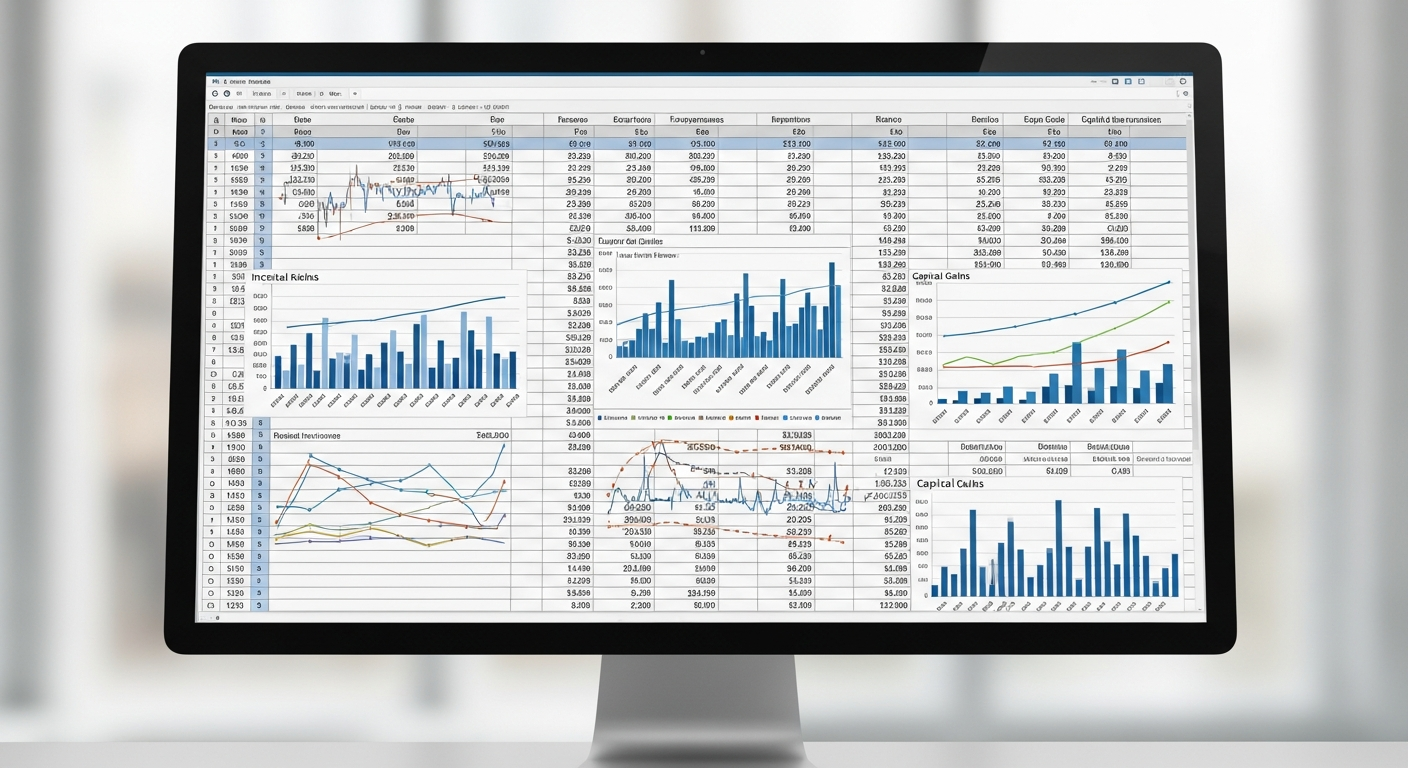
Once you identify your taxable events, the next step in following crypto tax guidelines is the actual math. Calculating capital gains requires knowing your cost basis, the sale price, and the holding period. This process can become overwhelmingly complex if you have thousands of micro-transactions.
Your cost basis is essentially how much you spent to acquire the asset, including transaction fees and gas fees. When you sell the asset, you subtract the cost basis from your final sale proceeds. A positive number represents a capital gain, while a negative number signifies a capital loss.
Statistical data from financial institutions shows that optimizing your calculation methods can save investors up to 15% on their final tax bill. Therefore, understanding the nuances of holding periods and accounting methods is highly lucrative.
Short-Term vs. Long-Term Capital Gains
The IRS heavily incentivizes investors to hold onto their assets for extended periods. If you hold a cryptocurrency for 365 days or less before selling, you incur short-term capital gains. These gains are taxed at your ordinary income tax rate, which can reach up to 37% for top earners.
Conversely, holding an asset for more than a year qualifies you for long-term capital gains. In 2026, the long-term capital gains tax rates are significantly lower, maxing out at 20% for the highest income bracket. This massive difference highlights the importance of strategic patience in investing.
You must track the exact timestamp of every acquisition to ensure you claim the correct holding period. Selling an asset at day 364 instead of day 366 could cost you thousands of dollars in unnecessary taxes. Always verify your holding periods before executing large trades.
Cost Basis Tracking Methods (FIFO, HIFO)
When you buy the same cryptocurrency at various price points over time, calculating your cost basis requires a specific accounting method. The standard default method used by the IRS is First-In, First-Out (FIFO). This assumes that the first coins you bought are the first ones you sell.
However, many crypto investors prefer the Highest-In, First-Out (HIFO) method. HIFO allows you to sell the coins with the highest purchase price first, which minimizes your recognized capital gain and reduces your immediate tax burden. Using HIFO requires meticulous, specific identification of your digital assets.
You must apply your chosen accounting method consistently throughout the tax year. You cannot switch back and forth between FIFO and HIFO for the same asset to cherry-pick your tax liabilities. Selecting the right method is a foundational pillar of modern crypto tax guidelines.
Comparison of Accounting Methods
| Method | How It Works | Best Used For |
|---|---|---|
| FIFO (First-In, First-Out) | Sells the oldest acquired assets first. | Default compliance; maximizing long-term gains. |
| LIFO (Last-In, First-Out) | Sells the most recently acquired assets first. | Keeping older, low-basis assets untouched. |
| HIFO (Highest-In, First-Out) | Sells assets with the highest purchase price first. | Minimizing immediate capital gains tax liability. |
Navigating DeFi, Staking, and NFT Taxes

Decentralized Finance (DeFi) has revolutionized how investors earn passive income, but it has created massive headaches for tax compliance. The borderless, automated nature of smart contracts does not easily map onto traditional tax laws. Navigating DeFi taxes in 2026 requires specialized knowledge.
The IRS views most DeFi activities as generating either capital gains or ordinary income, depending on the exact mechanic of the protocol. Engaging in liquidity mining, yield farming, or staking often triggers multiple taxable events within a single transaction. This complexity demands proactive record-keeping.
Furthermore, the explosive growth of the NFT market has brought its own set of distinct regulations. Digital art, virtual real estate, and gaming assets are heavily monitored. Understanding how to handle these unique asset classes is vital for your financial safety.
Staking Rewards and Airdrops
When you participate in Proof-of-Stake networks, you earn new coins as a reward for securing the blockchain. In 2026, the IRS definitively categorizes staking rewards as ordinary income at the exact moment you receive dominion and control over them. You must report their fair market value on the day they land in your wallet.
Airdrops follow a very similar set of crypto tax guidelines. If a protocol drops free tokens into your wallet as a marketing stunt or governance reward, that is taxable income. The value of the airdrop is determined by the market price when the tokens become accessible to you.
If you later sell those staked tokens or airdropped coins, you will face a secondary taxable event. Your cost basis for the sale is the amount you previously reported as income. This double-layer reporting is a common trap for inexperienced crypto investors.
Decentralized Finance (DeFi) Yields
Providing liquidity to a decentralized exchange (DEX) like Uniswap involves depositing two assets into a smart contract in exchange for a Liquidity Provider (LP) token. The IRS generally views the receipt of an LP token as a crypto-to-crypto trade. This means depositing assets into a liquidity pool often triggers an immediate capital gains tax.
As your LP position accrues trading fees, those fees are considered ordinary income. However, many protocols automatically reinvest these fees, compounding your position silently. You are still responsible for calculating and reporting that compounded income annually.
When you eventually withdraw your liquidity, exchanging the LP token back for the underlying assets, you trigger another capital gain or loss event. The intricate, multi-step nature of DeFi yields requires sophisticated tracking software to remain compliant.
Non-Fungible Tokens (NFTs) Rules
Buying and selling NFTs is taxed similarly to trading standard cryptocurrencies. If you purchase an NFT with Ethereum, you are effectively selling that Ethereum to buy the art. This triggers a capital gain or loss on the Ethereum spent.
When you sell the NFT later, you calculate the gain or loss based on its specific cost basis. Interestingly, the IRS has stated that certain NFTs may be classified as “collectibles” under the tax code. Collectibles are subject to a higher maximum long-term capital gains rate of 28%.
Creators of NFTs also face unique tax burdens. If you mint and sell your own NFT collection, the initial sale proceeds are treated as ordinary business income, not capital gains. You may also be liable for self-employment taxes depending on the scale of your operation.
🛒 Ledger Nano X crypto hardware wallet
View on Amazon →
As an Amazon Associate, we earn from qualifying purchases.
Essential Crypto Tax Software and Tracking Tools
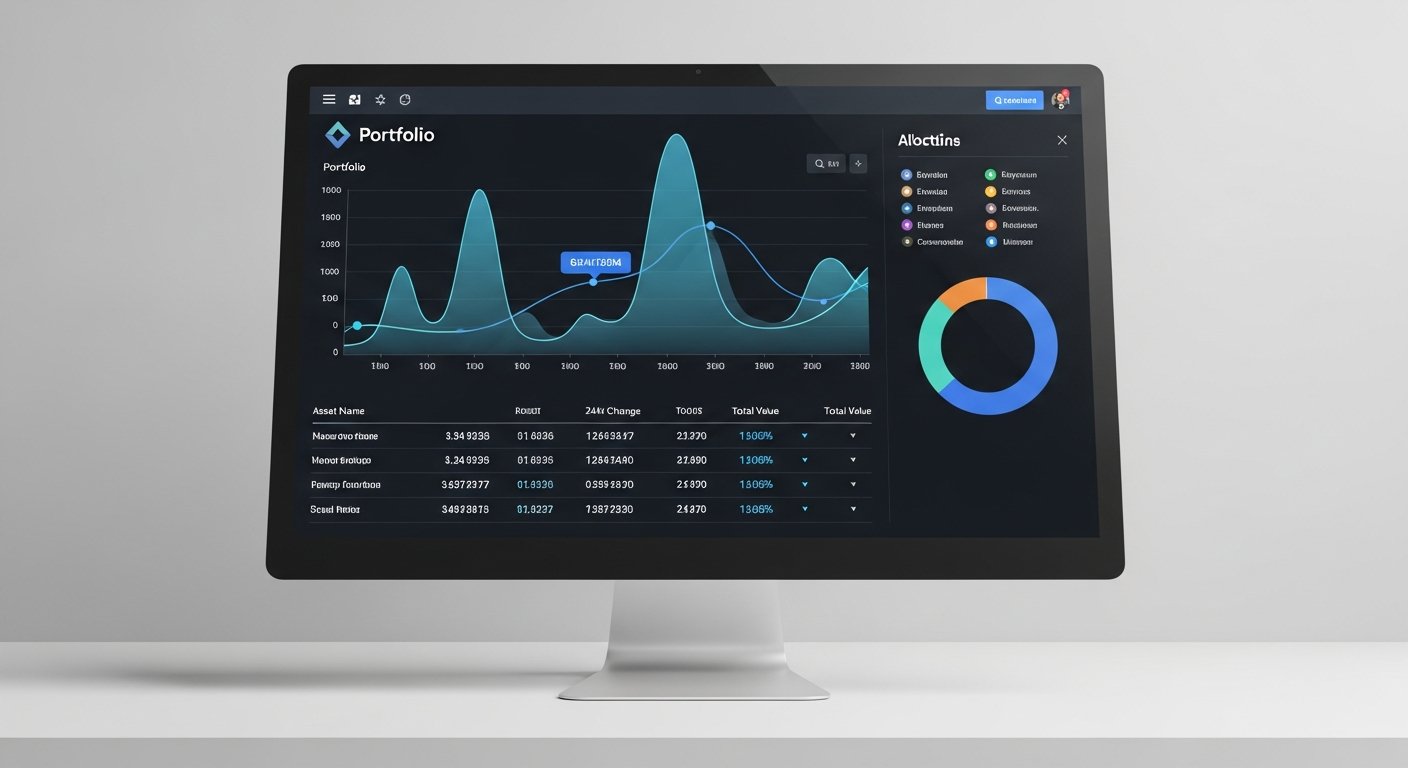
Given the sheer volume and complexity of blockchain transactions, calculating your taxes manually is nearly impossible. Professional investors and casual traders alike rely on dedicated tax software to parse their data. Using the right tools is a non-negotiable aspect of adhering to modern crypto tax guidelines.
These platforms integrate directly with your exchange accounts and digital wallets via read-only APIs. They automatically import your transaction history, identify taxable events, and calculate your cost basis. The end result is a cleanly formatted tax report ready for your accountant.
Statistics show that automated tax software reduces reporting errors by over 94% compared to manual spreadsheet tracking. In the 2026 tax landscape, investing in a robust software solution pays for itself by preventing costly IRS penalties.
Automated vs. Manual Tracking
Manual tracking involves downloading CSV files from every exchange you use and compiling them into a massive Excel spreadsheet. You must manually look up historical price data for every trade and apply your chosen accounting method. This process is highly prone to human error and incredibly time-consuming.
Automated software eliminates this friction entirely. By connecting your public wallet addresses, the software scans the blockchain and categorizes your trades in minutes. It easily handles complex DeFi protocols and high-frequency trading histories.
While manual tracking might suffice for someone who made two trades all year, it fails miserably for active participants. As the IRS ramps up its algorithmic auditing in 2026, relying on manual data entry is a dangerous gamble.
✅ Pros of Automated Software
- Saves hundreds of hours of manual calculation.
- Directly generates IRS Form 8949.
- Automatically tracks complex DeFi and NFT trades.
- Optimizes algorithms to apply HIFO for tax reduction.
❌ Cons of Automated Software
- Annual subscription fees can be costly.
- Requires granting API access to your exchanges.
- Obscure or brand-new micro-cap coins may lack price data.
Top Features to Look For in 2026
When selecting a tax software, ensure it natively supports the generation of Form 1099-DA reconciliation reports. This feature is vital for 2026 compliance, as it highlights discrepancies between your personal data and what brokers reported. Without it, you are flying blind.
Additionally, prioritize platforms that offer robust DeFi smart contract support. Many older software solutions struggle to interpret complex liquidity pool routing or yield farming contracts. The best tools provide granular, customizable categorization for every blockchain interaction.
Finally, look for built-in tax-loss harvesting dashboards. Premium software will actively scan your portfolio and highlight assets currently sitting at a loss. This allows you to strategically sell them before the end of the year, proactively lowering your tax bill.
🛒 TurboTax Premier 2026 software
View on Amazon →
As an Amazon Associate, we earn from qualifying purchases.
Proven Strategies to Minimize Your Crypto Tax Bill

Adhering to crypto tax guidelines does not mean you have to surrender your hard-earned profits. The tax code provides numerous legal avenues for investors to minimize their liabilities. Strategic planning throughout the year is the key to preserving your digital wealth.
Many investors wait until December to consider their tax situation, which is often too late. By implementing proactive strategies year-round, you can dramatically offset your capital gains. Intelligent tax planning is what separates amateur traders from wealthy veterans.
We will explore the most potent, fully legal strategies available to crypto investors in 2026. These techniques require discipline, but the financial payoff is substantial.
Tax-Loss Harvesting Tactics
Tax-loss harvesting is arguably the most powerful tool in your tax reduction arsenal. It involves deliberately selling cryptocurrencies that have dropped in value below your purchase price. By realizing these losses, you can use them to offset the capital gains you made on other successful investments.
For example, if you have $10,000 in Bitcoin gains and realize $8,000 in Solana losses, you only pay taxes on the net $2,000 profit. Furthermore, if your total losses exceed your total gains, you can use up to $3,000 of those net losses to offset your ordinary income. Any remaining losses roll over to future tax years indefinitely.
Crucially, the IRS currently has not applied the strict “wash sale rule” to cryptocurrencies as aggressively as it does to traditional stocks. This means you can often sell an asset to harvest the loss and buy it back relatively quickly. However, you must consult with a tax professional, as 2026 legislative proposals continually seek to close this loophole.
Using Crypto IRAs for Retirement
If you are investing with a long-term horizon, utilizing a Cryptocurrency Individual Retirement Account (IRA) is brilliant. These specialized accounts allow you to trade digital assets within a tax-advantaged shell. By doing so, you legally bypass immediate capital gains taxes entirely.
In a Traditional Crypto IRA, your contributions are tax-deductible, and your assets grow tax-deferred until retirement. You only pay taxes when you withdraw the funds decades later. This allows your crypto portfolio to compound massively without the drag of annual tax reporting.
Alternatively, a Roth Crypto IRA is funded with post-tax money, meaning you get no immediate deduction. However, all future trades, growth, and eventual withdrawals are 100% tax-free. If you believe your crypto assets will skyrocket over the next twenty years, a Roth IRA is the ultimate tax haven.
International Crypto Reporting Requirements in 2026

The reach of the IRS does not stop at the United States border. If you hold cryptocurrency in foreign exchanges or offshore wallets, you are subject to rigorous international reporting guidelines. The global crackdown on digital asset tax evasion is fully operational in 2026.
Ignoring these international rules carries some of the steepest financial penalties in the entire tax code. The government views offshore accounts as prime vehicles for money laundering and tax avoidance. Therefore, their scrutiny on foreign digital assets is incredibly intense.
You must determine if the platforms you use are classified as foreign financial institutions. If they are, you have a secondary layer of mandatory disclosures beyond your standard capital gains report.
FBAR Guidelines
The Foreign Bank and Financial Accounts Report (FBAR) is a critical requirement managed by the Financial Crimes Enforcement Network (FinCEN). If the aggregate value of all your foreign financial accounts exceeds $10,000 at any point during the calendar year, you must file an FBAR. In 2026, this rule definitively applies to foreign cryptocurrency exchanges.
It is important to note that the $10,000 threshold applies to the combined value of all your accounts. If you have $6,000 on Binance International and $5,000 on a European crypto platform, you cross the threshold and must report both. The FBAR is filed separately from your standard tax return.
Failing to file an accurate FBAR can result in devastating penalties, ranging from $10,000 for non-willful violations to over $100,000 for willful evasion. Tracking the daily high balances of your foreign exchange accounts is absolutely mandatory.
FATCA Rules for Digital Assets
The Foreign Account Tax Compliance Act (FATCA) requires U.S. taxpayers to report their specified foreign financial assets directly to the IRS using Form 8938. This is triggered if your offshore assets exceed certain thresholds, generally starting at $50,000 for single filers living in the U.S.
While the FBAR is filed with FinCEN, FATCA reporting is attached directly to your Form 1040 income tax return. You must list the details of your foreign exchange accounts, the maximum value during the year, and any income generated. The duplication of reporting might seem redundant, but both are legally required.
Cold storage wallets physically located within the United States generally bypass these foreign reporting requirements. This provides yet another compelling reason to take self-custody of your digital assets and move them off international platforms.
Real-World Case Studies for 2026

Theoretical rules can often be difficult to grasp until you see them applied in practice. Examining real-world case studies helps solidify your understanding of modern crypto tax guidelines. Every investor’s situation is unique, but common patterns emerge across the market.
By analyzing how different investor profiles handle their liabilities, you can identify the best strategies for your own portfolio. These case studies highlight the practical application of tracking, harvesting, and reporting.
Let’s look at two distinct profiles operating within the 2026 regulatory environment to see how tax planning impacts final outcomes.
Case Study 1: The Casual Investor
Sarah is a casual investor who buys $500 of Bitcoin every month using a popular U.S. exchange. She rarely sells but decided to trade $2,000 worth of her Bitcoin for Ethereum in July. Because she used a U.S. broker, she receives a 1099-DA in early 2026 detailing this transaction.
The crypto-to-crypto trade is a taxable event. Sarah’s tax software calculates that the specific fraction of Bitcoin she traded was originally purchased for $1,500. This means she realized a $500 short-term capital gain.
Because she accurately imported her exchange data into her software, she seamlessly generates Form 8949. She pays her ordinary income tax rate on the $500 profit and continues holding her remaining portfolio without any further tax liabilities for the year.
Case Study 2: The DeFi Yield Farmer
David is a highly active DeFi participant. He provides liquidity to decentralised exchanges, stakes governance tokens, and receives multiple airdrops. His transaction history spans across three different blockchains and totals over 4,000 interactions in the 2026 tax year.
Without automated software, David would be completely unable to file an accurate return. He uses a premium tracking tool to aggregate his public addresses. The software correctly identifies his staking rewards as ordinary income and his liquidity pool withdrawals as capital gains.
To optimize his heavy tax burden, David actively engages in tax-loss harvesting in late November. He strategically sells several underperforming altcoins to realize a $15,000 loss, offsetting his massive DeFi gains. By proactively managing his portfolio under the new crypto tax guidelines, David legally saves thousands of dollars.
[INTERNAL_LINKS]
Frequently Asked Questions (FAQ)
Navigating the complex world of digital asset taxation naturally leads to a variety of questions. Below are the most common inquiries regarding the implementation of the 2026 crypto tax guidelines.
Do I have to report crypto if I didn’t sell?
If you merely purchased cryptocurrency with fiat and held it in a wallet throughout the entire tax year, you do not have a taxable event. Buying and holding is tax-free. However, you must still check the box on your main IRS Form 1040 indicating that you interacted with digital assets during the year. Furthermore, if you received crypto via staking, mining, or airdrops, you must report that as income, even if you never sold it.
How does the IRS know about my crypto in 2026?
In 2026, the primary method the IRS uses to track your crypto is the mandatory Form 1099-DA. All centralized domestic exchanges and brokers are legally required to report your trading volume, gross proceeds, and identifying information directly to the government. Additionally, the IRS employs advanced blockchain analytics software tools to trace public ledger transactions back to known, KYC-verified wallet addresses.
What happens if I lost my private keys?
If you irrevocably lose access to your private keys and your digital assets are gone forever, the situation is complex. Unfortunately, under current tax law, you cannot easily claim lost or stolen cryptocurrency as a standard capital loss. The IRS suspended casualty and theft losses for personal property in recent tax overhauls. However, if you can mathematically prove the asset is entirely worthless and abandoned, there are highly specific abandonment loss claims you can explore with a certified CPA.
📚 You May Also Like