Smartphone Comparison Chart: Ultimate Guide (2026)
Are you feeling overwhelmed by the sheer number of mobile devices hitting the market today? You are definitely not alone. Between confusing processor names and exaggerated battery claims, upgrading your device has become a massive headache.
Finding reliable mobile phone specs without digging through dozens of separate review sites feels nearly impossible. Consumers waste hours trying to cross-reference data that should be easily accessible. That is exactly why we created the ultimate smartphone comparison chart for 2026.
By using a detailed side-by-side phone comparison, you can quickly filter out the marketing fluff. Our guide breaks down everything from processing power to camera capabilities. Read on to discover which device truly deserves your hard-earned money this year.
- Why You Need a Smartphone Comparison Chart in 2026
- Top Flagship Smartphone Comparison Chart
- Flagship Breakdown & Analysis
- Best Mid-Range Phones: Side-By-Side Comparison
- Mid-Range Value Breakdown
- Key Mobile Phone Specs to Evaluate
- How to Choose the Right Device for Your Needs
- Frequently Asked Questions (FAQ)
Why You Need a Smartphone Comparison Chart in 2026
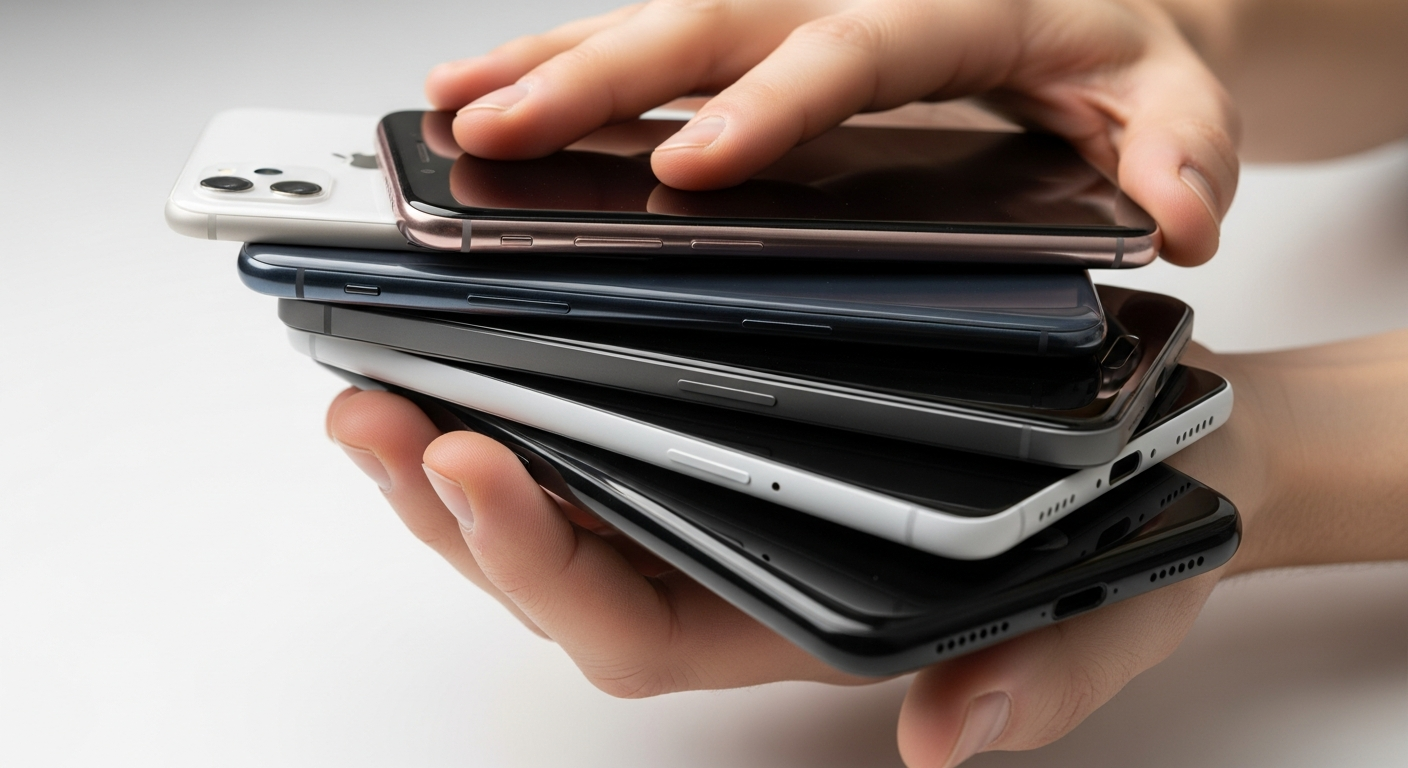
The technology landscape has shifted dramatically over the last few years. We are now seeing devices equipped with advanced on-device AI processors and incredibly dense solid-state batteries. Trying to keep track of these innovations requires a structured approach.
A comprehensive smartphone comparison chart acts as your personal roadmap through the tech jungle. It prevents you from overpaying for features you will never actually use. Conversely, it ensures you do not accidentally buy a device that will be obsolete in six months.
Furthermore, standardizing the data allows you to see the true value of each device. When you put the processor benchmarks right next to the retail price, the real winners emerge. This transparent approach takes the emotion out of the buying process.
Top Flagship Smartphone Comparison Chart
If you demand the absolute best performance, the flagship tier is where you want to look. These devices represent the pinnacle of modern engineering and design. They feature the highest quality displays, the most advanced cameras, and premium build materials.
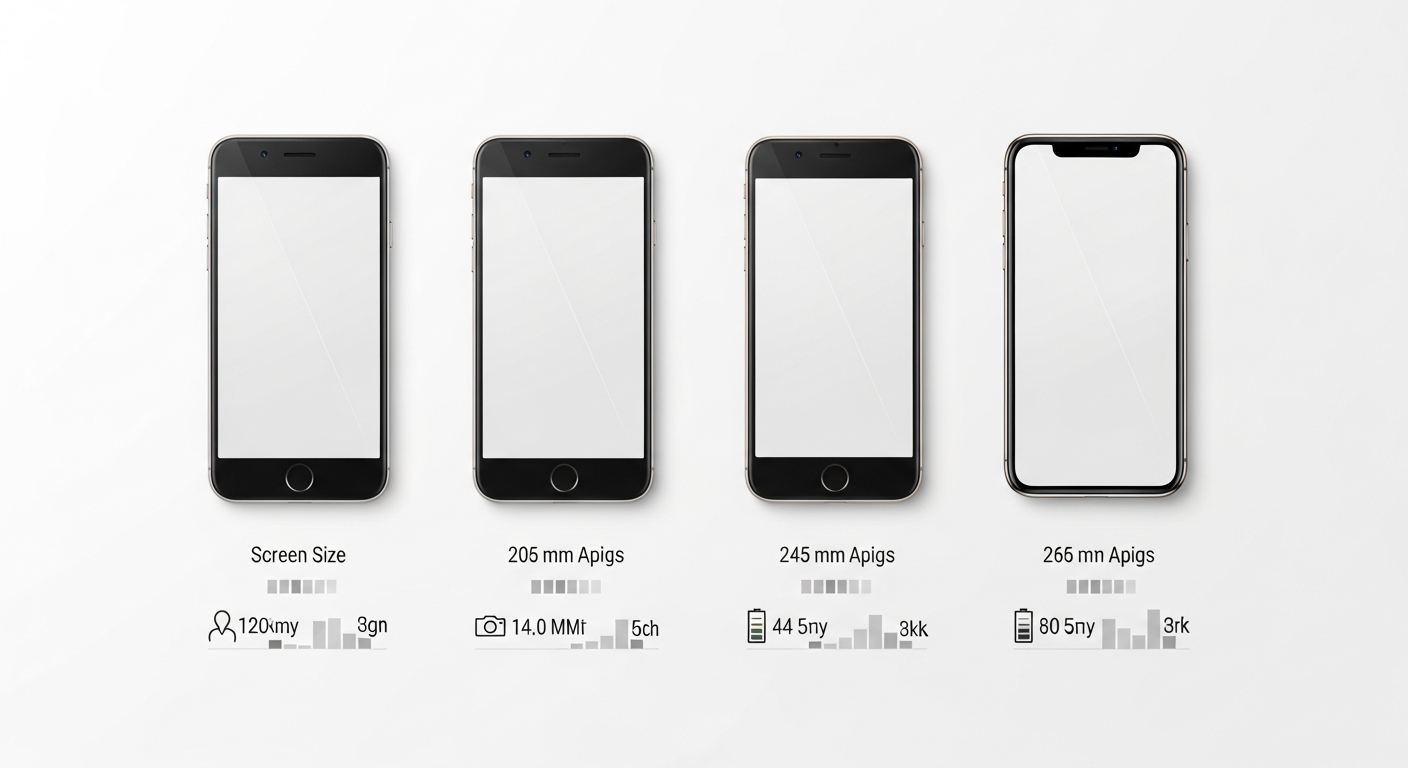
Below is our 2026 flagship smartphone comparison chart. We have compiled data for the top three industry leaders to give you a clear, side-by-side view.
| Feature | Apple iPhone 17 Pro Max | Samsung Galaxy S26 Ultra | Google Pixel 10 Pro |
|---|---|---|---|
| Processor | A19 Bionic Pro | Snapdragon 8 Gen 5 | Google Tensor G5 AI |
| Display | 6.9″ MicroLED (144Hz) | 6.8″ Dynamic AMOLED 3X (144Hz) | 6.7″ Super Actua (120Hz) |
| Main Camera | 48MP + 48MP Ultrawide | 200MP + 50MP Telephoto | 50MP + AI NightSight Pro |
| Battery | 4,800 mAh | 5,300 mAh Solid-State | 5,100 mAh |
| Price (Est.) | $1,199 | $1,299 | $999 |
Flagship Breakdown & Analysis

Looking at the chart above, each phone clearly targets a different type of user. The Apple iPhone 17 Pro Max dominates in raw video recording capabilities and ecosystem integration. Its transition to a MicroLED screen offers incredible brightness and color accuracy.
On the other hand, the Samsung Galaxy S26 Ultra is an absolute productivity monster. The inclusion of a 5,300 mAh solid-state battery means it can easily survive two full days of heavy use. Combined with the built-in S-Pen, it remains the ultimate tool for business professionals.
Google’s Pixel 10 Pro relies entirely on its computational prowess rather than pure hardware specs. The Tensor G5 chip is custom-built to process AI tasks locally, making voice translation and photo editing instantaneous. At a lower price point, it provides aggressive competition to the other two tech giants.
🛒 Samsung Galaxy S26 Ultra unlocked
View on Amazon →
As an Amazon Associate, we earn from qualifying purchases.
✅ Pros of 2026 Flagships
- Unmatched processing power for gaming and AI
- Professional-grade camera lenses and sensors
- Guaranteed software updates for 7+ years
- Premium build quality (titanium and advanced glass)
❌ Cons of 2026 Flagships
- Extremely high initial purchase price
- Often heavy and bulky in the pocket
- Costly to repair if screen or back glass shatters
- Features can be overkill for average users
Best Mid-Range Phones: Side-By-Side Phone Comparison
Not everyone needs or wants to spend over a thousand dollars on a phone. The mid-range market has become incredibly competitive in 2026. Devices in this category offer 85% of flagship performance at roughly half the cost.
When you conduct a side-by-side phone comparison in the sub-$600 bracket, you quickly realize how far technology has come. You no longer have to sacrifice great screens or decent battery life. Check out our top three mid-range recommendations below.
| Feature | OnePlus 14R | Samsung Galaxy A57 | Google Pixel 10a |
|---|---|---|---|
| Processor | Snapdragon 8 Gen 4 | Exynos 1680 | Tensor G4 |
| Display | 6.7″ AMOLED (120Hz) | 6.5″ Super AMOLED (120Hz) | 6.1″ OLED (90Hz) |
| Main Camera | 50MP Main | 50MP + 12MP Ultrawide | 64MP + AI Processing |
| Battery | 5,500 mAh (100W Charge) | 5,000 mAh | 4,600 mAh |
| Price (Est.) | $549 | $499 | $499 |
Mid-Range Value Breakdown
The OnePlus 14R stands out for anyone prioritizing raw speed and charging capabilities. With an incredible 100W fast charging spec, you can top off your battery in under 25 minutes. It uses a slightly older flagship processor that still handles heavy gaming with ease.
Samsung’s Galaxy A57 is the safest bet for the average consumer. It offers a gorgeous display, reliable cameras, and the familiarity of Samsung’s One UI ecosystem. Plus, its IP67 water resistance provides durability usually reserved for more expensive models.
For photography enthusiasts on a budget, the Pixel 10a is unbeatable. Google brings its legendary camera performance algorithms down to this price point. Even though the battery is slightly smaller, the software optimization ensures all-day longevity.
Key Mobile Phone Specs to Evaluate

Using a smartphone comparison chart effectively requires a basic understanding of modern hardware. You need to know what the numbers actually mean in real-world scenarios. Let’s break down the most critical mobile phone specs you should prioritize.
It is easy to get distracted by high megapixel counts or absurd amounts of RAM. However, true device performance relies on how these hardware elements work together. Software optimization is just as important as the physical components.
Processor Benchmarks & RAM
The processor is the brain of your smartphone, handling everything from opening apps to processing photos. In 2026, chips like the Snapdragon 8 Gen 5 and Apple A19 are pushing the boundaries of what a mobile device can do. Strong processor benchmarks guarantee that your phone will not slow down or stutter after a year of use.
RAM (Random Access Memory) dictates how many apps you can keep open simultaneously. For modern Android devices, 8GB is the absolute minimum, while 12GB to 16GB provides excellent future-proofing. iOS handles memory differently, so iPhones typically require less RAM to achieve the same smooth multitasking.
Camera Performance & AI Photography
Modern camera performance is no longer just about the physical lens. Computational photography and AI-driven enhancements handle the heavy lifting after you press the shutter button. This is why a 12MP camera from Google can often outperform a cheap 108MP sensor on a budget brand.
When reviewing our chart, look for features like Optical Image Stabilization (OIS) and advanced telephoto zoom. These hardware additions make a massive difference when shooting video or taking photos in low light. AI capabilities now allow you to remove objects or change lighting instantly on your device.
🛒 universal smartphone tripod stand
View on Amazon →
As an Amazon Associate, we earn from qualifying purchases.
Battery Life & Fast Charging Speeds
Nothing is more frustrating than a dead smartphone when you need it most. Battery life is heavily dependent on battery capacity (measured in mAh) and the efficiency of the processor. Solid-state batteries, newly introduced to the mass market in 2026, offer higher density without increasing the phone’s weight.
You also need to evaluate charging speeds. Some devices support ultra-fast 100W+ charging, allowing you to go from 0% to 100% in under half an hour. Be aware that ultra-fast chargers are rarely included in the box anymore, requiring an additional purchase.
How to Choose the Right Device for Your Needs
The perfect phone for a professional photographer is not the same as the perfect phone for a competitive gamer. You must evaluate your daily habits before making a decision. Keep a log of your smartphone usage for a few days to see where you spend the most time.
If you consume a lot of media, prioritize devices with an OLED display and a large battery. If you vlog or take endless family photos, allocate your budget toward massive storage and high-end camera sensors. Do not buy into a specific brand’s hype without verifying the specs first.
💡 Expert Insight: The Importance of Software Support
“As a mobile tech analyst covering the industry for over a decade, I always advise buyers to look past the hardware. In 2026, the biggest differentiator is software longevity. Companies like Google and Samsung now offer up to seven years of OS updates. A phone with brilliant specs is worthless if it stops receiving critical security patches two years after you buy it. Always factor the update policy into your side-by-side phone comparison.”
Finally, consider the ecosystem you are already invested in. Moving from Apple to Android, or vice versa, involves transferring paid apps, cloud storage, and smart home integrations. Sometimes, staying within your current ecosystem is worth the slight premium in price.
🛒 Anker 100W fast charger adapter
View on Amazon →
As an Amazon Associate, we earn from qualifying purchases.
📚 Related Articles
Frequently Asked Questions (FAQ)
What is the most important spec on a smartphone comparison chart?
The processor is arguably the most vital specification because it dictates overall performance, camera processing, and battery efficiency. A powerful, modern processor ensures your device will handle future software updates smoothly. However, if you have specific needs, battery capacity or camera sensors might take precedence for your lifestyle.
How often should I upgrade my smartphone in 2026?
With the current advancements in hardware durability and extended software support, the average upgrade cycle has extended to 3 to 4 years. Unless your current device is broken, has a severely degraded battery, or no longer receives security updates, you do not need an annual upgrade. Modern devices are built to last much longer than those from five years ago.
Do I really need a phone with a 120Hz or 144Hz display?
A higher refresh rate makes scrolling, gaming, and UI animations look incredibly smooth. While not strictly a necessity for basic tasks like texting or calling, once you experience a 120Hz display, going back to a standard 60Hz screen feels sluggish. It is highly recommended for anyone who spends hours looking at their device daily.